A mesothelioma diet helps patients maintain strength, energy and weight during treatment. It focuses on lean protein, fruits and vegetables and limits alcohol, processed meat, red meat and saturated fat. As nutrition needs can shift during treatment, meal planning and food safety are important.
Tejal Parekh: What are the benefits of a healthy diet during mesothelioma treatment?
Staying well nourished during a treatment is so important for patients with mesothelioma because it helps them to feel more energized. They're able to tolerate their treatments much better, and they have a much quicker recovery, especially after surgery.
Tejal Parekh: What are the benefits of a healthy diet during mesothelioma treatment?
Staying well nourished during a treatment is so important for patients with mesothelioma because it helps them to feel more energized. They're able to tolerate their treatments much better, and they have a much quicker recovery, especially after surgery.
Why Are Diet and Nutrition Important for Mesothelioma Patients?
Diet and nutrition can help strengthen the immune system, counter some of the effects of cancer and maintain energy levels. Consuming more proteins, for example, may help restore tissue mesothelioma damages. Nutrition needs can shift at each stage of mesothelioma care, from diagnosis through recovery.
Top Mesothelioma Diet Tips
Eat 5-6 small meals or snacks every 2 or 3 hours instead of 3 large meals daily.
Choose nutrient-dense foods that are easy to eat. These can include: eggs, fruit, full-fat Greek yogurt, protein powder smoothies, salmon and whole milk.
If cooking smells bother you, avoid kitchens and try colder foods such as sandwiches.
Experiment with different foods if you have taste changes to help you find more palatable ones.
Try a mouthwash of 1 quart water, 3/4 teaspoon salt and 1 teaspoon baking soda to clear taste buds and relieve dry mouth.
Eating at routine times can help keep your energy levels up and prevent malnutrition.
Stay hydrated with water, milk, soups and 100% fruit and vegetable juices.
Not only does what you eat matter when managing mesothelioma, but when you eat can also make a difference. Eating smaller portions throughout the day can help you get the nutrients you need without feeling too full or overwhelmed. It’s easy to forget to eat when you’re not feeling well. Setting a timer to remind you to eat a little something every 3 hours can help.
Maintaining a healthy weight can reduce complications from treatment. Certain foods can also help reduce treatment side effects like nausea or mouth sores. Before dietary changes are made, consult your mesothelioma doctor.
Exclusive Content
Dr. Marcelo DaSilva: Why Prehab Makes Mesothelioma Surgery Recovery Easier
So most of the patients when they come to see us they already had chemotherapy so they are a little debilitated. So we have to help them to get to the position which they say now we can have surgery done. So chemotherapy, immunotherapy takes some out of the patients. They lose weight, lose appetite, they have some problems with the nerves, their feet hurts, so they have several issues that we have to help them quite a bit. That’s when we say we’re going to help you with nutritional support 2,500 calories a day, one and grams of protein a day. We’re going to check your labs, we’re going to continue that process with you until we’re ready to go to surgery. We aim to accomplish that within four to six weeks.
How Does Nutrition Affect Mesothelioma Treatment?
A healthy, balanced diet can help you respond better to treatment and reduce its side effects. For example, omega-3 fatty acids in fish oil may help reduce inflammation and improve heart health. This effect can benefit people with a higher risk for heart problems.
People with mesothelioma should consume a balanced diet rich in protein, vitamins and minerals. Mesothelioma survivors may also be directed to limit whole grains or avoid other types of food during and while recovering from treatment.
A common dietary concern for people with mesothelioma is eating too few calories, which are essential to aid recovery, support immunity and fight fatigue. It’s important to keep your energy levels up and give your body the nutrients it needs to heal.
FREE MESOTHELIOMA TREATMENT GUIDE
Expert Guidance for Your Mesothelioma Journey
Get answers about treatment, top doctors, and clinical trials from the nation’s most trusted mesothelioma resource.
Understanding Nutrition During Mesothelioma Treatment
Mesothelioma treatment can affect your ability to eat as you usually do. Alterations to your diet and eating habits can help you cope with treatment and its side effects. Taking proactive measures to meet nutritional needs for each type of treatment can help.
Diet and Mesothelioma Treatment
Chemotherapy: Liquid or soft foods can reduce chewing if mouth sores develop. Avoiding icy or frozen foods can help with cisplatin-induced cold sensitivity. Chemotherapy can change how food tastes. Eating with plastic utensils can help if food tastes metallic.
Immunotherapy: Toast, oatmeal, broth and baked or broiled proteins such as chicken or tofu are often recommended for patients experiencing immunotherapy side effects such as nausea. Side effects require immediate attention from your oncologist.
Pain medications: Certain drugs can decrease appetite, cause nausea and contribute to constipation. Increasing dietary fiber and water can help lessen constipation. Always drink plenty of water when increasing fiber. Without adequate fluids, constipation may worsen.
Radiation therapy: Receiving radiation therapy around the chest can impact swallowing. While rare for peritoneal mesothelioma patients to receive radiation around the abdomen, this can cause digestive issues such as nausea, vomiting, cramps, bloating and diarrhea.
Surgery: Some people may need to gain weight before surgery. A healthy weight before mesothelioma surgery can improve wound healing, reduce infection risk and aid recovery. Proper nutrition after your surgery will also replace blood loss and increase your energy level.
Some aspects of treatment may affect how you get nutrition. For example, abdominal surgeries can complicate eating and digestion. Some peritoneal mesothelioma patients may receive nutrition intravenously shortly after abdominal surgery.
Expert Insight
More than 95% of my mesothelioma patients talk to me about losing weight. We get nutrition involved before we start our multimodality treatment program. We assess how much protein and how many calories they need. To get treatment, you have to have some type of nutrition program involved.
Dr. Jeffrey Velotta, thoracic surgeon
Foods to Aid Recovery After Mesothelioma Treatment
Foods that may support recovery after mesothelioma treatment include lean proteins such as poultry, fish and eggs, as well as colorful fruits and vegetables that provide antioxidants and fiber. But something that helps one patient may not help another. Speak with your doctor about which foods or nutrients they recommend you add to your current diet.
Foods Aiding in Recovery
Fiber-rich foods: Vegetables, fruit, beans, potatoes and nuts can balance insulin levels, possibly minimizing cancer cell growth.
Natural sources of coenzyme Q: The nutrient in beef, chicken, pork, trout, herring, sardines, soybeans, lentils and peanuts may protect the heart from chemo damage.
Omega-3 fats in fish: May reduce harmful weight loss and inhibit metastasis.
Spices: Turmeric, basil, oregano, rosemary, mint, dill and others may have anti-cancer and anti-inflammatory benefits.
Tea: Green tea is rich in antioxidants. Chamomile, ginger, mint and hibiscus may have anti-cancer properties. Essiac tea and moringa leaf are antioxidant-rich and may have limited anti-cancer actions in the body, but more research is needed to assess potential benefits.
While antioxidants are generally considered part of a healthy diet, they neutralize free radicals. Many chemo drugs use free radicals to attack cancer cells. Chemo patients may be advised to avoid foods high in antioxidants. Speak to your doctor about possible interactions.
Foods to Avoid During and After Mesothelioma Treatment
Foods to avoid with mesothelioma include alcohol, processed meat, red meat and saturated fat, along with undercooked or raw foods that raise infection risk during treatment. Some foods or nutrients may worsen side effects or weaken your immune system. Foods that are difficult to digest can exacerbate mesothelioma-related or treatment-related digestive problems.
Foods to Avoid With Mesothelioma
Alcohol: Limiting or eliminating alcohol consumption is advisable as it can harm cells and DNA, possibly interfering with medications.
Irritating Foods: Acidic, sour and spicy foods can irritate chemotherapy-related mouth sores.
Processed meats: Cured bacon, sausage, hot dogs and other processed meats can contribute to inflammation.
Salty Foods: Snacks high in sodium lead to fluid retention that may worsen shortness of breath.
Sugary Foods: Sweets are often low in nutrients. Excess sugar may contribute to inflammation and reduced immune function.
Some foods, such as grapefruits, can negatively interact with chemo and other mesothelioma drugs. Your doctor will tell you about specific foods that may interact with your medications.
How important is nutritional health to mesothelioma treatment
Nutrition itself for mesothelioma is one of the under under utilized, under studied, less known factors that we see because in the majority, in fact, more than ninety five percent of my patients with mesothelioma. Besides the shortness of breath and some of the chest pain, really every single family member or every single patient just like, yeah, I've been losing weight. Why am I losing weight?
It's not a cancer in the in the in the GI tract. Right? They're they it's not a tumor affecting their esophagus. This is in the plural lining. Something about mesothelioma, and it hasn't it's been studied a little bit, but one, the the there's proteins that we think that are secreted by mesothelioma that are more active in causing weight loss than other cancers per se. But number two, patients just don't feel well and they're so fatigued that they don't wanna eat because if you're short breath and out of breath and in pain, you're not gonna wanna eat.
And so that's probably the more common. And so nutrition is so important because most mesothelioma patients are not gonna weigh three hundred four hundred pounds. They're usually gonna be in the low one hundreds and very, you know, very thin.
And so the idea behind getting nutrition involved early even before we start our multimodality treatment program is important. We will, a hundred percent of the time now, recommend a nutritionist prior to any type of treatment to assess, you know, how much protein they need, how much calories they need. And we do think that that's important because most of the mesothelioma patients present with very, poor appetite, poor nutrition, and weight loss. So I think to even get treatment, you have to get the medical, surgical, immunotherapy, radiation treatment.
You have to have some type of nutrition program, involved in that.
What makes the Asbestos.com nutrition guide unique for mesothelioma patients?
[MUSIC PLAYING] TEJAL PAREKH: The nutrition guide that was created is really exciting because it’s so unique. It’s one of a kind for patients and their caregivers because it’s kind of an all in one. A lot of times, patients will go to a variety of websites trying to find the answers that they’re looking for for how to handle side effects from chemotherapy, to radiation, to surgery, and we address all of those. In addition, we provide recipes that are easy to make, and hopefully, easy to eat. And that’s what makes the book so unique for our patients with mesothelioma.
Dietary Supplements for Mesothelioma Patients
Mesothelioma patients should talk with their care team before starting any dietary supplement, since some supplements can interfere with chemo. Before taking any dietary supplements, it’s important to note that nutritional and herbal supplements usually are less well-researched than mainstream medications. This makes it even harder to predict what problems they may cause when combined with chemo.
Discuss any supplements you’re considering with your mesothelioma care team before taking them. They can provide guidance on what’s safe to take. They’ll also tell you which ones to avoid during mesothelioma treatment.
Top Supplements for Mesothelioma Patients
Amino acids
Beta-carotene
Minerals like calcium, magnesium, selenium and zinc
Protein supplements
Vitamins A, B9 (folic acid), B12, D and E
Dietary supplements can interact with cancer drugs. These interactions may make them less effective or cause harmful side effects. High levels of vitamin C or E can interfere with radiotherapy. St. John’s wort, ginseng and garlic supplements may also interfere with chemo drugs.
Even traditional supplements doctors may recommend can have harmful interactions with mesothelioma therapy. Mesothelioma survivors on chemo are often prescribed folic acid and B12 supplements to reduce toxic side effects but, vitamin B6 supplements can interact negatively with cisplatin.
FREE NUTRITION GUIDE + JOURNAL
Nutrition Tips and Recipes for Mesothelioma
Access expert diet and exercise guidance designed specifically for mesothelioma patients to support treatment and overall wellness.
Meal planning can alleviate the stress associated with food shopping. Meal prepping will also make crafting and following your mesothelioma diet easier.
As a caregiver, stock up on your loved one’s favorite foods when food shopping. Buy items essential for meeting their nutritional needs. This can reduce the need to shop often.
Planning Healthy Portions
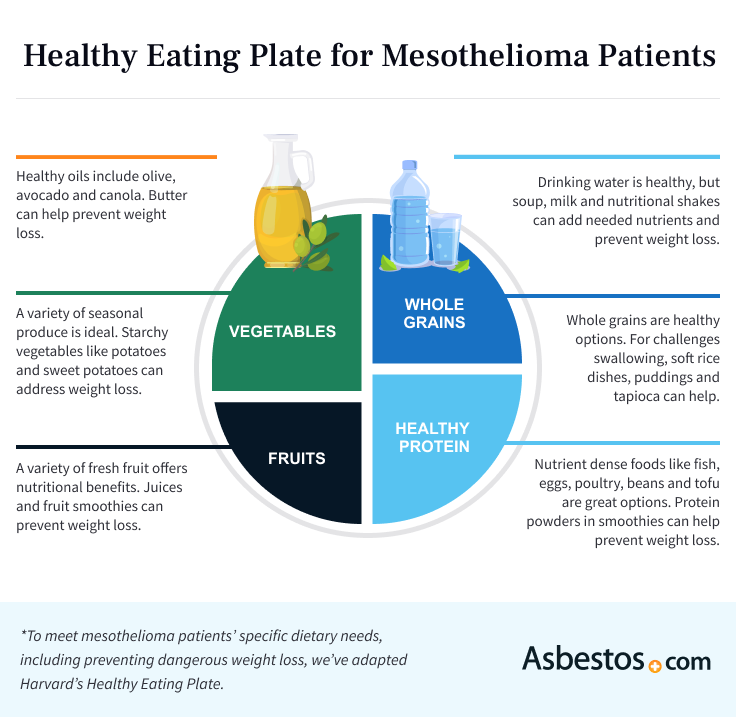
The U.S. Department of Agriculture retired the Food Guide Pyramid years ago and replaced it with My Plate. However, My Plate isn’t designed for people with cancer, so the Harvard School of Public Health created the Healthy Eating Plate. It’s a better starting place for developing a diet for people with mesothelioma.
The effects of cancer and treatment can make it challenging to eat. Mesothelioma survivors also have specific nutritional needs. You’ll need to adjust the Healthy Eating Plate guidelines during cancer therapy to find the best mesothelioma diet for you.
Replace green vegetables, salads and other lower-calorie foods with starchy vegetables such as potatoes and sweet potatoes. For most people with mesothelioma, it’s helpful to increase the protein portion of the plate and decrease whole grains a bit. Sometimes, you may need to add a high-protein, high-calorie liquid nutrition supplement.
Tips to Get More from Your Meals
Eating enough and getting proper nutrition can be challenging if you have mesothelioma. Patients may have difficulty eating and require additional nutrients to maintain their weight and strength. Building each meal around a protein source first, then filling in the rest of the plate around it is recommended.
Tips for Getting Proper Nutrition
Drink liquids after meals or as snacks, not before or during mealtime. Liquid can fill you up before you have the chance to consume the whole, nutrient-dense foods on your plate.
Eat multiple small meals throughout the day instead of 3 large ones.
Eat your favorite foods any time of day. For example, if you love breakfast foods, enjoy them for lunch or dinner if you’ll enjoy the meal more.
Include a portion of protein such as poultry, fish, eggs, beans or peanut butter at each meal.
Juice fresh fruits and vegetables to obtain their nutrients without filling up.
Snack whenever you’re hungry, even if it’s not mealtime. Enjoy foods that appeal to you at the time.
If you don’t own a juicer, you can create a juice with a blender and cheesecloth. Blend fruit or vegetables with filtered water, then strain with a cheesecloth available at most grocery stores.
Try to create a joyful or relaxing setting, enjoying food with friends or family. This may reduce stress around eating and lead to more enjoyment while consuming the foods you need.
Tips for Adding More Protein to Your Diet
People with mesothelioma may struggle to maintain their muscle mass and strength. Eating protein-rich foods regularly is important to maintaining muscle and fighting fatigue.
Protein examples include: tofu, tempeh, spinach, beans, nuts, Greek yogurt, cheese, eggs, fish, poultry and lean red meat. Try to eat more of these foods if you’ve lost weight or strength.
Tips for Eating More Protein
Blend nut butter and protein powder into smoothies and milkshakes.
Add cheese to omelets, sandwiches, soups, salads and casseroles.
Silken tofu or powdered milk can be added to smoothies, milkshakes, soups and mashed potatoes.
Add cooked tofu, tempeh, beans or meats to omelets, soups and salads.
Snacks between meals can include protein like nut butter, roasted nuts, cheese or sliced meats. Desserts made with eggs such as cheesecake, custard and pudding can increase protein consumption.
Tips for Adding More Calories to Meals
Maintaining a healthy weight as a result of mesothelioma treatment-related side effects can be a struggle. Adding extra calories to meals can be challenging, but you must get the necessary nutrients to help your body fight cancer.
Tips for Increasing Calories
Add avocado to sandwiches and salads. Eat guacamole with tortilla chips.
Add Greek yogurt, heavy cream or sour cream to dessert recipes, sauces and soups.
Avoid foods labeled as low-fat, nonfat and low-calorie.
Cook with butter and oil and add them to meals when possible, including high-calorie dressings.
Drink high-calorie beverages like milkshakes with added ice cream or fruit nectars.
Smear cream cheese onto bagels, sandwiches or crackers.
Top vegetables with creamy or cheesy sauces.
Maintaining weight and muscle mass helps the body handle the aggressive nature of anticancer therapies. Preparing meals in advance and freezing them into meal-sized portions that are easy to heat can make this less challenging. Talk with a dietitian for assistance with meal planning or preparing a grocery list.
Food Safety and Mesothelioma
For people receiving mesothelioma treatment, food safety is very important. Federal food safety guidelines highlight 4 key steps to keep food safe: clean, separate, cook and chill.
Food Safety Tips
Clean: When washing fruits and vegetables, don’t use soap, detergents or commercial produce washes. Rinse them well under running water. Always wash your hands with warm, soapy water before and after handling food.
Separate: To avoid spreading bacteria, always use a clean knife when cutting different foods, especially raw meats. Clean countertops and cutting boards with hot, soapy water or food-safe wipes. Store raw meat sealed and separated from other foods in the fridge or freezer.
Cook: Cook meats to the proper temperature to avoid eating raw or undercooked meat. Keep hot foods above 140°F and cold foods below 40°F to prevent bacterial growth.
Chill: Refrigerate or freeze perishable foods quickly. Once thawed, use food right away and don’t refreeze it.
Treatments like chemo and radiation often weaken the immune system, making it harder to fight foodborne bacteria, parasites and harmful germs. Following these food safety steps helps protect you during treatment.
Avoiding Food-Borne Illnesses
Foodborne illnesses, often called “food poisoning,” can cause serious health problems. To prevent getting sick from food, people with mesothelioma should avoid raw or undercooked meat, poultry, seafood and eggs. Unpasteurized or raw milk and cheeses should also be avoided.
Food Poisoning Side Effects
Abdominal cramps
Dehydration
Diarrhea
Dizziness
Fever
Flu-like illness
Lethargy
Loss of appetite
Muscle aches
Nausea
Upset stomach
Vomiting
Weakness
It’s important to stay informed about food recalls and outbreaks of food-related illnesses. Avoid eating or touching any foods suspected of contamination.
For example, the USDA’s Food Safety and Inspection Service announced a recall for 32,000 pounds of meat in August 2025 that bore a false USDA mark of inspection. The meat included chorizo, pork chops and ribs shipped to restaurants and stores across the country. The agency noted in its statement, “Any product bearing the false establishment number ‘Est. 1785’ should be considered misbranded and unsafe to eat.”
Common Questions About Nutrition & Mesothelioma
What is the best diet for mesothelioma patients?
Mesothelioma doctors recommend patients eat foods rich in nutrients such as eggs, fruit and salmon. They also recommend a diet high in protein with starchy vegetables and plenty of water to counter the effects of mesothelioma treatment.
Can a registered dietitian help me develop a personalized nutrition plan?
A registered dietitian can assess your nutritional needs and help you develop a personalized mesothelioma nutrition plan. They’ll base a program on your needs, preferences and health status. A registered dietitian can also help you navigate any dietary restrictions or challenges that may arise during your mesothelioma treatment.
Can certain foods or drinks interfere with my medications or treatments?
Yes, some foods may interact with chemo drugs, which can impact their effectiveness or cause side effects. Supplements may also interfere with cancer treatments. A registered dietitian can guide you on potential interactions. Discuss any supplements or dietary changes with your health care team.
Can you cure mesothelioma with diet?
No cure for mesothelioma exists yet, but a healthy diet can help offset the side effects of cancer treatment and support better outcomes.
What diet helps prevent mesothelioma?
Asbestos exposure is the primary cause of mesothelioma. While a healthy diet may not be able to counteract all of the risks from heavy, prolonged asbestos exposure, it can improve overall health and strengthen the body’s defenses.
Your web browser is no longer supported by Microsoft. Update your browser for more security, speed and compatibility.
If you are looking for mesothelioma support, please contact our Patient Advocates at (855) 404-4592
Fact Checked
Our fact-checking process begins with a thorough review of all sources to ensure they are high quality. Then we cross-check the facts with original medical or scientific reports published by those sources, or we validate the facts with reputable news organizations, medical and scientific experts and other health experts. Each page includes all sources for full transparency.
Reviewed
Asbestos.com is the nation’s most trusted mesothelioma resource
The Mesothelioma Center at Asbestos.com has provided patients and their loved ones the most updated and reliable information on mesothelioma and asbestos exposure since 2006.
Our team of Patient Advocates includes a medical doctor, a registered nurse, health services administrators, veterans, VA-accredited Claims Agents, an oncology patient navigator and hospice care expert. Their combined expertise means we help any mesothelioma patient or loved one through every step of their cancer journey.
More than 30 contributors, including mesothelioma doctors, survivors, health care professionals and other experts, have peer-reviewed our website and written unique research-driven articles to ensure you get the highest-quality medical and health information.
About The Mesothelioma Center at Asbestos.com
Assisting mesothelioma patients and their loved ones since 2006.
Helps more than 50% of mesothelioma patients diagnosed annually in the U.S.
A+ rating from the Better Business Bureau.
5-star reviewed mesothelioma and support organization.
My family has only the highest compliment for the assistance and support that we received from The Mesothelioma Center. This is a staff of compassionate and knowledgeable individuals who respect what your family is experiencing and who go the extra mile to make an unfortunate diagnosis less stressful. Information and assistance were provided by The Mesothelioma Center at no cost to our family.
Parekh, T. (2026, September 22). Mesothelioma Diet & Nutrition. Asbestos.com. Retrieved October 15, 2026, from https://www.asbestos.com/treatment/nutrition/
Parekh, Tejal. "Mesothelioma Diet & Nutrition." Asbestos.com. Last modified September 22, 2026. https://www.asbestos.com/treatment/nutrition/.
Most helpful, steered us in the right direction for treatment. Great source of information and support, the Center followed through on every one of our requests.
Because of their guidance, I was able to navigate getting my mother into MD Anderson when her case got put aside by mistake in all the COVID-19 craziness. Vanessa was amazing and I can’t recommend enough reaching out to them. I thought it was a gimmick to get you to hire a lawyer, but I was so wrong. They truly seemed to want to help meso patients and KNOW what you need to ask and do in order to get help.
Hearing the news about my mother's diagnosis was heartbreaking. I felt lost, I didn't know how I could help or where to seek the best medical care. I started researching specialists online and shortly after, Dr. Smart reached out to me. She has been extremely helpful and encouraging throughout this entire process. Even though we aren't located in her area, she has helped us get in contact and set up appointments with the best doctors/specialists nearby. She has always been available for any questions that we have, and she even sent us a binder full of helpful resources. The patient advocates are amazing and true to their title. Dealing with this process is not easy, but knowing that we have someone like Dr. Smart in our corner is reassuring and we are so grateful for her and The Mesothelioma Center.
My son Carlos was diagnosed with this terrible and unknown disease a few months ago. Thank God we found The Mesothelioma Center along the way, and Vanessa Blanco who provided us with information on hospitals and doctors who have been of great help. I am very grateful to them.
Extremely communicative and helped my dad get an appointment with one of the top centers in Philadelphia. I'm so grateful for this center. They assisted with information on nutrition, legal help, and scheduling appointments. Special thanks to Danielle!
Danielle DiPietro was an invaluable resource for me. Her suggestions and recommendations guided us towards stellar practitioners in our area. Without her advocacy, I feel we would have been receiving less-than-optimal medical and legal care for mesothelioma. Receiving the diagnosis was a shock and I felt lost initially. I wish everyone could take advantage of this FREE assistance.
I was very grateful and appreciative of Dr. Smart from The Mesothelioma Center. She was very helpful to my husband and me. She educated and walked us through the steps, and suggested ideas and questions to ask his doctors. She also provided me with a lot of information that I can read and educate myself about this illness. We need more people like Dr. Smart, who is very educated and you can tell she enjoys the work that she does by the way she assisted my husband and me. We thank the Lord and are grateful that we met Dr. Smart from The Mesothelioma Center.
In January of 2016, my husband was diagnosed with peritoneal mesothelioma. Our first reaction was: what is this and what can we do? He was diagnosed by an oncologist and was scheduled to start chemotherapy. When we arrived home that day, I googled mesothelioma and discovered The Mesothelioma Center had a form to fill out to request additional information. I filled it out and within an hour, I received a phone call from Karen Selby from The Mesothelioma Center asking if I needed any help. Karen was and still is my lifeline. She located a doctor at the Cleveland Clinic who performed surgery and HIPEC on peritoneal mesothelioma patients. My husband was scheduled with an appointment and his surgery was performed on March 3, 2016. He continued with follow-up appointments with the oncologist until a friend of ours passed away from it in 2017. Immediately I sent Karen an email asking if she knew any mesothelioma specialists at the clinic, and of course, I got a prompt response back with a name. Everything was going well until the last CAT scan, which showed it returned. He is now doing chemo and has his next CAT scan scheduled for the end of March with a follow-up for the results with the mesothelioma doctor. Without Karen, I am not sure my husband would still be here. She provided me with so much information along with help in various ways, too numerous to even mention. Thank you to all those who are there to help us.
Diana Zuckerman is the founder and president of the National Center for Health Research. She develops prevention strategies and treatments for programs such as the Cancer Prevention and Treatment Fund.
Fact-checked and verified content:
Our fact-checking process begins with a thorough review of all sources to ensure they are high quality. Then we cross-check the facts with original medical or scientific reports published by those sources, or we validate the facts with reputable news organizations, medical and scientific experts and other health experts. Each page includes all sources for full transparency.
Please read our editorial guidelines to learn more about our content creation and review process.