Natural disasters such as wildfires, hurricanes, floods and tornadoes can damage asbestos-containing materials and lead to asbestos exposure among first responders, cleanup crews and nearby residents. Learn how to prevent asbestos exposure when preparing for and cleaning up after a natural disaster.
How Is Asbestos a Risk During a Natural Disaster?
A large number of homes and commercial buildings constructed prior to the 1980s were built with asbestos materials. Those products are considered safe as long as they are in good condition. But once ripped, broken, burned, blown or washed away, the products release toxic asbestos fibers into the air.
Breathing in these fibers in the aftermath of a natural disaster can lead to serious health conditions years later. The more someone is exposed to asbestos, the higher their risk of developing asbestos-related diseases such as a cancer called mesothelioma.
Natural disasters pose dangers from the moment they occur. People don’t often consider health risks after a tornado rips through their neighborhood or a flash flood destroys their personal possessions.
Asbestos exposure isn’t an immediate danger such as live electrical wires, gas leaks or unstable infrastructure. It also isn’t as apparent as more obvious health risks such as black mold. Asbestos fibers are microscopic and travel by air or in clouds of dust, so you can be exposed and not even know it.
It is essential to consider and properly prepare for asbestos exposure prevention when planning for natural disasters and severe weather. Knowing how to keep safe from asbestos after a disaster can help prevent health conditions later in life.
Who Is at Risk of Asbestos Exposure During a Disaster?
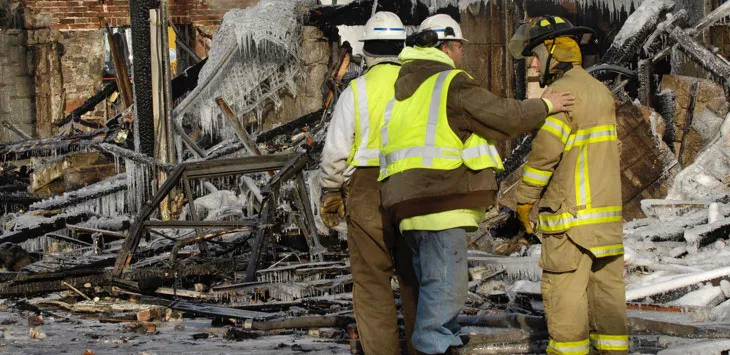
As the first people on the scene, emergency response crews and early response volunteers face an increased risk for asbestos exposure in the wake of a natural disaster because of all the debris. The risk of health effects increases over time and depends upon frequency and amount of exposure to asbestos to these workers.
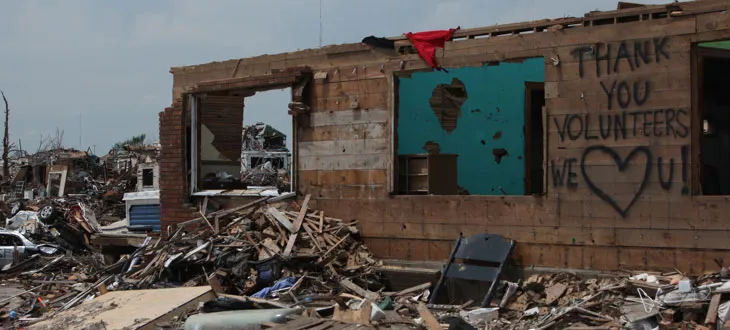
A thank you message for volunteers is written on a wall after a tornado destroyed Joplin, Missouri, in 2011.
Top First Responder Occupations at Risk
Firefighters
Law enforcement officials
Emergency response workers (FEMA, American Red Cross, etc.)
Enlisted military (Coast Guard, Navy, Army, etc.)
Cleanup crew members (private contractors, state and local agencies,volunteers)
Homeowners of damaged properties also face these risks and should alwaysuse caution when cleaning or searching through debris.
Exclusive Content
Karen Selby: The Widespread Use and Hidden Dangers of Asbestos
Asbestos was so widely used because it’s an amazing product.
It’s a God made mineral. It’s it’s a rock, and it has great attributes, it’s a fire retardant, it’s an insulator, and it’s free, it’s a part of the earth. And that’s why it was used in so many products because it was just an amazing product. It was put in so many different things, anything that could potentially catch fire, or anything that, needed to stay insulated or warm, whether it be ceiling tiles or flooring or walls or anything in our homes or anything in the industry.
For example, machines that blow or have a a motor in it are always in insulated with something. So in case it sparks or catches fire, it’s gonna be insulated. Well, back in the day, it was insulated with asbestos products. So if potentially catch fire, it would, you know, put it out because it’s great fire retardant.
The unfortunate thing is it can be a health hazard. It causes cancer, and because it’s a fine rock or mineral, when it becomes disturbed, it becomes airborne. When it becomes airborne, it can be ingested or in inhaled. And oftentimes, if you get an accumulation of inhaling something so microscopic, you can’t see it, it can become a future health hazard.
Products Containing Asbestos
There are dozens of asbestos-containing products in older construction such as single-family homes, apartment complexes, office buildings, churches and schools. These products are considered safe if they are in good condition and left undisturbed in walls, floors and the ceilings and roofs of structures.
But natural disasters pose a threat to these products which can be damaged by winds, fires, floods and earthquakes.
If asbestos-containing materials are suspected during cleanup efforts, experts recommend you leave them alone. Stirring up asbestos-containing debris can result in airborne asbestos fibers, and exposure is highly likely at that point.
Common Household Materials Containing Asbestos
Roofing felt
Pipe lagging
Block insulation
Adhesives
Appliance components
Ceiling products
Cement board
Gardening products
Flooring
Paints
Roofing
Table pads
Wallboard
Insulation
Fireplace decorations
Taping compounds and plasters
Electrical insulation and panels
Heating and cooling systems
Asbestos Exposure Prevention After a Disaster
Different types of natural disasters present a variety of asbestos exposure risks. For example, tornados may carry asbestos debris from one location to another, while floods may contaminate local waterways and neighborhoods with asbestos materials.
Fires present a greater risk to firefighters than other emergency responders. Hurricanes pose a variety of exposure threats from related tornados and flooding.
Consider these tips to minimize asbestos exposure:
If materials must be moved, wet them first so that the fibers are less likely to become airborne. Asbestos abatement contractors will be familiar with proper removal and disposal regulations. In each state, there are regulations that govern the removal and management of asbestos-containing materials after a natural disaster. You can find these requirements by locating the local EPA in your state.
Use only properly fitted NIOSH-Approved, N-100 or P-100 respirators. Do not use basic paper or fiber dusk masks, handkerchiefs or other, lower-grade air respirators, which will provide you with little or no protection from asbestos fibers.
Wet or cover asbestos-related debris to minimize dust, and always wear additional protective gear, such as boots, coveralls and gloves during removal.
Double-bag all building debris.
Enclose the work area with plastic sheeting and duct tape to minimize dust.
Only disturb construction materials that must be removed and minimize any excess breakage to prevent the release of dust and fibers into the air.
Be sure to thoroughly shower and wash once you have completed debris removal to remove any dust and fibers that could become airborne.
It is recommended to properly dispose of your clothes or wear disposable coveralls when handling asbestos materials. Washing clothes covered in asbestos dust or tiny fibers interwoven into the fabric can lead to exposure for you and your family members.
Make a Natural Disaster Emergency Plan for Your Family
People with cancer have more to consider and prepare for when planning for a natural disaster. Having an emergency plan in place that your family is on board with can help considerably when disaster strikes.
It’s also a good idea to talk to your oncologist before developing your plan. Ask for important contact information and steps you should take in case a disaster causes any changes to your treatment schedule.
Your Emergency Plan Should Include:
Where you plan to shelter
Your best evacuation route
How your family plans to communicate
How you’ll care for pets
How you’ll access emergency updates, alerts and warnings
Where safety supplies, such as face masks, gloves and goggles, are stored
Contact information for your oncologist, veterinary office, local police, fire department and utility companies
Email and phone numbers of your family members, neighbors and other important personal contacts
In addition to sharing digital copies of your plan with your family, make sure each person has a printed copy. You may want to share your plan with extended family members and trusted neighbors in case you need to rely on them during or after a disaster.
What to Look for on a NIOSH-Approved Facepiece Respirator
Only a filter rating designation of 100 will protect you against microscopic asbestos fibers in the air. N-100 and P-100 respirators filter at least 99.97% of airborne particles. Filters with the “P” designation are also strongly resistant to oily particles.
These masks will also protect you from other hazards such as mold damage. They can be purchased online or at your local home improvement store. Disposable masks generally cost around $10 each, while half-mask or full-face respirators can be $50 or more.
Respirators Must Contain
Manufacturer’s name
Model number or part number
TC-Approval Number: Required for products manufactured after September 2008
Filter Designation: Must be N-100 or P-100
NIOSH name or logo
Other Protective Equipment You Should Wear During Asbestos Cleanup
Protective clothing, preferably disposable
Helmet to prevent fibers from attaching to hair
Safety glasses or goggles
Safety gloves
Protective boots
Wildfires and Asbestos Exposure
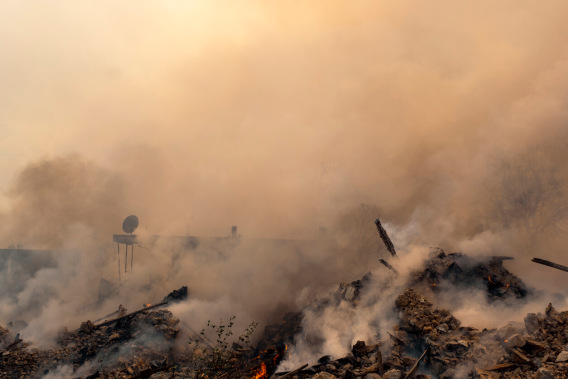
Wildfires pose a threat for asbestos exposure as they move into cities and residential neighborhoods with structures built before 1980, when asbestos was commonly used in construction.
When these structures catch fire, asbestos products become damaged and release carcinogenic fibers that become airborne and transportable in smoke.
According to the Congressional Research Service, there are an average of 67,000 wildfires each year and 7 million acres burned annually. In 2018 alone, more than 58,000 wildfires burned nearly 9 million acres nationwide.
Where Are Wildfires Most Prevalent in the US?
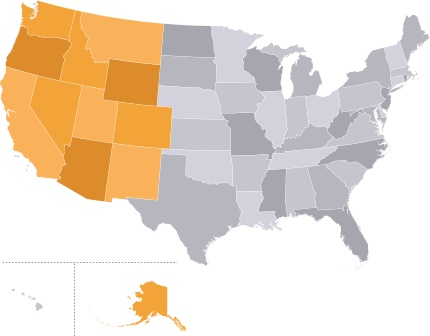
Wildfires most commonly occur in the East, including the central states. However, fires in the West are the largest and burn the most acreage.
States Most Affected by Wildfires
SOURCE: Congressional Research Service, 2019
California
Arizona
Montana
Nevada
Oregon
New Mexico
Idaho
Utah
Washington
Wyoming
Colorado
Alaska
In 2018, 87% of the acreage burned in the East was nonfederal land, while 63% of the acreage burned in the West was on federal land such as national forests and national parks.
Asbestos Exposure Prevention Tips for Wildfires
If there is a wildfire in your area, get to safety right away. Evacuate if you are told to do so and know your community’s evacuation routes.
According to Ready.gov, FEMA’s national public service campaign encouraging Americans to plan ahead for disasters, it recommends using an N-95 mask to prevent breathing in airborne particles. But these masks are not designed to filter finer particles such as asbestos fibers.
Only an N-100 or P-100 respirator will properly filter out tiny asbestos fibers that may be mixed with smoke and ash.
If your home or neighborhood was built before 1980, you are at higher risk of asbestos exposure from a wildfire. But keep in mind that wind can blow smoke, soot and ash for miles, potentially exposing residents in nearby communities to asbestos fibers mixed into these particles.
Helpful Tips Before and During a Wildfire
Have an N-100 or P-100 disposable respirator mask in your emergency supply kit. Make sure you have a mask for yourself and each member of your family. Use these masks when exposed to the wildfire’s smoke and ash.
Designate a room that can be closed from outside air, and make sure all doors and windows are firmly shut.
Have a portable air cleaner or air purifier on hand to keep indoor pollution levels low when smoky conditions exist.
If you are not ordered to evacuate, stay inside in a safe location where smoke levels are minimal.
Cleaning After a Wildfire
Wet down any possible asbestos-containing materials before handling them.
Wear your NIOSH-approved N-100 or P-100 mask at all times.
Seal immobile materials with plastic sheeting and duct tape.
Wet wipe or use a vacuum with a HEPA filter (high-efficiency particulate air filter) on nonmovable objects to keep asbestos from becoming airborne.
Clean up soot and ash using a HEPA vacuum.
Double-bag all debris.
Do not move any damaged construction materials (drywall, flooring, insulation) unless it’s absolutely necessary.
Seek help from a qualified asbestos abatement company if you believe large quantities of asbestos materials were damaged during a fire. These professionals are trained in decontamination and safety procedures.
Health officials are warning Maui residents to exercise caution during cleanup following deadly wildfires as ash and debris may be filled with toxic substances,…
The National Interagency Fire Center is the nation’s support center for wildland firefighting. It has the latest wildfire information, along with safety and training programs.
InciWeb, a product of the National Wildfire Coordinating Group, has an interactive map of wildland fire emergencies and prescribed fires. It also can be used for tracking other natural disasters such as hurricanes and earthquakes.
The Insurance Institute for Business & Home Safety is a nonprofit organization supported solely by property insurers and reinsurers. Its website has helpful tips on protecting your home and business from wildfires, including retrofit guides specific to certain states and regions of the U.S.
Hurricanes present three primary sources of destruction: Powerful winds, storm surge and rain. Storm surges lead to flooding along coastlines, damaging homes, hotels and public spaces. Powerful winds and tornadoes can destroy homes and buildings, while heavy rains cause flash floods.
9,375,000 cubic feet of debris transported from New Orleans homes to nearby landfills following Hurricane Katrina contained asbestos.
Debris can expose homeowners, emergency workers and volunteers participating in the cleanup process to hazardous materials that can contain asbestos. The amount of debris that piles up after a hurricane is significant and can quickly overwhelm a community and breakdown normally strict guidelines for handling hazardous materials.
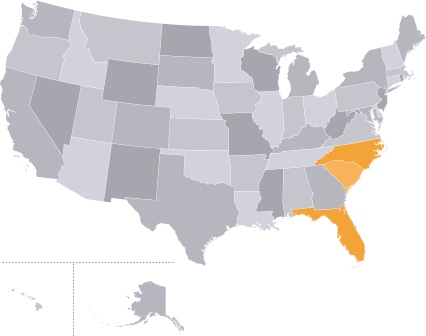
Hurricanes most often impact the East Coast and Gulf Coast of the United States. In 2022, hurricane Ian devastated much of the East Coast between Florida and South Carolina.
States Hit the Most by Hurricanes
SOURCE: National Hurricane Center, 2018
Florida
North Carolina
South Carolina
How to Prevent Asbestos Exposure After a Hurricane
The most important thing you can do to protect yourself from asbestos exposure after a hurricane is to wear safety equipment during cleanup and restoration efforts. This includes a NIOSH-approved N-100 or P-100 respirator and other protective gear such as googles, gloves, boots and disposable coveralls.
Cleaning After a Hurricane
Wet down any debris that may contain asbestos. This is a basic abatement procedure that reduces fiber release. Amended water (water mixed with surfactant chemicals such as dish soap) is often used to wet asbestos-containing materials (ACMs) during repair or removal operations.
Double-bag materials while wet. If ACMs are highly friable, such as attic insulation, it should be sealed in a leak-tight container while wet, labeled and disposed of in a landfill qualified to receive asbestos waste.
Wear a NIOSH-approved respirator mask at all times and use a vacuum with a HEPA filter to clean up dust, ash and other particulate matter.
Resources for Hurricane Safety
The Federal Emergency Management Agency’s (FEMA) Ready.gov/hurricanes has information on preparing for and surviving a hurricane.
The National Hurricane Center has live tracking of tropical depressions, tropical storms and hurricanes for the Atlantic, Eastern North Pacific and Central Pacific regions.
FEMA’s recovery resources page includes tools to help you find short- and long-term shelter options and locate Disaster Recovery Centers near you.
States heavily affected by hurricanes have dedicated websites for storm planning. The Florida Division of Emergency Management allows you customize your own family or business emergency plan, while the North Carolina Department of Public Safety has specific information for residents on what to do before, during and after a hurricane.
How to Prevent Asbestos Exposure from Other Disasters
While wildfires and hurricanes pose high risks for asbestos exposure, so do other natural disasters such as floods, tornados and earthquakes.
The key concern is the damage these disasters can cause to older homes, buildings and other structures containing asbestos materials such as drywall, insulation, floor tile and sheet roofing.
Knowing how to protect yourself and your family from asbestos during and after these natural disasters is essential to your long-term health.
Floods
Asbestos was used in more than 3,000 construction materials and manufactured products and was used as a part of new home construction or remodeling until 1980.
A home affected by flood waters becomes a source of asbestos exposure because damaged flooring, drywall and ceilings may contain asbestos. Water can damage even the strongest structures and disturb asbestos products in ways that release fibers when the material dries.
Aerial photo of flooding after Hurricane Harvey, which made landfall in parts of Louisiana and Texas in 2017.
Naturally Occurring Asbestos and Flooding
Floods can also disturb naturally occurring asbestos deposits. Asbestos fibers from natural deposits are easily carried by flood waters into communities and local water sources.
For example, in parts of the North Cascades in Washington, the toxic mineral was released by a slow-moving landslide and then was carried into the Swift River. When the river flooded, asbestos fibers were deposited into residents’ yards and homes.
Demolition and Cleanup After Floods
For severely damaged structures built before 1980, demolition should only be performed by individuals who are trained in the asbestos NESHAP regulations. A MDEQ-certified asbestos abatement supervisor should be on-site or available by phone to provide guidance and assistance.
All demolition workers should use equipment specifically designed to protect them from asbestos exposure during demolition and handling of debris, especially respirators that are required by OSHA regulations. It is recommended to wet the structure, and, if the walls are still standing, they should be wrapped to confine the asbestos particles.
Resources for Flood Planning and Flood Victims
The U.S. Geological Survey tracks flood conditions and data nationwide. The site includes interactive maps and visualizations on current floods, high-flow conditions and regional and local flood alerts.
In addition to preparation tips, the CDC has an Emergency Water Supply Planning Guide and information for emergency responders.
The American Red Cross’ flood safety page has information on what to do before, during and after a flood as well as a flood safety checklist.
Tornados
Tornadoes can destroy property and potentially cause exposure to asbestos among people who clean up the debris. The EPA and several state-affiliated departments of health and natural resources have issued guidelines for effective management of asbestos building debris to minimize exposure.
A disaster area with a tornado in the background. An average of 1,253 tornadoes occur in the United States each year, according to the National Oceanic and Atmospheric Administration.
Cleaning After a Tornado
Soak all suspected asbestos-containing materials in water mixed with surfactant chemicals (amended water). This will help reduce the amount of airborne fibers.
Wear a NIOSH-approved N-100 or P-100 respirator mask at the disaster site.
Contact the local EPA in your state and let them know if you believe the tornado has led to widespread asbestos contamination.
Resources for Tornado Safety and Response
OSHA provides a directory of resources, including a tornado safety checklist from the American Red Cross and a Demolition Safety QuickCard.
The National Weather Service details the difference between a tornado watch and a tornado warning and provides links to current tornado alerts in your area.
Earthquakes
Earthquakes are the vibrations caused by blocks of earth breaking and moving under stress. They strike suddenly, and often create significant damage to buildings and can also trigger tsunami waves that damage coastal communities.
In the U.S., earthquakes can strike any location at any time. However, most occur along the West Coast, primarily in California, according to the U.S. Geological Survey.
A sign along the San Andreas Fault in Bodega, California, warns of a possible tsunami in the event of an earthquake.
Asbestos Risks During Earthquake Cleanup
During cleanup of damaged and destroyed buildings after an earthquake, it is likely that there will be a need to handle, break up and dispose of asbestos-containing materials.
Much of this work may be undertaken by temporary laborers, volunteers and local residents who are unaware of the hazards of asbestos and who may be unable to identify asbestos products.
It is unlikely that the workers will initially be provided with appropriate personal protective equipment. Many people will also be unaware of abatement methods for the proper cleanup and removal of asbestos materials.
As a result of the cleanup operations, there may be an accumulation of asbestos-containing waste that will present a hazard to people in thelocal environment and those living in close proximity to the site offinal disposal.
Key Takeaways and Resources
It is important to be prepared and have a safety plan in place in the event natural disasters strike. But the after effects of these disasters are also a cause for concern.
The most important thing you can do to prevent asbestos exposure following a natural disaster is to have protective equipment on hand in an emergency response kit. This includes a NIOSH-approved N-100 or P-100 respirator for everyone in your household.
Secondly, remember this rule: If you’re not sure, don’t mess with it. When cleaning up after a wildfire or storm, always use caution.
Even with a protective mask, asbestos exposure can occur from fibers sticking to your clothes and exposing yourself or your family after cleanup efforts. Fibers could potentially be inhaled or ingested if your mask isn’t fitted properly.
If you know the cleanup site has damaged asbestos products, it is recommended to get the help of asbestos abatement professionals to remove and dispose of the materials safely and under EPA regulations.
Emergency Resources and Contacts
You can also contact these national emergency response organizations for help:
Your web browser is no longer supported by Microsoft. Update your browser for more security, speed and compatibility.
If you are looking for mesothelioma support, please contact our Patient Advocates at (855) 404-4592
Fact Checked
Our fact-checking process begins with a thorough review of all sources to ensure they are high quality. Then we cross-check the facts with original medical or scientific reports published by those sources, or we validate the facts with reputable news organizations, medical and scientific experts and other health experts. Each page includes all sources for full transparency.
Reviewed
Asbestos.com is the nation’s most trusted mesothelioma resource
The Mesothelioma Center at Asbestos.com has provided patients and their loved ones the most updated and reliable information on mesothelioma and asbestos exposure since 2006.
Our team of Patient Advocates includes a medical doctor, a registered nurse, health services administrators, veterans, VA-accredited Claims Agents, an oncology patient navigator and hospice care expert. Their combined expertise means we help any mesothelioma patient or loved one through every step of their cancer journey.
More than 30 contributors, including mesothelioma doctors, survivors, health care professionals and other experts, have peer-reviewed our website and written unique research-driven articles to ensure you get the highest-quality medical and health information.
About The Mesothelioma Center at Asbestos.com
Assisting mesothelioma patients and their loved ones since 2006.
Helps more than 50% of mesothelioma patients diagnosed annually in the U.S.
A+ rating from the Better Business Bureau.
5-star reviewed mesothelioma and support organization.
My family has only the highest compliment for the assistance and support that we received from The Mesothelioma Center. This is a staff of compassionate and knowledgeable individuals who respect what your family is experiencing and who go the extra mile to make an unfortunate diagnosis less stressful. Information and assistance were provided by The Mesothelioma Center at no cost to our family.
Whitmer, M. (2026, January 28). Asbestos and Natural Disasters Guide. Asbestos.com. Retrieved June 8, 2026, from https://www.asbestos.com/asbestos/natural-disasters/
MLA
Whitmer, Michelle. "Asbestos and Natural Disasters Guide." Asbestos.com, 28 Jan 2026, https://www.asbestos.com/asbestos/natural-disasters/.
Chicago
Whitmer, Michelle. "Asbestos and Natural Disasters Guide." Asbestos.com. Last modified January 28, 2026. https://www.asbestos.com/asbestos/natural-disasters/.
Scientifically Reviewed & Fact-Checked
An occupational scientist or another expert who specializes in occupational hazards reviewed the content on this page to ensure it meets current scientific standards and accuracy.
Arti Shukla, Ph.D., is an internationally renowned asbestos researcher known for her achievements in identifying biomarkers that cause mesothelioma. She is the director of the Shukla Research Lab, as well as a professor of pathology at The University of Vermont Larner College of Medicine.
Fact-checked and verified content:
Our fact-checking process begins with a thorough review of all sources to ensure they are high quality. Then we cross-check the facts with original medical or scientific reports published by those sources, or we validate the facts with reputable news organizations, medical and scientific experts and other health experts. Each page includes all sources for full transparency.
Please read our editorial guidelines to learn more about our content creation and review process.