Moffitt Takes Aim at Lung Cancer Screening Gap With Mobile Program
Treatment & Doctors
Written by Travis Rodgers | Edited by Amy Edel
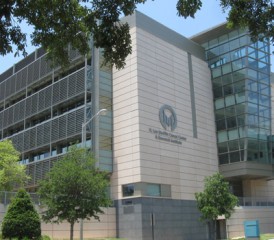
Only about 16% of people eligible for lung cancer screening undergo the annual low-dose CT scan, according to Moffitt Cancer Center. The low screening rate leaves many people at risk of lung cancer without the benefit of early detection.
Moffitt launched its mobile lung screening program in late 2024 to address some of the barriers that keep people from getting screened. The program takes low-dose CT scans directly into Florida communities, with a focus on current and former smokers, rural residents, medically underserved populations and people who face transportation challenges.
Since its launch, the mobile unit has held more than 70 community screening events across at least seven Florida counties and screened more than 500 people. Those numbers reflect the program’s growing reach, according to Michelle Smith, manager of Moffitt’s Mobile Lung Screening Program.
The program’s next stop is Lakeland, Florida, on Saturday, Nov. 14. The Mesothelioma Center at Asbestos.com is sponsoring the event at Lakeland Harley-Davidson, 4202 Lakeland Hills Blvd., where Moffitt expects to screen at least 15 people. Appointments remain available from 7 a.m. to 5 p.m.
Who Should Consider Lung Cancer Screening?
Moffitt recommends annual low-dose CT scans for people at high risk of lung cancer. Its current screening criteria include adults who are at least 50 years old, currently smoke or formerly smoked and have a smoking history of at least 20 pack-years. They must also have no symptoms of lung cancer.
A pack-year measures cumulative cigarette use over time. To calculate it, multiply the number of packs smoked each day by the number of years a person smoked. For example, someone who smokes one pack a day for 20 years has a 20 pack-year history.
Smoking isn’t the only risk factor for lung cancer. Asbestos exposure also increases risk, and asbestos-related lung cancer can develop decades after someone encounters the mineral. People with both a smoking history and past asbestos exposure face a substantially higher risk than those with either risk factor alone.
Asbestos exposure has occurred in many occupations and military settings. Firefighters, military service members, miners, plumbers, construction workers, shipbuilders, insulation installers and industrial workers can encounter asbestos in buildings, equipment, machinery and other materials. Anyone with a history of occupational or military exposure should share those details with a doctor, who can evaluate their individual risk and discuss appropriate monitoring or screening.
What to Expect From a Lung Cancer Screening
Medicare and most private insurance plans cover lung cancer screening for people who meet eligibility requirements. However, Smith says a lack of insurance doesn’t necessarily prevent someone from getting screened.
“For those without health insurance, we offer no-cost screenings ensuring that lack of insurance is not a barrier to screening,” Smith tells us. Moffitt also operates a Lung Screening Access Program for some uninsured Florida residents who meet its screening and income requirements.
The screening process takes relatively little time. Moffitt says a typical visit to the mobile unit takes about 10 to 15 minutes, while the low-dose CT scan itself takes about a minute. Patients typically receive their results within 5 to 10 business days.
Mobile Screening Program Reaches Across West-Central Florida
Moffitt Cancer Center launched its mobile lung screening program in late 2024 to bring low-dose CT scans closer to people who may have difficulty reaching traditional screening locations. The unit became Florida’s first mobile lung cancer screening vehicle equipped with a low-dose CT scanner.
Since launching the program, Moffitt has held more than 70 community screening events across at least 7 Florida counties and screened more than 500 people, Smith shares. The program reaches communities in Citrus, Hernando, Hillsborough, Pasco, Pinellas, Polk and Manatee counties, spanning west-central Florida from the Nature Coast to the Tampa Bay area and south toward the Gulf Coast.
Moffitt’s team typically holds community screening events about 3 days a week, with capacity for approximately 15 screenings at each event. Smith says the program prioritizes current and former smokers, rural residents, medically underserved populations and people who face transportation or other barriers to cancer screening.
Awareness remains another obstacle, even for people who meet screening guidelines. “One of the biggest gaps we see is awareness,” Smith explains. “Many eligible individuals simply don’t know that lung cancer screening exists or that they qualify for it.”
Moffitt’s team also works to identify eligible residents before bringing the unit to a community. “Before every event, our team conducts community outreach and education, identifies eligible individuals, and pre-registers participants whenever possible,” Smith says. “Bringing the mobile unit directly into the community removes transportation and access barriers while meeting people where they live, work, and gather.”
Lakeland Screening Comes as Moffitt Plans Polk County Expansion
Moffitt’s mobile screening event comes as the cancer center makes plans for a larger presence in Lakeland and Polk County. In February 2026, Moffitt announced plans to build a new outpatient center on 34 acres along Bartow Road in Lakeland. Construction is expected to begin in 2027, with the center scheduled to open in 2029.
The planned facility will offer cancer screening, diagnostic imaging, laboratory services, infusion treatment, medical oncology, radiation therapy and clinical trials. Moffitt expects the Lakeland location to become its Central Florida Campus.
Smith says community screening events support Moffitt’s broader effort to make cancer prevention and early detection more accessible throughout Florida. “Events like this align with Moffitt’s ongoing commitment to expanding access to prevention, early detection, and cancer care throughout Florida,” Smith says. “By bringing mobile lung cancer screening services directly into communities like Lakeland, we are helping extend access to care and reaching high-risk individuals who might otherwise go unscreened.”