

Based on Your Reading:
Get Your Free Mesothelioma Guide

Find a Top Mesothelioma Doctor

Access Help Paying for Treatment

Libby, Montana, is the site of one of America's worst man-made environmental disasters. Toxic asbestos dust from the vermiculite mines that helped the town prosper for decades has killed hundreds of residents, sickening thousands more. Victims continue to surface.

Written by Michelle Whitmer | Scientifically Reviewed by Arti Shukla | Edited by Walter Pacheco | Last Update:

The story traces back to 1919 when companies first started mining vermiculite ore in Libby, Montana.
Vermiculite is a naturally occurring mineral with heat-resistant properties. Vermiculite and asbestos form under similar conditions. The two minerals sometimes develop alongside each other, and asbestos contaminated Libby’s vermiculite deposit.
Libby vermiculite, known commercially as Zonolite, was used in a variety of construction materials, including insulation for homes and buildings. Decades of mining exposed workers and residents of Libby and Troy, a nearby town, to toxic asbestos.
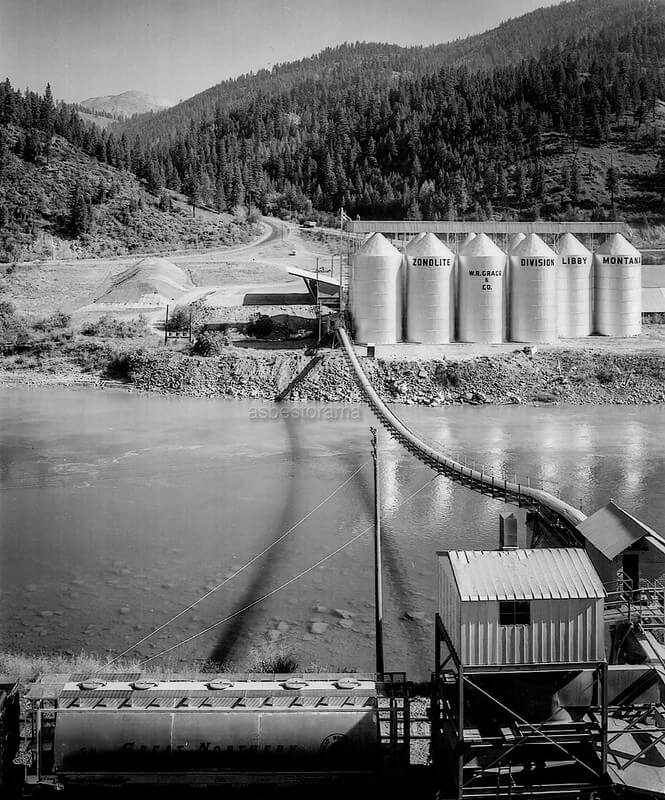
When W.R. Grace & Company took over operation of the mines in 1963, it knew the vermiculite was contaminated with asbestos and that it caused health complications. The company didn’t warn anyone about the asbestos exposure, and mining continued until 1990.
An estimated 694 Libby residents have died of asbestos-related diseases, according to a 2021 study published in the Journal of Exposure Science and Environmental Epidemiology. The study also reported a 15-fold increased risk of mesothelioma among W.R Grace workers compared to residents who didn’t work around the mine.
At least 1 in 10 people in Libby currently have an asbestos-related illness, according to the Center for Asbestos Related Disease in Libby. In addition to the hundreds of residents who have died, approximately 2,400 have been diagnosed with asbestos-related diseases since the contamination began.
The Seattle Post-Intelligencer newspaper ran a series of articles about Libby in 1999 that gained national attention. The U.S. Environmental Protection Agency stepped in that year and began to clean up the town in 2000.
In 2009, the agency declared a public health emergency in Libby and called it the worst case of industrial poisoning of a community in U.S. history. It was the first and only time the agency announced a public health emergency, which provided extra funding for health care for residents.
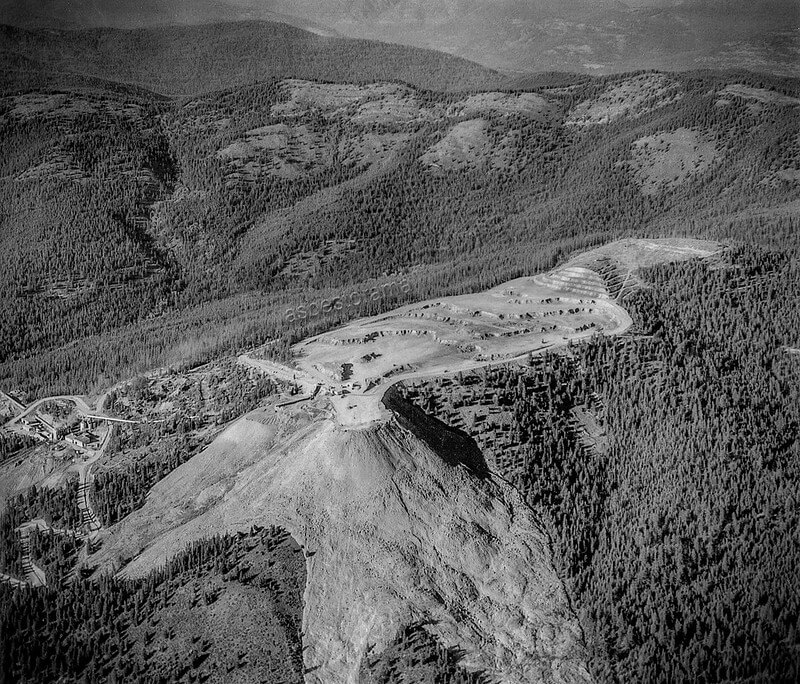
Cleanup in Libby is the largest, longest-running asbestos cleanup project in American history. It began slowly at first as workers from the U.S. Environmental Protection Agency identified the sources of contamination and began an extensive Superfund investigation.
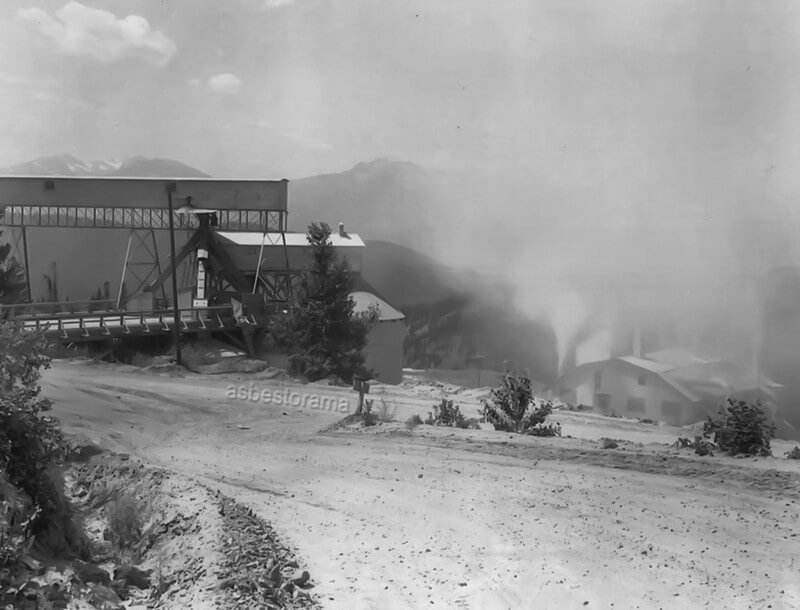
It was unlike any project the agency had ever seen. Libby homes and businesses needed asbestos-contaminated vermiculite removal, and the mine site needed attention to prevent further issues. Contamination of natural resources demanded a large-scale investigation as well. Libby was finally placed on the EPA’s Superfund list in 2002.
In 2008, W.R. Grace was ordered to provide $250 million to cover future cleanup costs. By 2018, the agency’s cleanup efforts finally began to wind down.
In 2023, Grace agreed to an $18.5 million settlement to restore damaged lands in and around the Superfund site.
The EPA investigated more than 8,200 properties and completed cleanups at more than 2,600 sites, including businesses, yards, homes, parks and other contaminated areas.
Over a million cubic yards of dirt and building materials were removed and replaced. More than $600 million of federal money was spent during the decontamination efforts.
In September 2021, the agency announced that another major section of the sprawling restoration effort had been completed. The area was identified as Operable Unit 8 and included all roadways and major highways in and between Libby and Troy.
The agency transferred oversight and responsibility for much of the project to the Montana Department of Environmental Quality on July 1, 2020. Only the actual mine site remains under the EPA’s oversight.
Get Your Free Mesothelioma Guide
Find a Top Mesothelioma Doctor
Access Help Paying for Treatment
Vermiculite mining in Libby began when E.N. Alley bought the Rainy Creek mining claims in 1919 and launched Zonolite Company. In 1963, Maryland-based W.R. Grace & Company acquired Alley’s Zonolite business. By this time, vermiculite had been mined for more than 40 years approximately seven miles outside of Libby.
Before Grace took over ownership of the mine, employees had developed lung problems and several fatalities were reported. Despite these health issues, the company claimed it was “unaware of the hazards of mining and milling vermiculite” when it purchased the business.
Evidence revealed in court showed W.R. Grace executives knew about the mine’s high level of tremolite asbestos dust and that exposure to the dust was damaging to the lungs, yet they never said anything to their employees.

Townspeople were also affected by the asbestos-tainted vermiculite because Grace distributed its leftover vermiculite for use in playgrounds, backyards, gardens, roads, driveways and other popular locations in the town.
While asbestos was circulating in the air around the mine, it also was found in baseball fields and other areas where children and citizens commonly spent their time.
In 2003, researchers determined the vermiculite was contaminated with one regulated and two unregulated forms of amphibole asbestos.
Tremolite is the regulated form, which is considered highly carcinogenic and made up 6% of the ore. The two unregulated types were winchite and richterite, which made up 84% and 11% of the ore, respectively. Collectively, they’ve been referred to as Libby amphiboles.
Researchers believe Libby amphiboles have led to some residents developing a type of pleural disease called lamellar pleural thickening, which is pleural thickening that develops parallel to the ribs.
By 2010, physicians at the Center for Asbestos Related Disease had diagnosed asbestos-related pleuropulmonary disease in 1,883 people, which was 47% of the 4,028 people who had received screenings. By 2022, the center had diagnosed more than 2,400 residents around Libby with asbestos-related diseases.
An acclaimed health clinic in a small Montana mining town known for treating asbestos patients has been ordered to pay almost $6 million in…

Thousands of Libby residents and former W.R. Grace & Company mine workers have filed lawsuits against Montana state agencies for failure to warn them of the dangerous asbestos contaminating the vermiculite mine. Several major group payouts have compensated affected Libby residents.
Individual lawsuits against insurers began reaching resolution in 2022. Claims against insurers became possible after a Montana Supreme Court decision in March 2020 ruled insurers are no longer protected by W.R. Grace’s bankruptcy plan, which it filed in 2001.
Montana agencies continue to claim that the state had no legal obligation to provide warning of the mine’s dangers.
Today, Libby is considered safe by the U.S. Environmental Protection Agency. According to the agency, the amount of asbestos in downtown Libby is now nearly 100,000 times lower than when the mine was operating.
Recommended ReadingYour web browser is no longer supported by Microsoft. Update your browser for more security, speed and compatibility.
If you are looking for mesothelioma support, please contact our Patient Advocates at (855) 404-4592
The Mesothelioma Center at Asbestos.com has provided patients and their loved ones the most updated and reliable information on mesothelioma and asbestos exposure since 2006.
Our team of Patient Advocates includes a medical doctor, a registered nurse, health services administrators, veterans, VA-accredited Claims Agents, an oncology patient navigator and hospice care expert. Their combined expertise means we help any mesothelioma patient or loved one through every step of their cancer journey.
More than 30 contributors, including mesothelioma doctors, survivors, health care professionals and other experts, have peer-reviewed our website and written unique research-driven articles to ensure you get the highest-quality medical and health information.
My family has only the highest compliment for the assistance and support that we received from The Mesothelioma Center. This is a staff of compassionate and knowledgeable individuals who respect what your family is experiencing and who go the extra mile to make an unfortunate diagnosis less stressful. Information and assistance were provided by The Mesothelioma Center at no cost to our family.LashawnMesothelioma patient’s daughter


Whitmer, M. (2024, April 24). Libby. Asbestos.com. Retrieved October 22, 2026, from https://www.asbestos.com/jobsites/libby/
Whitmer, Michelle. "Libby." Asbestos.com, 24 Apr 2024, https://www.asbestos.com/jobsites/libby/.
Whitmer, Michelle. "Libby." Asbestos.com. Last modified April 24, 2024. https://www.asbestos.com/jobsites/libby/.
An occupational scientist or another expert who specializes in occupational hazards reviewed the content on this page to ensure it meets current scientific standards and accuracy.

Arti Shukla, Ph.D., is an internationally renowned asbestos researcher known for her achievements in identifying biomarkers that cause mesothelioma. She is the director of the Shukla Research Lab, as well as a professor of pathology at The University of Vermont Larner College of Medicine.
Our fact-checking process begins with a thorough review of all sources to ensure they are high quality. Then we cross-check the facts with original medical or scientific reports published by those sources, or we validate the facts with reputable news organizations, medical and scientific experts and other health experts. Each page includes all sources for full transparency.
Please read our editorial guidelines to learn more about our content creation and review process.

