Appliance technicians could be exposed to asbestos when installing and repairing home appliances. An asbestos plastic resin known as Bakelite, for example, was used in appliances and countertops, which may have to be cut for new appliance installations. This could expose workers.
Quick Facts About Appliance Technicians and Asbestos
Asbestos-Related Disease Risk:
Low
States with Highest Employment:
Texas, California, Florida, Michigan, Illinois
How Appliance Technicians Were Exposed to Asbestos
While the current risk of asbestos exposure to appliance installers and repairers is low, it is not zero because asbestos materials remain in old appliances and older homes. New appliances made in the U.S. are not made with asbestos, but appliances manufactured in other countries may contain it. No U.S. government agency is testing imported appliances for the presence of asbestos.
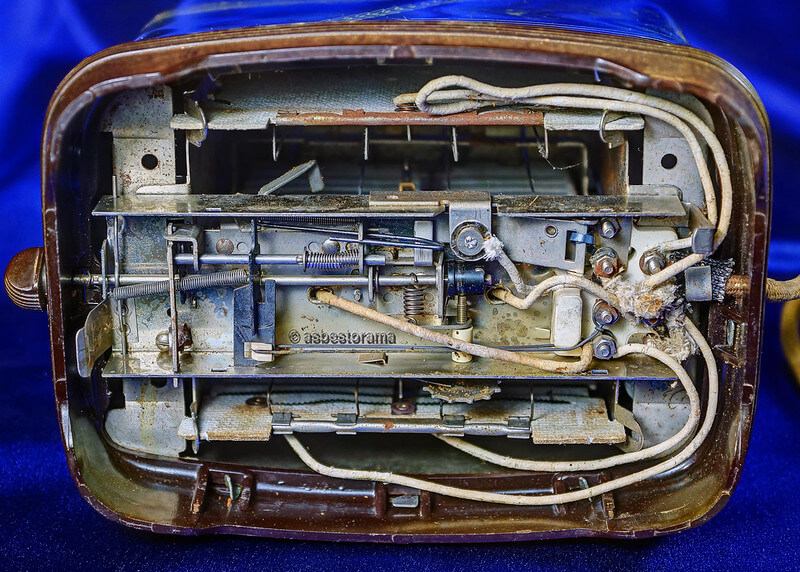
This old toaster contained asbestos insulation panels, asbestos-insulated wires and Bakelite knobs and trim.
In 2016, the Journal of the Air & Waste Management Association published a Korean study of asbestos in appliances. The researchers investigated 414 appliances manufactured between 1986 and 2007. They detected asbestos in many large home appliances such as refrigerators and washing machines.
In 2007, the Asbestos Disease Awareness Organization presented the findings of a study conducted in the U.S. by Scientific Analytical Institute Inc. that examined over 250 products in everyday use that were suspected to contain asbestos. It found asbestos in 18 of those products, including household appliances from China. The items were purchased at national retailers during the year and a half before the testing began.
After the presence of asbestos was confirmed in these products, Sean Fitzgerald, president of Scientific Analytical Institute Inc., noted that based on the findings of this limited study, more comprehensive testing for asbestos in routine products was necessary. While the U.S. Food and Drug Administration is currently testing talc products for asbestos contamination, no other products are being routinely tested.
When technicians remodel a space to accommodate an appliance that generates a high amount of heat, they often cut away existing walls that may contain asbestos insulation. Frequently, the special heat-resistant flooring on which ovens and dryers were installed included asbestos to reduce the risk of fire.
Phenolic molding compound, manufactured under the brand name Bakelite, was a plastic resin that contained chrysotile asbestos. It was prized for its thermal and electrical insulation properties. It was not only used in the appliances themselves, but also as wall moldings that would have to be removed when an appliance installer was reshaping a space for a large appliance.
Asbestos Products Associated with Appliance Technicians
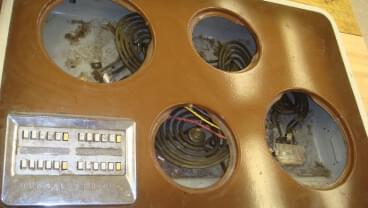
Asbestos wiring was used in this vintage General Electric stovetop.
Asbestos in appliances was used to prevent fires, control heat levels and reduce chemical corrosion. It was primarily used to insulate all parts of appliances and their electrical wiring.
Asbestos insulation was used in old oven doors, paneling, seals and wire wrapping. Installation posed a low risk of exposure if the installer didn’t have to cut asbestos flooring to install the appliance. Repairing asbestos-containing ovens posed a moderate risk and released asbestos fibers into the home. While asbestos could be found in home ovens before the 1980s, it was more commonly used in industrial and laboratory ovens. Asbestos cement slabs were used in bakery and laboratory ovens, and some of these may still be in use in laboratories and industrial and commercial settings.
Old refrigerators and freezers contained asbestos wiring and insulation. Installation in newer homes poses a low exposure risk, but cutting asbestos flooring in older homes for installation purposes poses a higher risk. In-home repairs present a moderate asbestos exposure risk. Cutting asbestos wires and insulation could release asbestos fibers into the air, which could travel throughout the home.
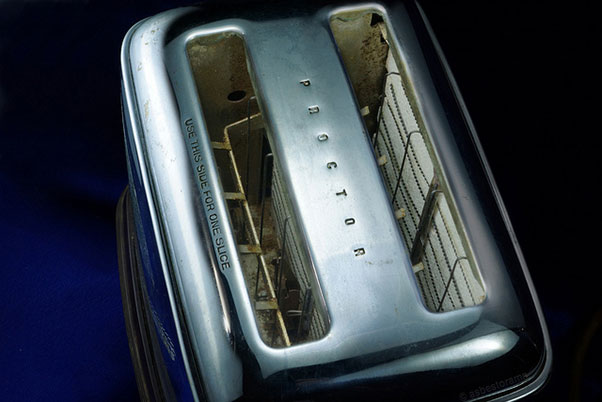
Proctor Electric Company made a toaster containing asbestos insulation.
Other large appliances, such as water heaters and washing and drying machines, contained asbestos insulation. Water heaters may contain asbestos in the insulating materials located inside the metal cover. Washers and dryers may have contained asbestos wiring and panels.
Small appliances, including toasters, bottle warmers, popcorn poppers, slow cookers and portable heaters, may contain parts made with asbestos depending on the age of the appliance. Some older portable heaters that contain coil-wrapping and insulation made from asbestos may still be in use. Appliance repair technicians dismantling old appliances remain at risk of exposure to asbestos, but the risk is low.
Manufacturers Who Made Products Appliance Installers Encounter
Companies that manufactured asbestos-containing appliances include:
Conair: Conair manufactured an asbestos-containing hair dryer that was recalled in 1979.
Electrolux: Electrolux claims its asbestos litigation results from externally sourced asbestos components used on appliances they manufactured before the early 1970s.
General Electric: GE made furnaces, stovetops and the Wil-Son Patent-Flex infrared oven with asbestos materials.
Gillette: Gillette made an asbestos hair dryer that was also recalled in 1979.
Proctor Electric Company: This company made a toaster containing asbestos insulation.
Sunbeam: Sunbeam also made an asbestos hair dryer that was recalled in 1979.
Union Carbide Corporation: Union Carbide produced Bakelite, which was a type of asbestos plastic used to make knobs, trim and other parts for appliances.
Whirlpool: Whirlpool made an asbestos washer used in oven doors.
Appliance Technicians and Asbestos-Related Diseases
According to a 2022 report by the European Commission, over 70,000 workers died in 2019 from past exposure to asbestos.
Appliance installers, repairers and technicians are at risk of developing asbestos-related diseases, including:
Benign pleural diseases such as pleural plaques and pleuritis
Appliance technicians may reduce their risk of occupational asbestos exposure by wearing personal protective equipment while repairing older appliances and working in older homes. It is important to learn about the types of asbestos products you may encounter to avoid exposure. Notify your employer if you suspect asbestos is present in an old appliance or home and request proper protection.
If you believe you were exposed to asbestos working on appliances, you should notify your doctor to talk about asbestos cancer screenings. Diagnosing these diseases early and seeking treatment with a specialist offers the best chance of long-term survival.
$30B+ IN TRUST FUNDS AVAILABLE
Find the Right Attorney for You
When filing a mesothelioma claim, the right legal representation is everything. We’ll connect you to a top lawyer who will help you secure financial compensation.
Compensation for Appliance Installers Exposed to Asbestos
Appliance installers and technicians have sued asbestos manufacturers after developing asbestos-related diseases, including mesothelioma and lung cancer. Personal injury lawsuits and wrongful death lawsuits filed by workers and their loved ones have resulted in compensation to cover medical costs and lost wages.
For example, appliance manufacturer Electrolux reported in December 2020 that it has 3,403 pending asbestos lawsuits. The company faced 930 new asbestos lawsuits in 2020 alone and resolved 1,424 asbestos claims that same year.
Some appliance technicians may also qualify to file claims with asbestos trust funds. Many asbestos-containing product manufacturers filed for bankruptcy protection under the weight of asbestos litigation. As part of their bankruptcy reorganization plans, they had to establish trust funds to compensate future victims.
A qualified mesothelioma attorney has the expertise to review your case and advise you on the types of claims you are eligible to file. You may be eligible to file multiple claims depending upon your exposure history.
Daniel and Mary Cain, John and Becky Cain, and Vincent and Kathleen Becker filed asbestos-related products liability claims against General Electric. The company manufactured, distributed and installed asbestos-containing products.
Whirlpool made an asbestos washer to be used in oven doors.
Sunbeam, Conair Corp. and Gillette Co. manufactured asbestos-containing hair dryers that were recalled in 1979.
Recommended Reading
Your web browser is no longer supported by Microsoft. Update your browser for more security, speed and compatibility.
If you are looking for mesothelioma support, please contact our Patient Advocates at (855) 404-4592
Fact Checked
Our fact-checking process begins with a thorough review of all sources to ensure they are high quality. Then we cross-check the facts with original medical or scientific reports published by those sources, or we validate the facts with reputable news organizations, medical and scientific experts and other health experts. Each page includes all sources for full transparency.
Reviewed
Asbestos.com is the nation’s most trusted mesothelioma resource
The Mesothelioma Center at Asbestos.com has provided patients and their loved ones the most updated and reliable information on mesothelioma and asbestos exposure since 2006.
Our team of Patient Advocates includes a medical doctor, a registered nurse, health services administrators, veterans, VA-accredited Claims Agents, an oncology patient navigator and hospice care expert. Their combined expertise means we help any mesothelioma patient or loved one through every step of their cancer journey.
More than 30 contributors, including mesothelioma doctors, survivors, health care professionals and other experts, have peer-reviewed our website and written unique research-driven articles to ensure you get the highest-quality medical and health information.
About The Mesothelioma Center at Asbestos.com
Assisting mesothelioma patients and their loved ones since 2006.
Helps more than 50% of mesothelioma patients diagnosed annually in the U.S.
A+ rating from the Better Business Bureau.
5-star reviewed mesothelioma and support organization.
My family has only the highest compliment for the assistance and support that we received from The Mesothelioma Center. This is a staff of compassionate and knowledgeable individuals who respect what your family is experiencing and who go the extra mile to make an unfortunate diagnosis less stressful. Information and assistance were provided by The Mesothelioma Center at no cost to our family.
Whitmer, M. (2026, February 12). Appliance Technicians and Asbestos. Asbestos.com. Retrieved September 28, 2026, from https://www.asbestos.com/occupations/appliance-installers/
MLA
Whitmer, Michelle. "Appliance Technicians and Asbestos." Asbestos.com, 12 Feb 2026, https://www.asbestos.com/occupations/appliance-installers/.
Chicago
Whitmer, Michelle. "Appliance Technicians and Asbestos." Asbestos.com. Last modified February 12, 2026. https://www.asbestos.com/occupations/appliance-installers/.
My primary support since being diagnosed with Mesothelioma, over 2 years ago, has been this company. Their monthly nationwide support group has been a tremendous help for me. I have learned about others' treatments and have been able to freely discuss mine, knowing others walk the same walk as I do and fully understand. Karen Selby, the nurse and patient advocate, has helped me so much. I call her and she delivers. She's experienced in Thoracic surgeries, is supportive, kind, knowledgeable, and makes a patient feel very cared for! The whole staff are polite, caring, and will help with Mesothelioma victims' many needs. I feel very blessed to have this Organization by my side as I live with this cancer.
I found out about The Mesothelioma Center while researching Peritoneal Mesothelioma days after being diagnosed with malignant cancer. While a lot of the 'Mesothelioma' websites are actually law firms just trying to get your business, theirs is a user-friendly, comprehensive website set up to aid patients, their loved ones, and/or caregivers with all things related to a cancer diagnosis from asbestos exposure. I was soon put in touch with one of their doctors, Snehal Smart, M.D., who immediately sent me a packet of general information, a book on surviving Mesothelioma, and offered me assistance in finding doctors, reputable law firms, financial help, support groups, and so much more! The Mesothelioma Center's website is, in my opinion, the best resource for anyone suffering from cancer due to asbestos. Dr. Smart is amazing! She is very knowledgeable and helpful, but she is also a very kind, caring doctor who appears to go the distance whether she is researching a pertinent topic, making suggestions, providing contacts, or just being a good listener on the other end of the phone. In addition, Dr. Smart referred me to a law firm who is now fighting to get me compensation for the negligence of those defendants whose products exposed me to asbestos and caused my subsequent cancer. Thank you, TMC and Dr. Smart, for helping me determine the best treatment plan for my cancer and being part of my miracle. I am currently cancer-free and back to being a mom to my precious daughter. The Mesothelioma Center, their website, and their staff rock!!
I just want to take this time to thank Mesothelioma Center for all the information you provide. The survival stories are inspiring and give hope where hope is needed! Thanks to you, I have met many others on the site and continue to converse with them. Keep up the good work. I am always looking forward to your posts! Thank you, Richard Delisle.
My brother was recently diagnosed with mesothelioma. I began researching it online. The information I received from The Mesothelioma Center is all-inclusive. No need to look anywhere else! The first phone call was with Karen, and she answered all my questions with ease. She also had a calming effect by presenting all the options available for my brother and his family. Thank you!
My father was recently diagnosed with mesothelioma. We, as a family, were devastated. We were uncertain where to even start, so we reached out to The Mesothelioma Center. They were absolutely amazing. They provided physicians in our area who specialize in this type of cancer because it is so rare. They also set us up with a firm who specializes in getting funds that are set aside to help with our medical bills. I’m so glad we made the phone call. They were very knowledgeable, supportive, sincere, and true patient advocates.
An occupational scientist or another expert who specializes in occupational hazards reviewed the content on this page to ensure it meets current scientific standards and accuracy.
Arti Shukla, Ph.D., is an internationally renowned asbestos researcher known for her achievements in identifying biomarkers that cause mesothelioma. She is the director of the Shukla Research Lab, as well as a professor of pathology at The University of Vermont Larner College of Medicine.
Fact-checked and verified content:
Our fact-checking process begins with a thorough review of all sources to ensure they are high quality. Then we cross-check the facts with original medical or scientific reports published by those sources, or we validate the facts with reputable news organizations, medical and scientific experts and other health experts. Each page includes all sources for full transparency.
Please read our editorial guidelines to learn more about our content creation and review process.