Engineers work on diverse projects, from shipyards and Navy ships to buildings and large-scale construction sites. During their work they may encounter many asbestos products, including insulation, cement, ceiling tiles and sheets, increasing their risk of developing mesothelioma.
Engineers find solutions to technical problems with the application of scientific and mathematical principles. They are employed in diverse fields that historically used different types of asbestos products, including construction, industrial and marine sectors, oil and gas, power generation and chemical production. Asbestos was used in these fields because of its resistance to heat, electricity and chemical corrosion.
There are hundreds of asbestos products engineers may have been exposed to throughout their careers because engineers work in a variety of fields that used asbestos for many different purposes.
Most engineers in the U.S. today don’t encounter asbestos as often as they did in the past, but some engineers remain at risk. Industrial and chemical engineers work in facilities that may still contain old asbestos products. Environmental and mining engineers who work on job sites that contain naturally occurring asbestos are at risk of exposure if proper safety precautions are not taken. Marine engineers overseeing the breakdown of old asbestos-containing vessels are also at risk.
There are more than 25 engineering specialties, including:
Aerospace engineers design and develop aircraft and spacecraft that are used in aviation, defense systems and space exploration. Asbestos products were used on planes and spacecraft, especially in electrical equipment.
Civil engineers design and oversee the construction of roads, buildings, airports, bridges and other infrastructure. The construction industry used more asbestos products than any other industry.
Electrical engineers design and oversee the development of electrical equipment such as motors, machinery controls, wiring in buildings and radar and navigation systems. Asbestos was used as a form of insulation in many electrical products, including panels and wire insulation.
Environmental engineers help manage environmental projects and they often work closely with civil engineers to maintain and restore environmental systems. They may encounter asbestos at environmental and construction job sites.
Marine engineers design, build and maintain ships, boats and marine vessels of all kinds. Asbestos insulation, boilers and gaskets were used in the shipbuilding industry through the 1980s.
Mechanical engineers design and develop engines and machinery. They create electric generators, internal combustion engines and steam and gas turbines. They also work on refrigeration and air conditioning equipment. These engineers may be exposed to asbestos used in mechanical equipment as a form of insulation.
Nuclear engineers design the processes that are used to harness the power of nuclear energy and to safely dispose of nuclear waste. Nuclear sites used a lot of asbestos insulation to prevent fires from developing near reactors.
Civil and industrial engineers are among the most at risk of exposure to asbestos because asbestos was so widely used in construction and industrial settings.
$30B+ IN TRUST FUNDS AVAILABLE
Find the Right Attorney for You
When filing a mesothelioma claim, the right legal representation is everything. We’ll connect you to a top lawyer who will help you secure financial compensation.
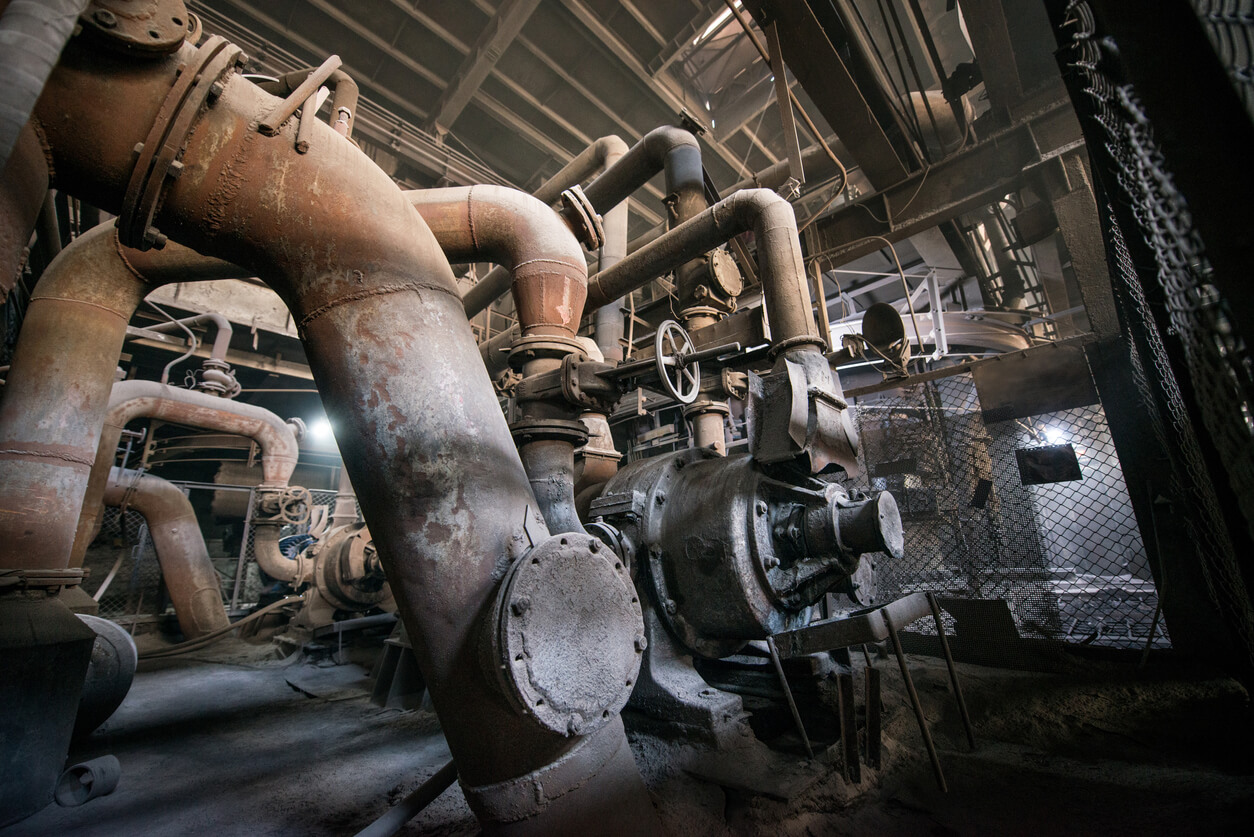
Industrial workplaces could have exposed engineers to asbestos.
Sometimes engineers directly handled asbestos when designing machinery or electrical systems or inspecting or installing equipment that contained asbestos. But more often engineers were indirectly exposed working at job sites where asbestos products were used.
Engineers often oversaw work at construction, civil, industrial and environmental job sites that used many different types of asbestos products. When other workers directly handled these products, they released asbestos fibers into the air. Depending on the working conditions of the facility or job site, asbestos fibers could accumulate and lead to dangerous exposure for everyone nearby, including engineers.
Engineers were exposed to different asbestos products, including:
Aerospace Products
Aerospace engineers were exposed to asbestos insulation and gaskets used in planes and spacecraft to prevent fires. Electrical panels and wiring on aircraft also contained asbestos.
Construction Products
Civil engineers used asbestos-containing products in all construction applications through the 1980s. Asbestos sheets and boards, a combination of asbestos and Portland cement, were used in buildings for false ceilings, partitions, sign boards and wall insulation. Asbestos was found in many different building materials, including flooring, ceilings, roofing, siding, adhesives, joint compounds and more. Civil engineers were also exposed to asbestos cement pipes that were used as boundary wall pipes, rainwater pipes, ventilating pipes and plumbing pipes.
Electrical Products
Older cast-iron switch gear used in electrical engineering designs contained asbestos flash strips, separators and rope gasket door seals. These are products that can have a high asbestos content. Electrical engineers who serviced or inspected electrical panels could have been exposed to asbestos in the panels and wire insulation.
Industrial Products
Industrial engineers working at industrial job sites may encounter old asbestos materials in machinery, insulation throughout the facility and around boilers, and in old asbestos cement pipes.
Machinery Parts
Mechanical engineers were exposed to asbestos insulation and asbestos gaskets used in different types of machinery.
Nuclear Reactors
Nuclear engineers were exposed to asbestos through their work on sodium-cooled reactors, which were insulated with asbestos-containing pipe coverings, asbestos valve packing and powdered asbestos that was mixed with water to repair damaged insulation.
Ships
Marine engineers were exposed to asbestos-containing boilers, insulation and gaskets that were used throughout vessels of all types, from small boats to large naval vessels.
Manufacturers That Made Products Engineers Use
Engineers were exposed to a wide range of asbestos products made by many different manufacturers. Companies such as Combustion Engineering and Johns Manville made construction materials and boilers with asbestos that exposed civil and industrial engineers. Manufacturers such as General Electric and A.B.B. Lummus Global made electrical equipment containing asbestos that exposed electrical engineers.
A.B.B. Lummus Global: This company manufactured power transformers, cables, wires and electrical systems containing asbestos. Electrical engineers who inspected or repaired these transformers may have been directly exposed to asbestos.
Combustion Engineering: CE manufactured more than two dozen asbestos products used in building construction and marine applications. The company provided asbestos-lined boilers to the U.S. Navy during World War II. Engineers who inspected these boilers for safety and performance may have directly handled asbestos insulation.
Foster Wheeler: This company made asbestos-containing marine boilers, steam generators, pumps, seals and gaskets that exposed industrial and marine engineers.
General Electric: GE made asbestos-containing electrical equipment that exposed electrical engineers, including wires, cables and arc chutes.
H.K. Porter: This locomotive company used asbestos-containing pipes, steam valves, gaskets and brakes that exposed locomotive engineers.
Johns Manville: Johns Manville made many different construction materials with asbestos that could have exposed civil and construction engineers at construction sites from the early 20th century through the 1980s.
Engineers and Mesothelioma
Scientific research has shown higher rates of asbestos-related diseases among engineers because of the occupational exposure they’ve endured. According to a 2022 report by the European Commission, over 70,000 workers died in 2019 from past exposure to asbestos.
A 2016 Epidemiology and Health study reported the rates of asbestos-related cancer in Swedish workers from 1961 to 2009. Compared to the general population, the incidence of pleural mesothelioma was 67% higher for mechanical engineers and 606% higher for ship engineers.
A 1997 study conducted by researchers from the National Institute for Occupational Safety and Health evaluated the relationship between high occupational asbestos exposure and the occurrence of gastrointestinal cancer. Statistical data for the incidence of mesothelioma was used to identify occupations having a high level of exposure. The analysis revealed that while increased risk for gastrointestinal cancer was not an issue for mechanical and electrical engineers, elevated risk for colorectal cancer was. Recent research has presented evidence that asbestos exposure may have a causal relationship with colorectal cancer.
Mesothelioma is a type of cancer that is almost exclusively caused by asbestos exposure. Asbestos exposure also causes lung cancer, ovarian cancer, laryngeal cancer and asbestosis.
If you have been diagnosed with one of these conditions, it is important to find a specialist so you have access to the best treatment. Doctors specializing in mesothelioma and lung cancer work at some of the best treatment centers in the country where you can participate in innovative clinical trials.
Chat with a Patient Advocate
We Are Standing By to Help You
Our Patient Advocates have more than 50 years of combined experience helping mesothelioma patients.
In June 2020, a New York judge dismissed a boiler manufacturer’s request to be dismissed from a mesothelioma lawsuit filed by a pollution control engineer. Thomas L. Echrick worked for the New York City Department of Air Resources in the same area as workers who maintained and repaired asbestos-containing boilers provided by ERC International Inc. The judge allowed the suit to continue, and no further updates have been published.
David Bean was employed as an engineer with Bristol Water from the 1950s until he retired in 1992. He repaired and maintained pumping stations that were covered with asbestos cement insulation. This insulation had to be removed for repairs, but Bean was not given protective gear of any kind to shield him from inhaling asbestos fibers. Bean was diagnosed with mesothelioma in 2010 and died in 2011. His wife filed a wrongful death lawsuit and a jury awarded her more than $450,000.
Engineers who develop asbestos-related diseases have a right to file personal injury lawsuits and claims with asbestos trust funds. Those who have lost a loved one to mesothelioma have a right to file a wrongful death lawsuit to get compensation to cover medical bills, lost wages and funeral expenses.
An experienced mesothelioma attorney can advise whether you qualify to file a lawsuit, and you may additionally be eligible to file multiple claims with asbestos trust funds depending on your exposure history.
Recommended Reading
Your web browser is no longer supported by Microsoft. Update your browser for more security, speed and compatibility.
If you are looking for mesothelioma support, please contact our Patient Advocates at (855) 404-4592
Fact Checked
Our fact-checking process begins with a thorough review of all sources to ensure they are high quality. Then we cross-check the facts with original medical or scientific reports published by those sources, or we validate the facts with reputable news organizations, medical and scientific experts and other health experts. Each page includes all sources for full transparency.
Reviewed
Asbestos.com is the nation’s most trusted mesothelioma resource
The Mesothelioma Center at Asbestos.com has provided patients and their loved ones the most updated and reliable information on mesothelioma and asbestos exposure since 2006.
Our team of Patient Advocates includes a medical doctor, a registered nurse, health services administrators, veterans, VA-accredited Claims Agents, an oncology patient navigator and hospice care expert. Their combined expertise means we help any mesothelioma patient or loved one through every step of their cancer journey.
More than 30 contributors, including mesothelioma doctors, survivors, health care professionals and other experts, have peer-reviewed our website and written unique research-driven articles to ensure you get the highest-quality medical and health information.
About The Mesothelioma Center at Asbestos.com
Assisting mesothelioma patients and their loved ones since 2006.
Helps more than 50% of mesothelioma patients diagnosed annually in the U.S.
A+ rating from the Better Business Bureau.
5-star reviewed mesothelioma and support organization.
My family has only the highest compliment for the assistance and support that we received from The Mesothelioma Center. This is a staff of compassionate and knowledgeable individuals who respect what your family is experiencing and who go the extra mile to make an unfortunate diagnosis less stressful. Information and assistance were provided by The Mesothelioma Center at no cost to our family.
Whitmer, M. (2026, February 12). Engineers and Asbestos Exposure. Asbestos.com. Retrieved June 9, 2026, from https://www.asbestos.com/occupations/engineers/
MLA
Whitmer, Michelle. "Engineers and Asbestos Exposure." Asbestos.com, 12 Feb 2026, https://www.asbestos.com/occupations/engineers/.
Chicago
Whitmer, Michelle. "Engineers and Asbestos Exposure." Asbestos.com. Last modified February 12, 2026. https://www.asbestos.com/occupations/engineers/.
My primary support since being diagnosed with Mesothelioma, over 2 years ago, has been this company. Their monthly nationwide support group has been a tremendous help for me. I have learned about others' treatments and have been able to freely discuss mine, knowing others walk the same walk as I do and fully understand. Karen Selby, the nurse and patient advocate, has helped me so much. I call her and she delivers. She's experienced in Thoracic surgeries, is supportive, kind, knowledgeable, and makes a patient feel very cared for! The whole staff are polite, caring, and will help with Mesothelioma victims' many needs. I feel very blessed to have this Organization by my side as I live with this cancer.
I found out about The Mesothelioma Center while researching Peritoneal Mesothelioma days after being diagnosed with malignant cancer. While a lot of the 'Mesothelioma' websites are actually law firms just trying to get your business, theirs is a user-friendly, comprehensive website set up to aid patients, their loved ones, and/or caregivers with all things related to a cancer diagnosis from asbestos exposure. I was soon put in touch with one of their doctors, Snehal Smart, M.D., who immediately sent me a packet of general information, a book on surviving Mesothelioma, and offered me assistance in finding doctors, reputable law firms, financial help, support groups, and so much more! The Mesothelioma Center's website is, in my opinion, the best resource for anyone suffering from cancer due to asbestos. Dr. Smart is amazing! She is very knowledgeable and helpful, but she is also a very kind, caring doctor who appears to go the distance whether she is researching a pertinent topic, making suggestions, providing contacts, or just being a good listener on the other end of the phone. In addition, Dr. Smart referred me to a law firm who is now fighting to get me compensation for the negligence of those defendants whose products exposed me to asbestos and caused my subsequent cancer. Thank you, TMC and Dr. Smart, for helping me determine the best treatment plan for my cancer and being part of my miracle. I am currently cancer-free and back to being a mom to my precious daughter. The Mesothelioma Center, their website, and their staff rock!!
I just want to take this time to thank Mesothelioma Center for all the information you provide. The survival stories are inspiring and give hope where hope is needed! Thanks to you, I have met many others on the site and continue to converse with them. Keep up the good work. I am always looking forward to your posts! Thank you, Richard Delisle.
My brother was recently diagnosed with mesothelioma. I began researching it online. The information I received from The Mesothelioma Center is all-inclusive. No need to look anywhere else! The first phone call was with Karen, and she answered all my questions with ease. She also had a calming effect by presenting all the options available for my brother and his family. Thank you!
My father was recently diagnosed with mesothelioma. We, as a family, were devastated. We were uncertain where to even start, so we reached out to The Mesothelioma Center. They were absolutely amazing. They provided physicians in our area who specialize in this type of cancer because it is so rare. They also set us up with a firm who specializes in getting funds that are set aside to help with our medical bills. I’m so glad we made the phone call. They were very knowledgeable, supportive, sincere, and true patient advocates.
Michelle Whitmer has covered science and medicine for Asbestos.com for more than 15 years. She has been featured in multiplatform media, including The New York Times and KYW Newsradio. Whitmer is pursuing American Medical Writers Association certification, has completed OSHA Asbestos Standard for the Construction Industry training and is CDC certified in Health Literacy.
Fact-checked and verified content:
Our fact-checking process begins with a thorough review of all sources to ensure they are high quality. Then we cross-check the facts with original medical or scientific reports published by those sources, or we validate the facts with reputable news organizations, medical and scientific experts and other health experts. Each page includes all sources for full transparency.
Please read our editorial guidelines to learn more about our content creation and review process.