May is National Cancer Research Month. It’s an opportunity to applaud all those involved in cancer research, particularly research dedicated to mesothelioma. It’s also a chance to share some of that research and answer survivors’ most common questions.
A question people diagnosed with mesothelioma frequently ask is: “What can I do to improve my health now?” As a registered dietitian, I share research and tips with the patients I work with to help them improve overall health with a healthy mesothelioma diet.
A recent review of studies related to diet and cancer found that The Mediterranean Diet was helpful and safe for those affected. The American Institute for Cancer Research recommends a similar diet to help keep our body healthy for prevention and even after diagnosis.
What Is the Mediterranean Diet?
Foods historically part of the traditional cuisine in countries bordering the Mediterranean Sea and their neighbors are part of what’s called The Mediterranean Diet. These foods are still wildly popular in the region and across the world today.
UNESCO officially recognized the culinary traditions of this diet as an “Intangible Cultural Heritage of Humanity.” The organization named Croatia, Cyprus, Greece, Italy, Morocco, Portugal and Spain as “Emblematic Communities” to support the diet’s legacy as members of a special task force.
The Mediterranean Diet’s 5 Key Features
Focus on vegetables, legumes, fruits, nuts and whole grains.
Use Olive Oil as a primary source of fat.
Eat more fish.
Limit dairy products to 1-2 servings per day.
Eat less red meat, poultry and processed meats.
This type of diet is high in fiber, which the AICR highly recommends for cancer prevention. We’ve talked about the importance of whole grains for mesothelioma patients, for example, in The Mesothelioma Center’s blog before.
Eating foods typical for The Mediterranean Diet means you’ll likely follow a lower fat diet, which may lead to weight loss. While many studies find being a lower body weight can be beneficial to fight cancer, it’s important to be careful as unintended weight loss can be a problem for mesothelioma patients.
Finding the right balance for you is important. If your healthcare team advises increasing calories to maintain a healthy weight, a nutritionist can help you balance tips for adding more calories to meals while benefiting from elements of The Mediterranean Diet.
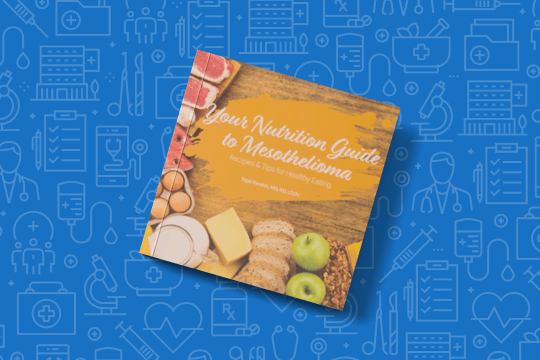
FREE NUTRITION GUIDE + JOURNAL
Nutrition Tips and Recipes for Mesothelioma
Access expert diet and exercise guidance designed specifically for mesothelioma patients to support treatment and overall wellness.
10 Tips for Following a Mediterranean Diet as a Mesothelioma Survivor
Before making changes to your diet, be sure to speak with your mesothelioma doctor. A dietitian who specializes in mesothelioma nutrition can help you or your caregiver make adjustments to your meals.
As you begin trying new foods, it can be helpful to keep a nutrition journal and record how you’re feeling. Are any foods you’ve tried left you not feeling your best? Do you have more energy? Has your appetite improved?
Top Mediterranean Diet Tips
Adjust your plate: Try adjusting your plate so meat (and especially red meat) isn’t the main ingredient. Gradually reduce your meat portion to about 4-6 oz.
Try new recipes: For something new to try, substitute red meat with a meat-free option or fish! UNESCO and AICR have a lot of great recipes. Your local fish market or grocery store can also give you tips for cooking fish.
Swap sweets with fruit: Cut down on processed sweets such as cookies, cakes and soda. Replace traditional dessert with fresh fruit to boost your intake of plant foods and still satisfy your sweet tooth. Frozen fruits like blueberries or grapes make a fun treat.
Skip soda and sweet tea: Soda and sweetened drinks such as sweet tea can add a lot of processed sugar to your diet. Like swapping desserts with fruit, try infusing fruits in water. Mint, rooibos and green tea can make drinking unsweet tea easier. Mixing a small amount of fruit juice with sparkling water can also help replace soda.
Use more olive oil: To use more olive oil, switch out recipes that call for vegetable oil or butter. Make your own salad dressing using olive oil, lemon juice and seasonings.
Use herbs and spices: Sneak in more herbs and spices for a boost of antioxidants. Add some cinnamon to your pancake mix. Throw some oregano into your pasta. Steep some mint leaves in hot water for a flavorful tea.
Keep it colorful: When you look at your plate, it should be full of different colors. Each color provides a host of different nutrients. Some people call it “eating the rainbow.”
Embrace frozen foods: Frozen fruits and vegetables are just as good as fresh. Sometimes they’re actually fresher because they’re usually picked at their peak and frozen quickly thereafter. It also means that most fruit is available year round. Frozen means less waste too because you only take what you need.
Avoid preservatives: Replace bacon, sausages, deli meats and hot dogs with unprocessed meats, poultry or a meat-free alternative. The preservatives used in those foods can be harmful, particularly in large amounts. Cut down gradually if they’re a big part of your diet.
Be as active as you can: Go for walks with a friend, try some weight-bearing exercises or join a yoga class. Swimming, cycling and gardening are all great forms of activity too. Moving your body helps maintain your muscle mass.
Tips in our nutrition guide can also work in conjunction with The Mediterranean Diet approach to balancing meals. Recipes and meal prep suggestions can be adapted to fit your personal needs.
Free Mesothelioma Resources
Get Access to Free Resources for Patients & Loved Ones
Your web browser is no longer supported by Microsoft. Update your browser for more security, speed and compatibility.
If you are looking for mesothelioma support, please contact our Patient Advocates at (855) 404-4592
Fact Checked
Our fact-checking process begins with a thorough review of all sources to ensure they are high quality. Then we cross-check the facts with original medical or scientific reports published by those sources, or we validate the facts with reputable news organizations, medical and scientific experts and other health experts. Each page includes all sources for full transparency.
Reviewed
Asbestos.com is the nation’s most trusted mesothelioma resource
The Mesothelioma Center at Asbestos.com has provided patients and their loved ones the most updated and reliable information on mesothelioma and asbestos exposure since 2006.
Our team of Patient Advocates includes a medical doctor, a registered nurse, health services administrators, veterans, VA-accredited Claims Agents, an oncology patient navigator and hospice care expert. Their combined expertise means we help any mesothelioma patient or loved one through every step of their cancer journey.
More than 30 contributors, including mesothelioma doctors, survivors, health care professionals and other experts, have peer-reviewed our website and written unique research-driven articles to ensure you get the highest-quality medical and health information.
About The Mesothelioma Center at Asbestos.com
Assisting mesothelioma patients and their loved ones since 2006.
Helps more than 50% of mesothelioma patients diagnosed annually in the U.S.
A+ rating from the Better Business Bureau.
5-star reviewed mesothelioma and support organization.
My family has only the highest compliment for the assistance and support that we received from The Mesothelioma Center. This is a staff of compassionate and knowledgeable individuals who respect what your family is experiencing and who go the extra mile to make an unfortunate diagnosis less stressful. Information and assistance were provided by The Mesothelioma Center at no cost to our family.
Asbestos.com. (2026, February 12). 10 Tips to Benefit From the Mediterranean Diet as a Mesothelioma Patient. Retrieved May 27, 2026, from https://www.asbestos.com/blog/2024/05/28/10-tips-to-benefit-from-the-mediterranean-diet/
MLA
"10 Tips to Benefit From the Mediterranean Diet as a Mesothelioma Patient." Asbestos.com, 12 Feb 2026, https://www.asbestos.com/blog/2024/05/28/10-tips-to-benefit-from-the-mediterranean-diet/.
Chicago
Asbestos.com. "10 Tips to Benefit From the Mediterranean Diet as a Mesothelioma Patient." Last modified February 12, 2026. https://www.asbestos.com/blog/2024/05/28/10-tips-to-benefit-from-the-mediterranean-diet/.
Registered and Licensed Dietitian & Contributing Writer
Tejal Parekh is a registered and licensed dietitian in Florida. As a writer for The Mesothelioma Center at Asbestos.com, the nation's most trusted mesothelioma resource, she uses her knowledge of nutrition to help mesothelioma cancer patients.
Fact-checked and verified content:
Our fact-checking process begins with a thorough review of all sources to ensure they are high quality. Then we cross-check the facts with original medical or scientific reports published by those sources, or we validate the facts with reputable news organizations, medical and scientific experts and other health experts. Each page includes all sources for full transparency.
Please read our editorial guidelines to learn more about our content creation and review process.