


Find a Top Doctor
Connect with expert doctors for advanced mesothelioma treatment options.
Get Started
Short-term asbestos exposure means brief or one-time contact with asbestos fibers, typically lasting less than a few days. While the health risk is generally low, exposure intensity, fiber concentration and ventilation can make even brief exposure dangerous.

Written by Karen Selby, RN | Edited by Amy Edel | Last Update:

No level of asbestos exposure is considered safe, but cancer risk varies depending on how much you’re exposed to and for how long. OSHA warns workers, “Asbestos exposures as short in duration as a few days have caused mesothelioma in humans.” The agency also clarifies that no “type of asbestos fiber” is without risk.
The more asbestos fibers you encounter and the longer that asbestos exposure lasts, the greater the chance of developing asbestos-related diseases. This concept is known as the dose-response relationship. For example, a worker at a construction site or factory has a higher risk than someone who works in an office with far less exposure.
Every year, asbestos diseases, like mesothelioma, kill thousands in the U.S. Past exposure led to nearly 40,000 deaths, according to the International Commission of Occupational Health. It’s natural for people to feel concerned after short-term exposure to asbestos.
| Exposure Type | Duration | Risk Level | Context |
|---|---|---|---|
| One-Time / Incidental | Minutes to hours | Low (generally) | Outdoor, intact materials, brief contact |
| Short-Term | Hours to a few days | Low to Moderate | Depends heavily on fiber concentration and ventilation |
| Short-Term (Intense) | Hours (e.g., 9/11) | Moderate to High | High fiber concentration, enclosed space, no PPE |
| Long-Term / Occupational | Months to years | High | Primary driver of mesothelioma and asbestosis diagnoses |
Usually, short-term asbestos exposure isn’t a major risk. Typically, asbestos diseases like mesothelioma arise from long-term exposure at work. If you were exposed to asbestos for one day, the health risk depends on how much asbestos dust you inhaled.
Examples of Short-Term Asbestos Exposure
Mesothelioma can take 20 to 60 years to develop after exposure. Many workers diagnosed today were exposed decades ago, while young workers can take steps now to protect themselves from asbestos exposure on the job. If you’ve experienced exposure, document the date, place, materials and inform your doctor at your next visit. They’ll know how this exposure, combined with your age, smoking status and other comorbid conditions, will impact your risk over time.
Mesothelioma survivor Chuck Gast explains how a short work contract led to his and his wife’s asbestos cancer diagnosis. “When I was working in a plant for like 6 weeks during the summer for a temporary job, I brought the [asbestos] fibers home on my clothing and she would launder my clothes,” Chuck said.

Four key factors determine how dangerous asbestos exposure may be: exposure duration, fiber type, health history and type of asbestos product. Each factor influences risk independently, but the combination of all four determines your overall level of risk.
Risk Factors and Dangers of Asbestos
These risk factors are additive. A 2025 study in the International Journal of Surgery confirms occupational exposure significantly increases that risk. But an outdoor, 5-minute job may not have the same risk level as a 5-minute job in a crowded boiler room with no mask. Because asbestos is the primary cause of mesothelioma, it’s important to communicate all details to your physician whether your exposure was short-term or more extensive.
If you were briefly exposed to asbestos, the most important first steps are staying calm and documenting what happened. The details you record will help your doctor assess your specific risk.
Steps to Take After Asbestos Exposure
If you’re interested in screenings, develop symptoms or are concerned a prior diagnosis didn’t account for short-term asbestos exposure, our team of Patient Advocates can help. They can discuss screening options with you and connect you with a mesothelioma doctor who can examine you or offer a second opinion.

Discover financial assistance programs, insurance guidance, and veteran benefits to help cover your mesothelioma treatment expenses.
Get Financial HelpAsbestos-related diseases have a long latency period, meaning symptoms may not appear for many years after exposure. For anyone with a documented exposure history, mesothelioma screening offers a way to monitor for early signs of disease before symptoms develop.
Symptoms to Monitor
Early symptoms of asbestos-related disease are often mistaken for less serious conditions, which is one reason mesothelioma is frequently diagnosed late. Letting your doctor know about any past asbestos exposure ensures that symptoms are less likely to be overlooked if they do appear.
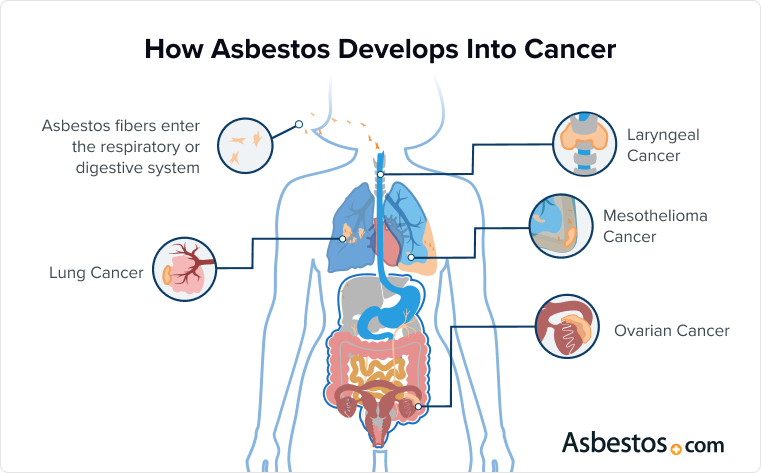
The amount of time it takes for symptoms to develop can be anywhere from 20 to 60 years, like other exposure types. Once asbestos fibers become trapped in the body, they irritate cells. This can eventually change healthy cells to cancer cells like mesothelioma. How long this process takes for each individual depends on factors like age, genetics and overall health, as well as the intensity and duration of the exposure.
Short-term asbestos exposure isn’t as common a cause of mesothelioma as long-term occupational exposure. However, it does happen, and OSHA confirms that exposures as short as a few days have led to diagnoses in humans. Avoiding further exposure is the most effective way to lower your lifetime risk.
No. Many people exposed to asbestos don’t develop mesothelioma. While specific risk factors can heighten risks, there is no determined safe level, so all exposure should be avoided. Risk factors can include dose, asbestos type and individual factors like overall health and smoking history. Smoking doesn’t cause mesothelioma, but it negatively affects overall health and can put people who have been exposed to asbestos at increased risk.
One-time asbestos exposure is considered low risk, though no amount is considered safe. A single brief exposure in an open, well-ventilated space with intact materials is considered significantly less concerning than a single intense exposure in an enclosed area with visible dust and no protection.
Because there is no safe amount of exposure, all exposure is potentially dangerous. OSHA sets occupational benchmarks for workers, but these aren’t safe thresholds. These thresholds are: 0.1 fibers per cubic centimeter of air for an 8-hour workday and a short-term limit of 1.0 fiber per cubic centimeter over any 30-minute period. OSHA is clear that no level of asbestos exposure is without risk and the higher the dose and period of exposure, the higher the risk.
Your web browser is no longer supported by Microsoft. Update your browser for more security, speed and compatibility.
If you are looking for mesothelioma support, please contact our Patient Advocates at (855) 404-4592
The Mesothelioma Center at Asbestos.com has provided patients and their loved ones the most updated and reliable information on mesothelioma and asbestos exposure since 2006.
Our team of Patient Advocates includes a medical doctor, a registered nurse, health services administrators, veterans, VA-accredited Claims Agents, an oncology patient navigator and hospice care expert. Their combined expertise means we help any mesothelioma patient or loved one through every step of their cancer journey.
More than 30 contributors, including mesothelioma doctors, survivors, health care professionals and other experts, have peer-reviewed our website and written unique research-driven articles to ensure you get the highest-quality medical and health information.
My family has only the highest compliment for the assistance and support that we received from The Mesothelioma Center. This is a staff of compassionate and knowledgeable individuals who respect what your family is experiencing and who go the extra mile to make an unfortunate diagnosis less stressful. Information and assistance were provided by The Mesothelioma Center at no cost to our family.LashawnMesothelioma patient’s daughter


Asbestos.com. (2026, September 2). Short-Term Asbestos Exposure. Retrieved October 15, 2026, from https://www.asbestos.com/exposure/short-term/
"Short-Term Asbestos Exposure." Asbestos.com, 2 Sep 2026, https://www.asbestos.com/exposure/short-term/.
Asbestos.com. "Short-Term Asbestos Exposure." Last modified September 2, 2026. https://www.asbestos.com/exposure/short-term/.

Karen Selby is a registered nurse and Board Certified Patient Advocate at The Mesothelioma Center with more than 30 years of experience in oncology and thoracic surgery. She worked as an operating room nurse in thoracic surgery at the University of Maryland for 6 years, assisting with surgeries such as lung transplants, pneumonectomies and pleurectomies. She later served as regional director of the tissue procurement program at the University of Florida. Karen joined The Mesothelioma Center in 2009, providing patients with personalized support and resources.
Our fact-checking process begins with a thorough review of all sources to ensure they are high quality. Then we cross-check the facts with original medical or scientific reports published by those sources, or we validate the facts with reputable news organizations, medical and scientific experts and other health experts. Each page includes all sources for full transparency.
Please read our editorial guidelines to learn more about our content creation and review process.

