We surveyed 2,000 U.S. adults and found that cost is the No. 1 barrier to preventive health screening. Our data also shows significant AI use in healthcare, particularly among people managing a serious illness or a cancer diagnosis.
Quick Facts
1 in 5 Americans struggled to afford care, or avoided care entirely as a result of cost in the past year.
61% of ACA marketplace enrollees saw their premiums rise in 2026, and nearly 1 in 3 reported a “significant” increase in cost.
46% of Americans aged 35+ are behind on recommended cancer screenings, and among cost-burdened Americans, that figure jumps to 55%.
3 in 5 Americans skipped or delayed medical care last year like specialist visits (26%), routine physicals (26%) and prescriptions (24%).
40% of people in the U.S. use AI for medical advice, including 57% of those with a serious illness history.
What Rising Costs Mean for U.S. Healthcare
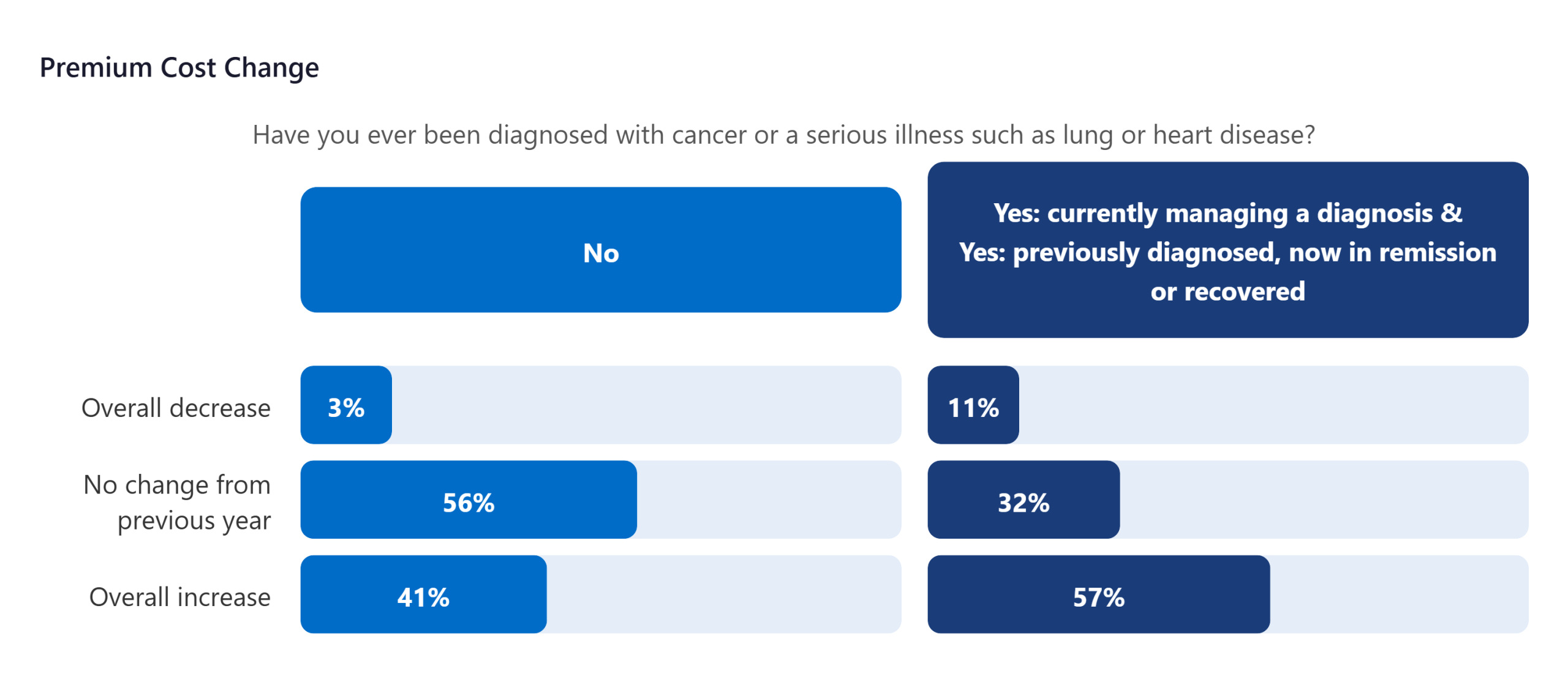
Cost is the No. 1 reason people in the U.S. skip or delay cancer screenings, according to a new survey from The Mesothelioma Center at Asbestos.com. Of the 2,000 adults we surveyed, 44% of respondents saw their premiums increase since January 2026. People living with chronic illness or a serious diagnosis felt this burden the most, as 57% of those with a chronic illness reported an overall premium increase, compared to 41% of those without one.
About 20% of respondents describe healthcare costs as “very” or “extremely” burdensome with 12% struggling to afford care and 8% avoiding care entirely because of cost. Among those with a serious illness or history of cancer such as mesothelioma or lung cancer, 34% say costs are “moderately” burdensome and 16% say “very burdensome” compared to 18% and 10% among those without a diagnosis.
Healthcare affordability isn’t an abstract policy issue. Nearly 50% of those surveyed had skipped at least one cancer screening in the last year. Lapsing ACA subsidies, marketplace premiums and overall medical costs are rising for many people. For those managing or recovering from a serious illness, the cost of treatment may dictate choices about care. Nearly 1 in 10 ACA Marketplace enrollees dropped coverage in 2026.
Delayed Screenings Worsen Outcomes
New research from Harvard has found a link between an individual’s financial health and their survival from cancer, suggesting that economic barriers can worsen medical outcomes. This is especially true for people at high risk of an asbestos-related disease.
Skipping cancer screenings can impact their life significantly. Groups with histories of asbestos exposure, the primary risk factor for asbestosis, pleural effusions and asbestos cancers, include veterans, construction workers, firefighters and talc-based makeup and baby powder users. Early disease detection and treatment interventions can dramatically improve outcomes.
As Patient Advocate Snehal Smart, MD tells us, “There’s often a painful gap between knowing you need a cancer screening and being able to afford one. If you’re at higher risk because of asbestos exposure, there are some low-cost or covered screening options. Patient Advocates can help you navigate insurance or connect you with free and reduced-cost programs to access potentially life-saving tests.”
Nearly 50% of U.S. Adults Are Behind on Cancer Screening
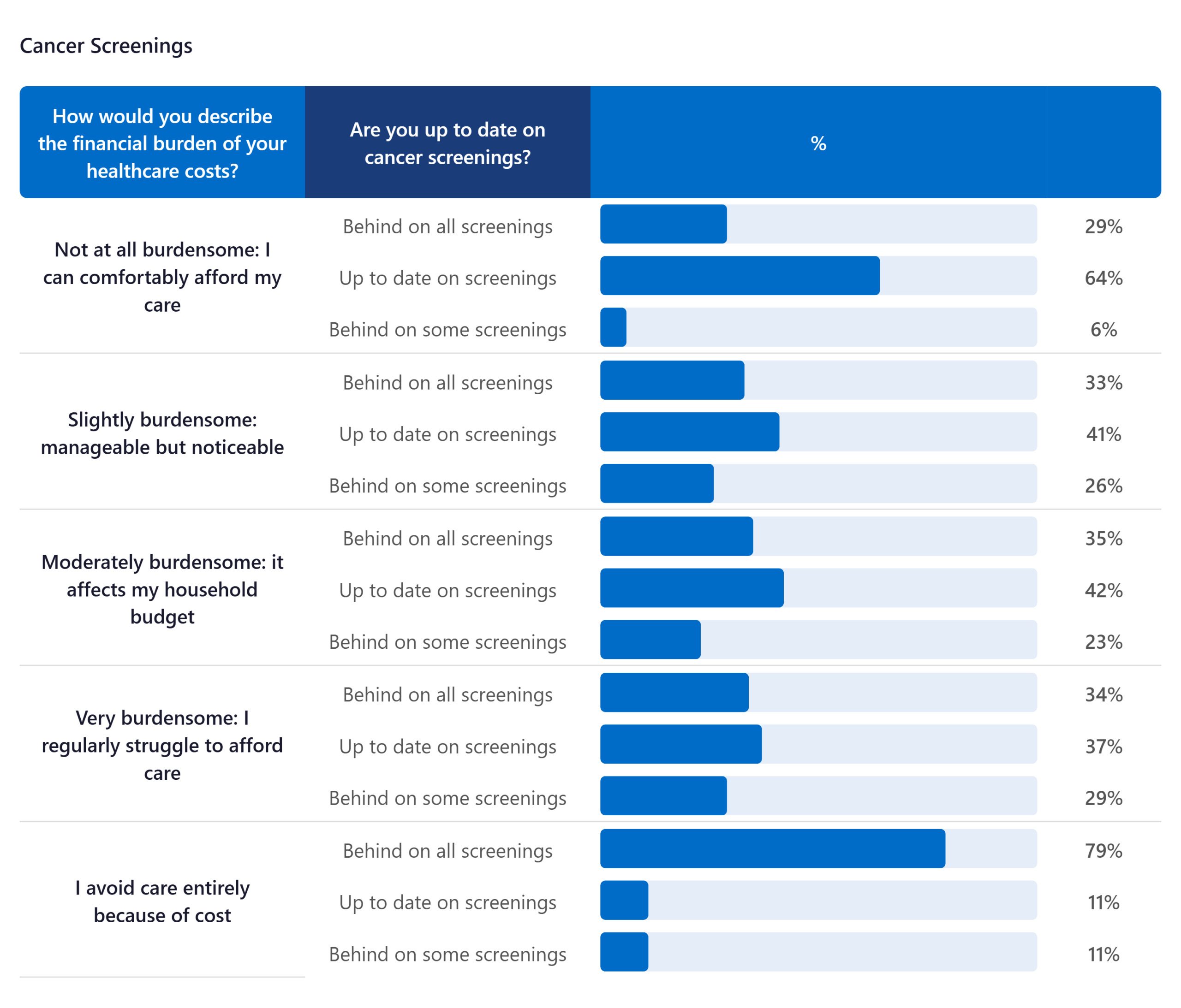
According to our survey, overall, only 46% of U.S. adults surveyed are up to date on all recommended cancer screenings, and 8% don’t get screened for cancer at all. Among people who avoid care entirely because of cost, 79% are behind on all cancer screenings.
About 1 in 4 Americans (23.7%) said cost was their biggest obstacle to getting cancer screenings. Other reasons included not being of the recommended age for screenings (13.4%), feeling healthy (10.2%) and fear of receiving a diagnosis of cancer (8.9%).
Among those who aren’t insured, only 11% are up to date with their screenings compared to 49% of those who are insured. And 33% of uninsured people don’t get screened for cancer at all compared to only 6% of insured people who aren’t screened for cancer. Nearly 1 in 10 ACA Marketplace enrollees dropped coverage in 2026.
Who Is Most at Risk of Missing Cancer Screenings Because of Cost?
Our data makes it clear there are three main groups of people who tend to fall behind on cancer screenings because of costs. These include the uninsured, those who can pay for healthcare but struggle with high costs and those facing financial challenges of a serious illness or cancer.
Screening Rates and Barriers
Cost-burdened respondents: Only 34% are fully current on screenings, compared to 54% of those who can comfortably afford care. Among those who avoid care entirely because of cost, 79% are behind on all cancer screenings.
People with a cancer or serious illness history: This group is often more engaged in screening because they’re already in the healthcare system. But the financial pressure on them is also higher: 57% saw premium increases in 2026, and a larger share describes costs as moderately or very burdensome compared to those without a diagnosis.
Uninsured respondents: Only 11% are fully up to date on all recommended screenings, 39% are behind and 33% don’t get screened for cancer at all. However, 49% of insured respondents are up to date and only 6% are unscreened.
Our survey also indicated 8.9% of respondents were afraid of receiving a bad diagnosis from the screenings. Additionally, 5.6% of people said they don’t have a primary care doctor. These findings indicate there are additional layers of obstacles to receiving cancer screenings beyond the financial ones.
10 States With the Fastest Rising Healthcare Costs
The cost of health insurance isn’t distributed evenly across the U.S. Some states have experienced a more dramatic rise in the cost of ACA Marketplace plans since 2025. This has left many people who purchase their own health insurance plans in these states at a disadvantaged financial situation.
Kaiser Family Foundation data shows 6 of the 10 states that saw the sharpest premium increases from 2025 to 2026 are in the South. Arkansas leads with a wide margin. The state’s premiums jumped 69% in a single year, nearly twice the second-highest increase.
Rank
State
Avg. Monthly Premium 2025
Avg. Monthly Premium 2026
Dollar Increase
% Increase
1
Arkansas
$458
$774
$316
69.0%
2
Washington
$434
$612
$178
41.0%
3
Tennessee
$516
$711
$195
37.8%
4
Mississippi
$485
$662
$177
36.5%
5
Illinois
$474
$646
$172
36.3%
6
Texas
$489
$661
$172
35.2%
7
Kentucky
$442
$590
$148
33.5%
8
Florida
$515
$683
$168
32.6%
9
Kansas
$513
$670
$157
30.6%
10
Maine
$546
$709
$163
29.9%
Source:
Kaiser Family Foundation
How Concerned Are U.S. Adults About Affording a Serious Illness?
More than 1 in 3 individuals (36%) expressed concerns about their ability to afford treatment for a serious illness. More than 20% of this group were very concerned about their ability to afford treatment for a serious illness, and 15% were extremely concerned about the financial toll such a treatment could cause.
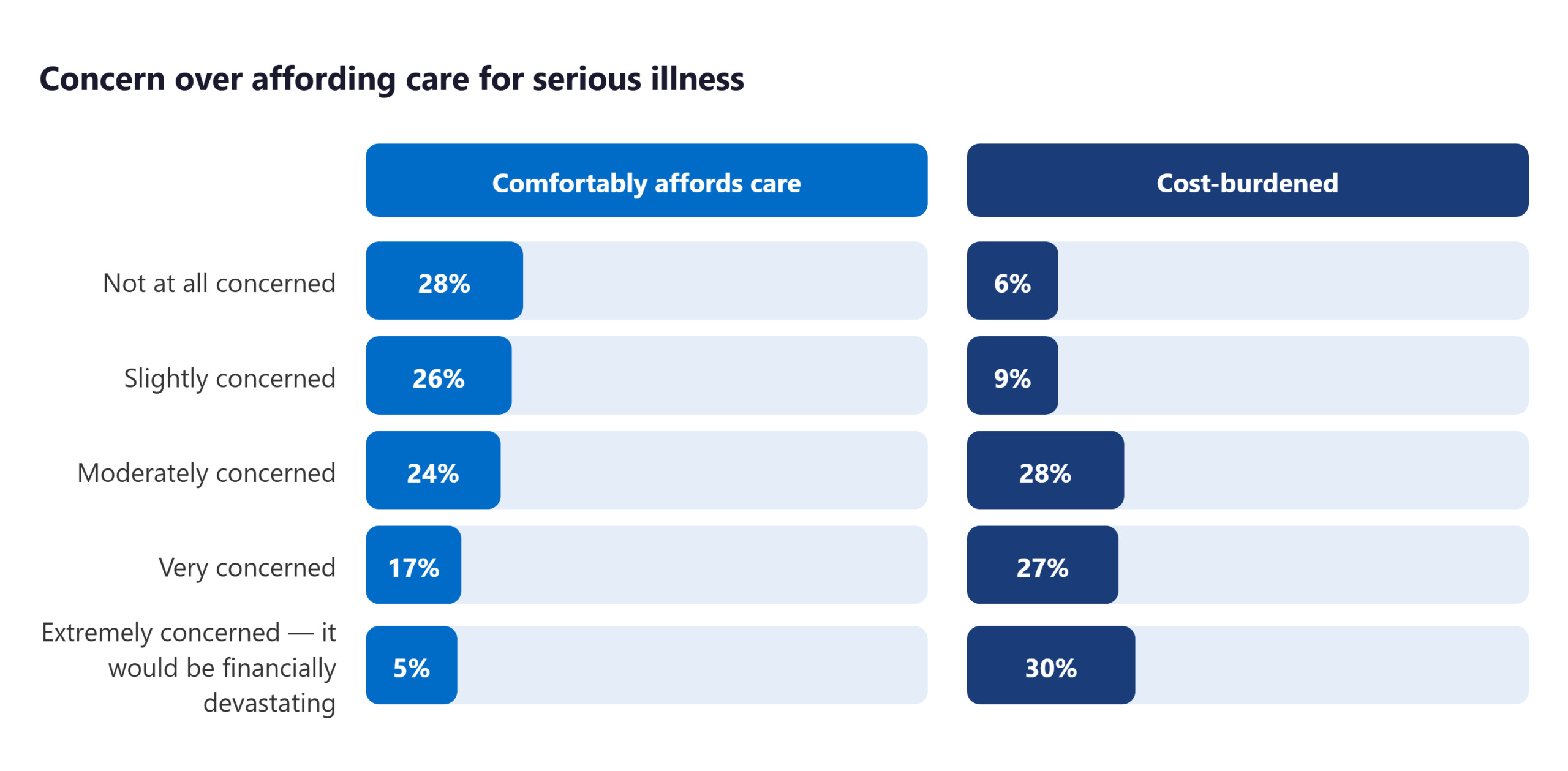
Among those cost-burdened, more than 25% expressed concerns about affording treatment for a serious illness and 30% were extremely concerned. More than 50% of those who struggle to pay for their medical treatments believe a serious diagnosis could be financially catastrophic.
Baby Boomers are the generation most likely to be diagnosed with cancer and most likely to have Medicare, yet half believe a cancer diagnosis would be financially devastating. Researchers and Patient Advocates call this financial toxicity: the way treatment costs ripple beyond health into quality of life and care decisions. That fear doesn’t fade after diagnosis either. Among people who have faced cancer or serious illness, roughly 40% remain very or extremely concerned about affording the care they need.
Pleural mesothelioma survivor Michael Cole notes, “Getting the treatment you need for mesothelioma can be a real journey. It always distresses me when I see insurance companies refusing to pay for treatment that’s medically your best option.”
Are U.S. Adults Turning to AI Instead of Their Doctors?
Our survey found 40% of U.S. adults have used an AI chatbot such as ChatGPT, Gemini or Claude to get medical information or advice. And cost isn’t the sole driver of AI use. Insured respondents use AI for medical information at almost the same rate (41%) as cost-burdened respondents (45%).
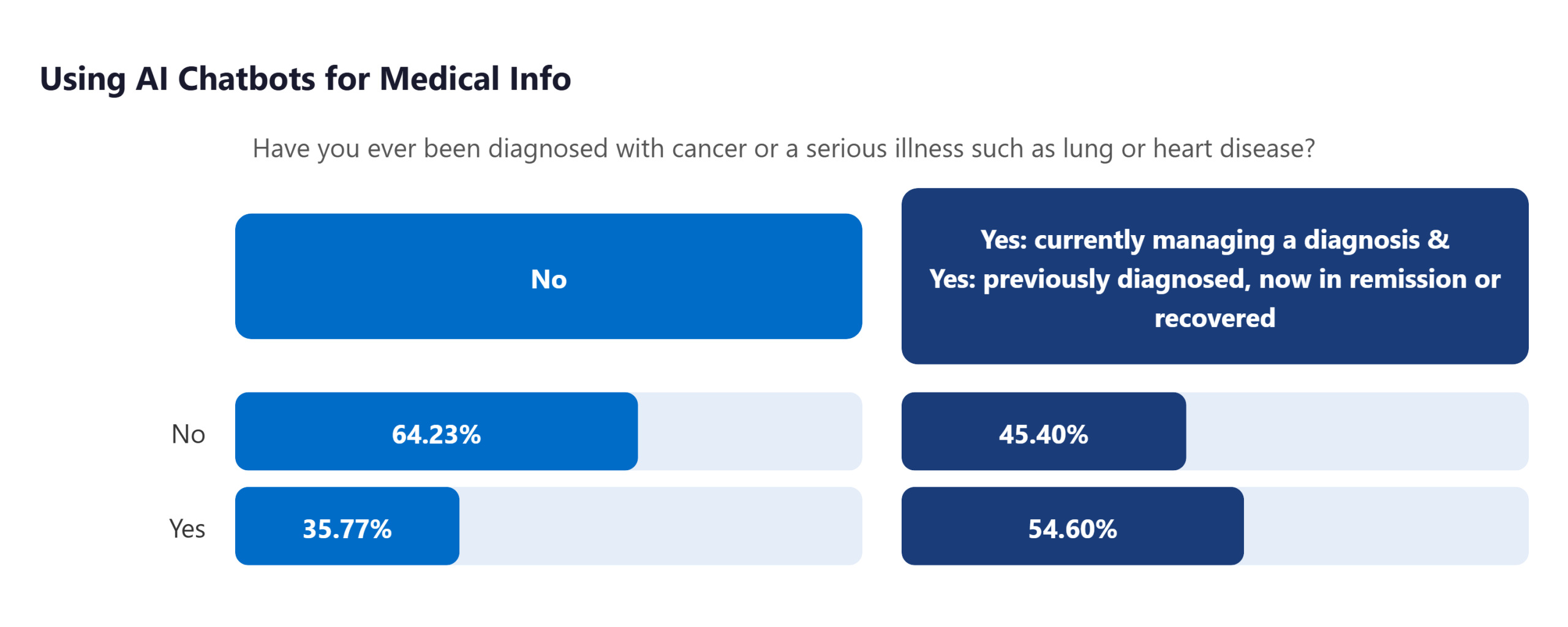
What does meaningfully affect usage is diagnosis history: 54.6% of people currently or previously managing a cancer or serious illness have used AI for medical information, whereas 35.8% of those without a diagnosis have turned to AI. Those facing a serious illness may be more inclined to use AI chatbots to better understand their condition and treatment options.
As Dr. Daniel Landau, medical director of virtual hematology at the Medical University of South Carolina in Charleston, said of AI use: “AI is a powerful tool and a quick resource. Although AI use has shown some promising results, AI models typically lag behind by several years. So, while I am a big fan of AI, its use does have to be taken with a grain of salt and should not replace traditional medical opinions.”
While AI chatbots may serve as a starting point, such information isn’t a substitute for consulting with a specialist or Patient Advocate to learn more about mesothelioma or other asbestos cancers. The use of AI for medical information reflects the growing need for medical information for those with cancer, especially in the face of daunting diagnoses.
How to Navigate Healthcare Costs and Get Cancer Screenings
If healthcare costs are making it hard to keep up with cancer screenings or access care, there are real options. Our team of Patient Advocates, for example, can help people with mesothelioma and asbestos-related lung cancer navigate insurance, identify grants and connect with financial assistance options at no cost to patients or their families.
Screening and Care Resources
ACA Marketplace coverage: Subsidies in the ACA Marketplace can significantly reduce the cost of health insurance for many individuals and households.
The Health Insurance Marketplace offers open and special enrollment periods for those who have recently lost their health insurance coverage.
Financial assistance programs: Many cancer centers, pharmaceutical companies and non-profit organizations offer financial assistance to patients to cover the cost of cancer treatment and travel to specialists.
CancerCare offers financial assistance and co-payment programs for cancer patients, as well as social workers who can help locate additional financial resources.
Free or low-cost cancer screenings: Community health centers, federally qualified health centers and some hospital systems offer screenings on a sliding-scale fee basis.
The CDC’s National Breast and Cervical Cancer Early Detection Program provides free or low-cost mammograms and Pap smears for eligible women.
The Veterans Health Administration covers cancer screenings for eligible veterans.
Patient Advocates: The Mesothelioma Center offers free support to individuals with mesothelioma and their families. They can assist with navigating medical and insurance policies and connecting with top doctors for treatment.
Talk to your doctor: Tell your doctor if cost was the reason for your delay in getting a cancer screening. Most doctors will be able to offer you an alternative treatment option or connect you with a social worker at the clinic.
VA benefits: Individuals who have been exposed to asbestos while in the military may be eligible for mesothelioma treatment and compensation from the VA. These benefits include access to mesothelioma specialists.
Don’t let the fear of what a cancer diagnosis could cost you prevent you from getting a cancer screening. Early detection is one of the best tools available to fight cancer, and there are people and resources that can help you with the cost of your screening and treatment.
Methodology
The Mesothelioma Center at Asbestos.com conducted a nationally representative online survey of 2,000 U.S. adults aged 35 years and older in early 2026 to investigate the impact of rising healthcare costs on health behaviors, health screenings and perceptions of AI as a health resource.
Survey Topics
What is your health status and diagnosis history (for cancer, serious illness, and chronic illness)?
What is your health insurance coverage, and how have the costs of your healthcare insurance premiums changed since January 2026?
How financially burdensome are your healthcare costs over the past 12 months?
What are your health and preventative care habits?
How are your health screening behaviors for cancer?
What are your barriers to undergoing cancer screenings?
How concerned are you about affording treatment for a serious illness?
How often have you used an AI chatbot to obtain medical information?
The data was segmented according to insurance status, financial burden (based on a Likert scale), chronic illness status and history of serious illnesses or cancer diagnoses. Each respondent was weighted to represent the U.S. adult population nationally according to age, sex, race and region of residence.
Your web browser is no longer supported by Microsoft. Update your browser for more security, speed and compatibility.
If you are looking for mesothelioma support, please contact our Patient Advocates at (855) 404-4592
Fact Checked
Our fact-checking process begins with a thorough review of all sources to ensure they are high quality. Then we cross-check the facts with original medical or scientific reports published by those sources, or we validate the facts with reputable news organizations, medical and scientific experts and other health experts. Each page includes all sources for full transparency.
Reviewed
Asbestos.com is the nation’s most trusted mesothelioma resource
The Mesothelioma Center at Asbestos.com has provided patients and their loved ones the most updated and reliable information on mesothelioma and asbestos exposure since 2006.
Our team of Patient Advocates includes a medical doctor, a registered nurse, health services administrators, veterans, VA-accredited Claims Agents, an oncology patient navigator and hospice care expert. Their combined expertise means we help any mesothelioma patient or loved one through every step of their cancer journey.
More than 30 contributors, including mesothelioma doctors, survivors, health care professionals and other experts, have peer-reviewed our website and written unique research-driven articles to ensure you get the highest-quality medical and health information.
About The Mesothelioma Center at Asbestos.com
Assisting mesothelioma patients and their loved ones since 2006.
Helps more than 50% of mesothelioma patients diagnosed annually in the U.S.
A+ rating from the Better Business Bureau.
5-star reviewed mesothelioma and support organization.
My family has only the highest compliment for the assistance and support that we received from The Mesothelioma Center. This is a staff of compassionate and knowledgeable individuals who respect what your family is experiencing and who go the extra mile to make an unfortunate diagnosis less stressful. Information and assistance were provided by The Mesothelioma Center at no cost to our family.
Asbestos.com. (2026, June 8). Healthcare Costs Are the No. 1 Barrier to Cancer Screening. Retrieved October 23, 2026, from https://www.asbestos.com/featured-stories/healthcare-costs-cancer-screenings-ai/
MLA
"Healthcare Costs Are the No. 1 Barrier to Cancer Screening." Asbestos.com, 8 Jun 2026, https://www.asbestos.com/featured-stories/healthcare-costs-cancer-screenings-ai/.
Chicago
Asbestos.com. "Healthcare Costs Are the No. 1 Barrier to Cancer Screening." Last modified June 8, 2026. https://www.asbestos.com/featured-stories/healthcare-costs-cancer-screenings-ai/.
Sean Marchese is a registered nurse with experience developing and managing respiratory oncology clinical trials and treatments. He has more than 10 years of clinical experience as a nurse in pain management, neurosurgery and clinical trials.
Fact-checked and verified content:
Our fact-checking process begins with a thorough review of all sources to ensure they are high quality. Then we cross-check the facts with original medical or scientific reports published by those sources, or we validate the facts with reputable news organizations, medical and scientific experts and other health experts. Each page includes all sources for full transparency.
Please read our editorial guidelines to learn more about our content creation and review process.