The United Kingdom possesses one of the highest rates of mesothelioma in the world, largely because the UK government permitted the use of asbestos long after other countries outlawed the mineral's use.
The United Kingdom has one of the highest rates of mesothelioma in the world. The U.K. used brown asbestos and its government permitted the use of chrysotile asbestos years after other countries outlawed it.
Asbestos use in the U.K. began in the late 1800s to insulate ships, steam engines and power plants. By the 1970s, Britain used it in construction throughout the country. U.K. researchers were publishing studies on the dangers of asbestos as early as the 1930s. But it wasn’t until 1999 that the U.K. banned all types of asbestos.
I’m always on tenterhooks as I have a scan every two months [because] it can hold the future in my hands. If [the cancer is] growing again, I have another battle on my hands and more traveling and more drugs to fight it with. But when I get a good result, I go silent and just feel so grateful to Merck, the Royal Marsden and all the wonderful doctors.
Mavis Nye, pleural mesothelioma survivor
Brown asbestos is also known as amosite. Insulation boards throughout the U.K. contained it. Researchers believe this type of asbestos contributes to Britain’s high rate of mesothelioma. It is more carcinogenic than chrysotile.
Most U.K. residents who die from the disease are older than 65. Men make up about 80% of people who receive a mesothelioma diagnosis in the U.K., which also fits the worldwide profile for this cancer.
Since the early 1990s, the U.K. mesothelioma incidence rate has increased by approximately 57%. The incidence rate in women increased about 93%, and the rate in men increased by 47% from 2016-2018. Women are often exposed to asbestos indirectly by living in areas near asbestos factories or living with people who worked with asbestos.
FREE MESOTHELIOMA GUIDE
Expert Guidance for Your Mesothelioma Journey
Get answers about treatment, top doctors, and financial support from the nation’s most trusted mesothelioma resource.
Certain occupations required workers to use asbestos-containing products. They provided excellent protection from heat, salt water and chemical corrosion. These properties also make it difficult for the body to break down asbestos. This leads to an accumulation of asbestos fibers inside the body.
People in the U.K. who worked in the shipbuilding industry before the 1980s are at high risk for mesothelioma. Asbestos insulation and other asbestos products were on ships, so retrofitting, maintaining or repairing ships puts workers at risk of asbestos exposure. Construction workers in the U.K. are another high-risk group. Asbestos is prevalent in the country’s older buildings and residences. Structures erected or renovated before 2000 likely contain asbestos.
High-Risk Occupations
Carpenters
Construction workers
Firefighters
Joiners
Plumbers
Boilermakers
Electricians
HVAC engineers
Plasterers
Roofing contractors
Demolition crews
Painters
Pipefitters
Maintenance workers
Shipyard workers
Teachers
Veterans
U.K. military veterans have a high rate of mesothelioma. Exposure occurred because the military used many asbestos products. Veterans need help navigating health and military systems for mesothelioma support and resources. A 2021 article in the European Journal of Oncology Nursing documented that veterans struggle to find support.
Women in the U.K. who used products containing asbestos-contaminated talc have developed mesothelioma. These products include personal hygiene products and cosmetics such as talcum powder, deodorant and makeup.
Terry Latham
Verified Asbestos.com Survivor
UK Native Is Longest Living Mesothelioma Survivor
Terry Latham, originally from Oxfordshire, England, is one of America’s longest-living pleural mesothelioma survivors, an inspiration to many and a living testament to the expertise of thoracic surgeon Dr. Robert Cameron and his staff at the Ronald Reagan UCLA Medical Center. Latham, now in California, continues to thrive, overcoming myriad health issues that long ago would have sacked a less-determined man.
There has been a slight decrease in the number of deaths from mesothelioma in most of the country’s regions. The UK’s Health and Safety Executive, also known as HSE, reported this data. Rates for males in Wales resemble rates in Scotland. England documented higher rates. Unfortunately, an upward trend in deaths for women was found in all regions.
Asbestos was widely used in factories, chemical plants, power plants, refineries, commercial buildings and schools in the UK. Studies conducted in the past when asbestos was widely used show higher rates of mesothelioma around facilities that heavily used asbestos or produced asbestos products. Anyone working at these facilities or living nearby was at risk of inhaling asbestos fibers.
20 Most Affected UK Sites
Barking and Dagenham
Barrow-In-Furness
Crewe and Nantwich
Eastleigh
Glasgow City
Gosport
Hartlepool
Havant
Inverclyde
Medway
Newcastle-Upon-Tyne
Newham
North Tyneside
Plymouth
Portsmouth
Renfrewshire
South Tyneside
Southampton
Sunderland
West Dunbartonshire
In the 1970s, it became apparent that cases of mesothelioma and other asbestos-related diseases were on the rise in England, Scotland, Wales and Northern Ireland. Legislators recognized it was necessary to take action to control and possibly ban the use of this toxic material, and hospitals realized they needed to account for people who required specialized treatment for this rare cancer.
Asbestos Products in the UK
Many buildings in the U.K. contained asbestos insulation, cement, shingles, siding, wallboard and tiles. Many structures still contain asbestos. They continue to present a danger when renovated or demolished.
Several thousand household and automotive products used by U.K. residents contained asbestos. Asbestos-contaminated talc products exposed women throughout the U.K. Women have developed mesothelioma through contaminated talcum powder and makeup products.
Products Containing Asbestos
Brake pads and linings
Clutch facings
Hair dryers
Irons and ironing board covers
Ovens
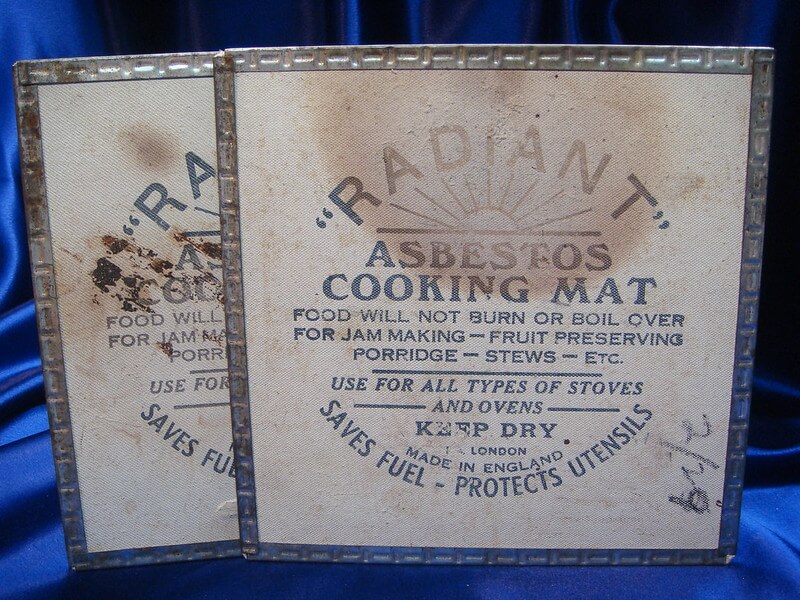
Stove-top pads
Talcum powder and talc-based makeup
Toasters
Exposure to household asbestos products is not considered as dangerous as working directly with asbestos products on the job, but it should still be avoided.
UK Asbestos Manufacturers
A few dozen producers of asbestos products may be responsible for the exposure of thousands of individuals to asbestos fibers. These companies employed tens of thousands of individuals who were likely exposed to asbestos on the job.
Companies such as Turner & Newall — based in Manchester — produced asbestos cloth, asbestos cement sheets and a variety of other products that made workers sick. Other U.K. asbestos product manufacturers include Cape Asbestos, Ferodo Limited, Marinite Co., John Brown and Company, JW Roberts Limited, Washington Chemical Company, TBA Industrial Products, Turners Asbestos Cement and Newalls Insulation Company Limited.
Mesothelioma Treatment Centers in the UK
Not every hospital in the U.K. has mesothelioma specialists on staff. Prestigious hospitals throughout Britain offer mesothelioma specialists.
The Royal Marsden Hospital, located in London and Surrey, offers mesothelioma treatment. The Royal is also the oldest dedicated cancer hospital in the world. The hospital has the latest treatment options and conducts mesothelioma clinical trials.
UK Treatment Centers
Glenfield Hospital (Leicester)
Guy’s Hospital (London)
London Lung Cancer Centre- London Bridge Hospital (London)
Papworth Hospital (Cambridge)
St. Bartholomew’s Hospital (London)
St. George’s Hospital, University of London
The Christie Hospital (Manchester)
The London Chest Hospital (London)
The Royal Marsden Hospital (London and Surrey)
St. George’s Hospital, University of London is home to Dr. Angus Dalgleish, a mesothelioma specialist who has been involved in clinical trials for mesothelioma in addition to serving as a medical oncologist for this rare cancer. The hospital is one of the largest in Europe and is known for its cancer care, cardiac care and bone marrow transplantations.
Mesothelioma Clinical Trials
The U.K. doesn’t have as many mesothelioma clinical trials as the U.S. or Europe. These trials study a wide range of therapeutics. These range from immunotherapy to surgery. They’ve even studied radiation to help surgery scars.
Clinical trials are investigating targeted therapies, immunotherapy and chemotherapy. As well as methods to improve the diagnostic process.
Mesothelioma Lawsuits and Compensation in the UK
The average compensation awarded in mesothelioma lawsuits in the United Kingdom ranges from £137,000 to £153,531. These figures come from a 2014 report by the U.K. Department for Work and Pensions.
The number of mesothelioma cases increased in the second half of the 20th century. The U.K. government began to acknowledge asbestos-related diseases of the lungs. Legislation is now in place to protect those affected by asbestos.
Determining who is liable is difficult because the disease can take 20 to 50 years to develop. Most of those diagnosed with mesothelioma worked for one or more companies that used asbestos.
Residents of the United Kingdom have been among the growing number of personal injury plaintiffs filing lawsuits in U.S. courts, attributing their diagnoses of…
A 2019 mesothelioma talc lawsuit filed by a U.K. woman decided that U.S. courts are the best venue for such claims.
In her lawsuit, Hanna Louise Fletcher claimed she developed mesothelioma at the age of 45 by using talc-based makeup and other talc products. Fletcher used her mother’s talcum powder as a child. She also purchased contaminated talc-based makeup during vacations in New York City.
You may think that living in the UK, you are not able to file a case within the U.S. court system, but that’s not entirely true. If you have [asbestos] exposure that relates back to American-branded companies or to products manufactured here in the United States, you may be able to avail yourself of a courtroom in the United States.
Daniel Wasserberg, mesothelioma lawyer
The judge ruled that her case should stay in New York because it remains the defendants’ principal places of business. Fletcher’s purchase of products in New York also influenced the ruling. U.K. women have received multimillion-pound verdicts since this ruling.
$30B+ IN TRUST FUNDS AVAILABLE
Find the Right Attorney to Help You File a Lawsuit
When filing a mesothelioma lawsuit, the right legal representation is everything. We’ll connect you to a top lawyer who will help you secure financial compensation.
Asbestos prohibition laws in the United Kingdom were first introduced in the mid-1980s. In 1985, the U.K. banned the import and use of crocidolite and amosite, or blue and brown asbestos, respectively. This rule was replaced in 1992 with a law that also banned some uses of chrysotile asbestos, which is traditionally considered less lethal than the other forms of asbestos.
1999
Year the U.K. government banned the use and import of chrysotile asbestos.
Other asbestos-related laws passed during the 1990s stipulated that work on any asbestos insulation products may only be carried out by a licensed asbestos professional.
Asbestos-at-work regulations have set maximum exposure limits and require that all asbestos be identified and managed properly. Regulations also require that employees at risk for asbestos exposure be trained in asbestos safety precautions.
Control of Asbestos Regulations Act
The U.K.’s Control of Asbestos Regulations Act combined the above legislation into one law prohibiting the use, supply, and importation of all asbestos to help prevent mesothelioma. This law prevents new uses of asbestos in the U.K. but allows existing asbestos-containing materials to remain intact if they are in good condition and undisturbed.
The 2006 act also set maximum exposure limits and demanded that anyone at risk of encountering asbestos on the job be trained to handle the material properly. Certain asbestos products and work activities relating to asbestos were outlawed in the U.K. by the Control of Asbestos Regulations Act, unless the products were manufactured before November 1999.
Outlawed by the Control of Asbestos Regulations Act
Spraying of asbestos materials as a surface coating
Use of low-density insulating or soundproofing materials made from asbestos
Importation of asbestos-containing products
Use of asbestos cement
Use of boards, panels or tiles covered in asbestos paint or plasters
The Control of Asbestos Regulations 2012 Act updated previous regulations to comply with the European Commission’s opinion that the U.K. had yet to completely implement the European Union Directive on asbestos exposure.
This measure didn’t change prior regulations, but it added more requirements to improve the safety of non-licensed asbestos work. Such measures included reporting non-licensed asbestos work to the relevant enforcing authority, keeping written records of the work and having workers under medical surveillance.
Controlling Asbestos at Work
The Asbestos Regulations of 1969 were the first U.K. laws designed to help control asbestos exposure in the workplace, but statutory control procedures were not introduced until nearly 20 years later when the Control of Asbestos at Work Regulations (1987) was put into effect.
In 1993, those laws were amended to make it mandatory to substitute other suitable, safer products for asbestos wherever possible. In 2002, the bill was amended again to require that all workplaces identify any existing asbestos-containing materials and manage them to ensure the safety of workers.
In 2009, Scotland passed the Damages Act to ensure the House of Lords ruling from October 2007 would not affect cases in Scotland.
The Damages Act allows compensation for individuals who have developed pleural plaques because of asbestos exposure. Insurers tried appealing the 2009 legislation, noting that plaques do not necessarily lead to poor health, but they lost on appeal in April 2011.
Asbestos Licensing Laws
In 1983, the Health & Safety Executive, also known as HSE, passed legislation which stated that all contractors working with asbestos insulation or coating had to be licensed through the HSE. Asbestos insulation board was added to the list of license-required materials in 1998.
Under the 2006 Control of Asbestos Regulations, nearly all work involving asbestos insulation products must be performed by a licensed professional.
The law also states that work must be performed in accordance with the approved code of practice, and any plans for the removal of asbestos must be submitted to the HSE at least two weeks prior to the beginning of work.
A recently published study from the United Kingdom has shown that legacy asbestos lingering in commercial and residential construction is more dangerous than expected. …
The mission and vision of the Royal Society for the Prevention of Accidents (RoSPA) is to save lives, reduce injuries and lead the way on accident prevention. The organization, which started in 1916, has spearheaded pedestrian safety, analyzing accident causes, home safety guidelines and occupational health risk campaigns, including raising awareness of asbestos-related illnesses and how to prevent them.
The charity provides an asbestos training course that includes an explanation of the Control of Asbestos at Work Regulations 2012, as well as how to manage asbestos risks and understand the dangers of exposure.
RoSPA’s National Occupational Safety & Health Committee is a voluntary association of people drawn from organizations representing a broad cross-section of occupational safety and health interests.
It is an advisory committee to the RoSPA and helps identify the ways and means of improving occupational safety and health, while also shaping RoSPA policy and key issues. It also covers several topics, including asbestos and work-related cancer, as part of its Occupational Health Risks Campaigns.
Recommended Reading
Your web browser is no longer supported by Microsoft. Update your browser for more security, speed and compatibility.
If you are looking for mesothelioma support, please contact our Patient Advocates at (855) 404-4592
Fact Checked
Our fact-checking process begins with a thorough review of all sources to ensure they are high quality. Then we cross-check the facts with original medical or scientific reports published by those sources, or we validate the facts with reputable news organizations, medical and scientific experts and other health experts. Each page includes all sources for full transparency.
Reviewed
Asbestos.com is the nation’s most trusted mesothelioma resource
The Mesothelioma Center at Asbestos.com has provided patients and their loved ones the most updated and reliable information on mesothelioma and asbestos exposure since 2006.
Our team of Patient Advocates includes a medical doctor, a registered nurse, health services administrators, veterans, VA-accredited Claims Agents, an oncology patient navigator and hospice care expert. Their combined expertise means we help any mesothelioma patient or loved one through every step of their cancer journey.
More than 30 contributors, including mesothelioma doctors, survivors, health care professionals and other experts, have peer-reviewed our website and written unique research-driven articles to ensure you get the highest-quality medical and health information.
About The Mesothelioma Center at Asbestos.com
Assisting mesothelioma patients and their loved ones since 2006.
Helps more than 50% of mesothelioma patients diagnosed annually in the U.S.
A+ rating from the Better Business Bureau.
5-star reviewed mesothelioma and support organization.
My family has only the highest compliment for the assistance and support that we received from The Mesothelioma Center. This is a staff of compassionate and knowledgeable individuals who respect what your family is experiencing and who go the extra mile to make an unfortunate diagnosis less stressful. Information and assistance were provided by The Mesothelioma Center at no cost to our family.
Whitmer, M. (2026, March 11). Mesothelioma in the UK. Asbestos.com. Retrieved October 15, 2026, from https://www.asbestos.com/mesothelioma/uk/
MLA
Whitmer, Michelle. "Mesothelioma in the UK." Asbestos.com, 11 Mar 2026, https://www.asbestos.com/mesothelioma/uk/.
Chicago
Whitmer, Michelle. "Mesothelioma in the UK." Asbestos.com. Last modified March 11, 2026. https://www.asbestos.com/mesothelioma/uk/.
The Patient Advocates are absolutely amazing and helpful! I am so very pleased with the information and the emotional support that I have received from everyone! When I felt all hope was lost, Amy gave me great information and was so compassionate. I do not feel alone, and I know there is strong support for anyone dealing with this tragic disease. I received a FREE information package, including a recipe book, information on the disease, a toll-free number to contact for assistance, and a book with the answers to 100 questions that are commonly asked. This information alone was worth my time! I read for hours and hours, and just that alone—knowledge—can be a great comfort. To fully understand this disease, to just have the knowledge!!! Thank you all!! Thank you so, so much.
I found out about The Mesothelioma Center while researching peritoneal mesothelioma days after being diagnosed with the malignant cancer. While a lot of the 'Mesothelioma' websites are actually law firms just trying to get your business, theirs is a user-friendly, comprehensive website set up to aid patients, their loved ones, and/or caregivers with all things related to a cancer diagnosis from asbestos exposure. I was soon put in touch with one of their doctors, Snehal Smart, M.D., who immediately sent me a packet of general information, a book on surviving mesothelioma, and offered me assistance in finding doctors, reputable law firms, financial help, support groups, and so much more! The Mesothelioma Center's website is, in my opinion, the best resource for anyone suffering from cancer due to asbestos. Dr. Smart is amazing! She is very knowledgeable and helpful, but she is also a very kind, caring doctor who goes the distance whether she is researching a pertinent topic, making suggestions, providing contacts, or just being a good listener on the other end of the phone. In addition, Dr. Smart referred me to a law firm who is now fighting to get me compensation for the negligence of those defendants whose products exposed me to asbestos and caused my subsequent cancer. Thank you, TMC and Dr. Smart, for helping me determine the best treatment plan for my cancer and being part of my miracle. I am currently cancer-free and back to being a mom to my precious daughter. The Mesothelioma Center, their website, and their staff rock!!
I reached out and talked to Aaron a couple of weeks before my diagnosis of malignant mesothelioma. He was very helpful and gave me a lot of information at that time. I have talked to him several times since and always gotten my questions answered. Aaron is very knowledgeable and has been very helpful and supportive. He also sent me a comprehensive packet of information, including info on nutrition, legal help, and medical resources.
My brother was recently diagnosed with mesothelioma. I began researching it online. The information I received from The Mesothelioma Center is all-inclusive. No need to look anywhere else! The first phone call was with Karen, and she answered all my questions with ease. She also had a calming effect by presenting all the options available for my brother and his family. Thank you!
My Dad was diagnosed with mesothelioma, and thankfully The Mesothelioma Center was the first place I called. Snehal Smart answered the phone immediately and was very helpful. She immediately sent us an information packet and answered questions. She followed up each week to see how things were going and if we had any questions. She also connected us with a lawyer. I highly recommend this Center.
An occupational scientist or another expert who specializes in occupational hazards reviewed the content on this page to ensure it meets current scientific standards and accuracy.
Arti Shukla, Ph.D., is an internationally renowned asbestos researcher known for her achievements in identifying biomarkers that cause mesothelioma. She is the director of the Shukla Research Lab, as well as a professor of pathology at The University of Vermont Larner College of Medicine.
Fact-checked and verified content:
Our fact-checking process begins with a thorough review of all sources to ensure they are high quality. Then we cross-check the facts with original medical or scientific reports published by those sources, or we validate the facts with reputable news organizations, medical and scientific experts and other health experts. Each page includes all sources for full transparency.
Please read our editorial guidelines to learn more about our content creation and review process.