Navelbine - Chemotherapy Drugs for Mesothelioma
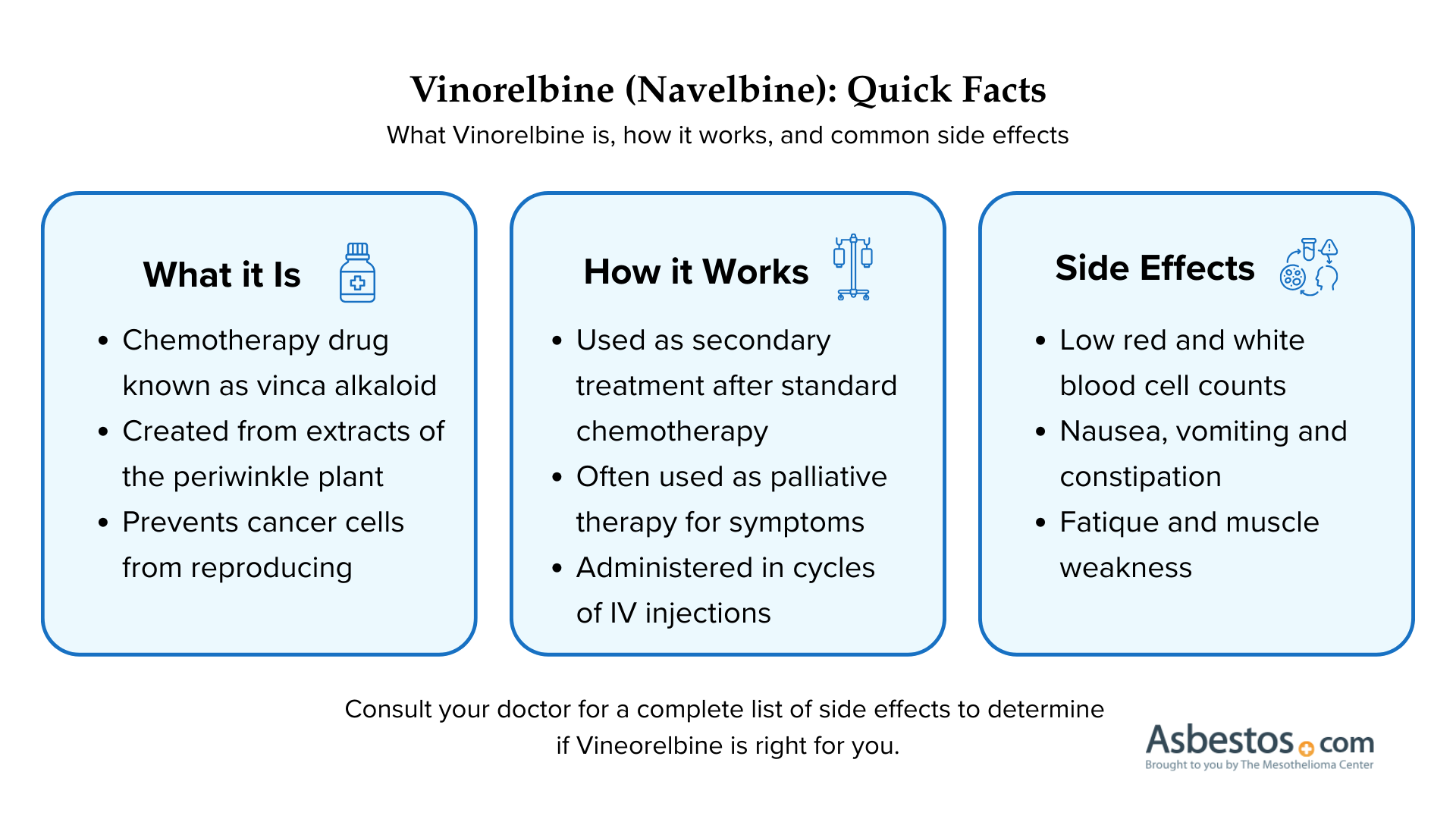
Navelbine (also known as Vinorelbine) is relatively unique among chemotherapy drugs used for the treatment of mesothelioma because most chemotherapy drugs are entirely synthetic, whereas Navelbine is a semi-synthetic drug that is extracted from a flowering plant known as periwinkle.
Are You Starting Chemo?
Do you want to know more about your chemotherapy drugs? Request a free packet. Complete the form to the right to have your packet delivered to you.
Navelbine for Mesothelioma Treatment
Most chemotherapeutic drugs, including Navelbine, work by entering cells and binding to structures that are essential in cell division. This prevents cells from dividing, and because the cells cannot function normally, a form of "cellular suicide" takes place. Thus, Navelbine can both slow the spread of cancers and kill existing cancer cells.
Relatively new on the treatment scene, Navelbine has shown a slightly higher success rate than some other chemotherapy drugs in the treatment of mesothelioma.
Often used in conjunction with other treatments such as surgery, or in tandem with other chemotherapeutic agents, Navelbine is typically administered once a week for several weeks. The drug is injected intravenously on an out-patient basis and the procedure usually takes around 30 minutes to an hour. The number of treatments a patient will receive is determined by the location and development of cancer.
When discussing treatment options with a doctor it is important to inform them of any other medical conditions, such as kidney or liver problems. In addition, patients must inform their doctor of other medications being taken to avoid possible complications.
Side Effects of Navelbine
Those taking Navelbine for mesothelioma treatment might experience side effects that may become serious if left untreated. All severe side effects should be reported to a medical professional and may include:
- Allergic reaction (symptoms may include difficulty breathing, swelling of the lips, tongue, or face, or hives)
- Extreme fatigue, tendency to bruise or bleed easily, blood in stool, chills, fever, or other signs of infection. These symptoms indicate decreased bone marrow function and increased vulnerability to infection.
- Pain, swelling, or redness at the injection site
- Constipation or abdominal pain
- Cough or difficulty breathing
- Chest pain, numbness, or tingling
Less serious side effects may include:
- Minor feelings of fatigue
- Hair loss
- Nausea, vomiting, loss of appetite, and diarrhea
- Inflammation or soreness inside the mouth or on the lips
It is very important to note those being treated with Navelbine are much more vulnerable to infection. As such. those receiving treatment should avoid contact with people who have colds, the flu, and other contagious conditions.
Use Our Doctor Match Program
If you feel as if you need more information from a doctor about your illness, use our Doctor Match Program to find a mesothelioma treatment specialist near you. Call (800) 549-0544.
-
05/24/2012 -
One of the biggest asbestos-abatement jobs ever done in Buffalo, New York, is being handled now by a local company with a history of asbestos-related ..
-
05/23/2012 -
A new class of anti-cancer drugs is nearing the clinical trial phase and may eventually be available for treatment of aggressive diseases like pancrea ..
-
05/23/2012 -
School districts all across America have been wrestling in recent years with the task of removing and disposing of toxic asbestos from older buildings ..