Mesothelioma surgery removes tumors and extends survival in eligible patients. About 27.6% of patients with pleural mesothelioma underwent surgery between 2004 and 2020. Eligibility depends on cancer stage, cell type and overall health.
Dr. Jeffrey Velotta: What Do You Feel Is the Best Approach to Treating Mesothelioma?
I feel that surgery first, followed by chemotherapy, is the best multimodality approach for mesothelioma due to the fact that we know only 20% to 40% of patients will actually have somewhat of a radiologic or clinical response to chemotherapy. So patients that will opt for chemotherapy first--
which is still done in certain places because right now there currently is a clinical trial looking at whether or not to get the chemotherapy prior or after surgery. And we still don't have those results. So in the meantime, it's done depending on what institution you're at.
And so the idea--
why I believe that the chemotherapy--
two reasons, first, is an issue is that 20% to 30% of the time it may be helpful, but it never shrinks it completely. It never gets rid of it.
And then there's a 60% to 80% chance that the tumor will progress and that you missed your window to operate. They're getting sicker on the chemo, and the tumor is growing. And that's a 60% to 80% chance the tumor will progress and grow.
So rather than take that chance, I'd rather get it out first and then have--
and we know that 80% of patients, after we take it out, can still make it to surgery because we do a pleurectomy and decortication. And so it's not as aggressive or not as morbid. So patients will be able to do the chemotherapy afterwards.
It was originally thought that do the chemo first because patients were getting an extrapleural pneumonectomy, and they were never able to make it because they were too sick to get chemotherapy afterwards. So you missed that window. But now that we do pleurectomy decortication, chemo afterwards is better because, like I said, chemo is going to react better to a patient that has less disease in the body.
The other reason why I don't necessarily think it's a great idea to get chemotherapy first is that those patients with symptoms and signs of mesothelioma are already weak. They're already in pain. They're already having a lot of pleural fluid. The chemo doesn't get rid of any of that. It may shrink something a little bit, tiny bit, but it doesn't get the patient clinically better.
So not only does it not help, but these patients are already sick, and then they start to lose even more weight just based on the chemotherapy alone. So those patients are essentially not doing well during that time period. And so what we found in previous studies is that 50% to 65% of patients that get the neoadjuvant or get chemotherapy first never actually make it to surgery. They're too sick to even make it to surgery.
Whereas when you first see them, you catch it early, you haven't had to give them toxic agents or anything, and then we first caught it hopefully early enough, we operate on them first. So I think those are the two big reasons why I really favor the surgery first, followed by chemotherapy afterwards.
Dr. Jeffrey Velotta: What Do You Feel Is the Best Approach to Treating Mesothelioma?
I feel that surgery first, followed by chemotherapy, is the best multimodality approach for mesothelioma due to the fact that we know only 20% to 40% of patients will actually have somewhat of a radiologic or clinical response to chemotherapy. So patients that will opt for chemotherapy first--
which is still done in certain places because right now there currently is a clinical trial looking at whether or not to get the chemotherapy prior or after surgery. And we still don't have those results. So in the meantime, it's done depending on what institution you're at.
And so the idea--
why I believe that the chemotherapy--
two reasons, first, is an issue is that 20% to 30% of the time it may be helpful, but it never shrinks it completely. It never gets rid of it.
And then there's a 60% to 80% chance that the tumor will progress and that you missed your window to operate. They're getting sicker on the chemo, and the tumor is growing. And that's a 60% to 80% chance the tumor will progress and grow.
So rather than take that chance, I'd rather get it out first and then have--
and we know that 80% of patients, after we take it out, can still make it to surgery because we do a pleurectomy and decortication. And so it's not as aggressive or not as morbid. So patients will be able to do the chemotherapy afterwards.
It was originally thought that do the chemo first because patients were getting an extrapleural pneumonectomy, and they were never able to make it because they were too sick to get chemotherapy afterwards. So you missed that window. But now that we do pleurectomy decortication, chemo afterwards is better because, like I said, chemo is going to react better to a patient that has less disease in the body.
The other reason why I don't necessarily think it's a great idea to get chemotherapy first is that those patients with symptoms and signs of mesothelioma are already weak. They're already in pain. They're already having a lot of pleural fluid. The chemo doesn't get rid of any of that. It may shrink something a little bit, tiny bit, but it doesn't get the patient clinically better.
So not only does it not help, but these patients are already sick, and then they start to lose even more weight just based on the chemotherapy alone. So those patients are essentially not doing well during that time period. And so what we found in previous studies is that 50% to 65% of patients that get the neoadjuvant or get chemotherapy first never actually make it to surgery. They're too sick to even make it to surgery.
Whereas when you first see them, you catch it early, you haven't had to give them toxic agents or anything, and then we first caught it hopefully early enough, we operate on them first. So I think those are the two big reasons why I really favor the surgery first, followed by chemotherapy afterwards.
What Does Mesothelioma Surgery Do?
Diagnostic surgeries, such as biopsies, identify the type of disease. Curative mesothelioma surgeries remove tumors to extend survival, while palliative surgeries relieve symptoms like fluid buildup and pain. No surgery can cure mesothelioma, but aggressive curative approaches can significantly extend life expectancy in eligible patients. Surgery is most effective as part of a multimodal plan that may include chemotherapy, radiation or immunotherapy.
Key Facts About Mesothelioma Surgery
Mesothelioma surgery can improve a patient’s prognosis, extend survival and improve the overall quality of life.
About 27.6% of pleural mesothelioma patients received surgery between 2004 and 2020, according to the National Cancer Database.
About 50% to 69% of peritoneal patients who undergo cytoreductive surgery with heated chemotherapy or HIPEC live longer than 5 years.
Pain and swelling around the incision are the most commonly reported complications of surgery.
Patients who undergo pleurectomy/decortication or P/D for pleural mesothelioma have a median survival of about 22 months, with some studies reporting a 16% 10-year survival rate.
Therapeutic mesothelioma surgeries cut out visible tumors. Surgeons also remove as much tissue where mesothelioma cells have spread as possible to help people live longer. Palliative mesothelioma surgeries address issues such as pain, discomfort and trouble breathing with procedures to remove and prevent unwanted fluid from returning.
Surgery is often part of multimodal therapy plans for mesothelioma. Doctors may recommend chemotherapy to kill any remaining cancer cells after surgery and radiation to prevent local recurrence. Immunotherapy may help as a maintenance therapy. These mesothelioma treatments improve the chance of long-term survival in combination with surgery. In some cases, chemotherapy or immunotherapy is given before surgery rather than after. This approach, called neoadjuvant therapy, can shrink tumors before resection and may improve surgical outcomes for select patients. Your oncologist and surgeon will determine the right sequencing for your treatment plan.
Exclusive Content
Dr. Marcelo DaSilva: Am I a Candidate for Mesothelioma Surgery?
How can we determine specifically how do I determine if a patient is a candidate for surgery for mesothelioma?
There are two components, important components. One is what I call the physiologic status of the patient. The performance status is the patient walking, talking, interacting, is he willing to go treatment.
And there is the psychological aspect of it as well. Is the patient prepared mentally to go through treatment including surgery because chemotherapy, immunotherapy in itself is a very hard long prolonged treatment. They have to get through them to get to surgery. So those are the important things that I look at patients and their willingness to really jump into this treatment plan with us.
I usually tell the patients you know it’s a dark black forest difficult to navigate. You never done this before. We’ve done it several times for many years. We have the roadmap.
We know how to get you from this side of forest to the other side through it. You cannot go around the forest. You have to go through it. Let us help you navigate that.
Who Is Eligible for Mesothelioma Surgery?
Eligibility for surgery is thoroughly vetted during a surgical consultation, where the surgeon and the surgical team review your medical history, imaging scans and biopsy results. The type of mesothelioma you have can also help determine which type of surgeon may lead your care. You may not qualify if you have the biphasic or sarcomatoid cell type, late-stage cancer or certain preexisting conditions.
Cancer stage is the most important eligibility factor, according to nearly 56% of mesothelioma surgeons in our exclusive survey. A surgical consultation is the best way to determine whether you qualify.
Eligibility for surgery is thoroughly vetted during a surgical consultation, where the surgeon and the surgical team review your medical history, imaging scans and biopsy results. If you qualify for surgery, you also may be able to join a mesothelioma clinical trial of other treatment options. Mesothelioma surgeons can offer patients the opportunity to participate in clinical trials to investigate the best therapies to combine with surgery. If you’re unsure where to start, our Patient Advocates can help connect you with a top mesothelioma surgeon at no cost to you.
If your doctor confirms you’re a surgical candidate, expect preoperative testing that typically includes pulmonary function tests, a cardiac evaluation, blood work and updated imaging. Your team will also advise you to stop smoking and pause certain medications ahead of surgery. Arrange for a home caregiver for the first several weeks of recovery. If you are being evaluated for EPP, expect spirometry as well, since your remaining lung must compensate after the procedure.
Am I a Candidate for Mesothelioma Surgery?
Factor
Likely Candidate
May Not Qualify
Cancer stage
Early-stage (1 or 2)
Late-stage (3 or 4)
Cell type
Epithelioid
Sarcomatoid or biphasic
Heart health
No significant cardiac conditions
History of serious heart disease
Lung function
Adequate pulmonary function
Significantly reduced lung capacity
Overall health
Good general health
Serious comorbidities present
Smoking status
Non-smoker or quit
Active smoker
Ability to recover
Can tolerate lengthy recovery
Unable to withstand surgery or recovery
Free Webinar
Mesothelioma Clinical Trials 101
Join Dr. Catherine Perrault for a free webinar to learn how clinical trials work, who qualifies and how to find one that fits your diagnosis.
Types of Surgery for Mesothelioma: Diagnostic, Curative and Palliative
Mesothelioma surgery falls into 3 main categories: diagnostic, curative and palliative. Surgery can also help in staging and supportive procedures assist an overall treatment plan. Each of these can play an important role in your mesothelioma care.
Dr. Jacques Fontaine, thoracic surgeon and director of the Mesothelioma Research and Treatment Center at Moffitt Cancer Center in Tampa, told us, “There’s two categories of surgery we can offer. Palliative surgery’s goal is to improve quality of life. The goal of curative surgery for mesothelioma is to remove all the disease that can be seen with the naked eye.”
Common Curative Types of Mesothelioma Surgery
Cytoreductive surgery with HIPEC: This curative surgery for peritoneal mesothelioma removes visible tumors before applying heated chemo directly to the abdomen.
Extrapleural pneumonectomy: This surgery for pleural mesothelioma removes the entire lung. Because EPP is a very aggressive surgery, surgeons perform it less often than lung-sparing surgeries.
Pericardiectomy: Also known as a pericardial window, this surgery for pericardial mesothelioma removes part or all of the heart’s lining to take out tumors or relieve fluid buildup. It may improve symptoms and extend life.
Peritonectomy: A peritonectomy is an aggressive surgery that removes visible tumors from the abdominal lining to treat peritoneal mesothelioma. A type of cytoreductive surgery, it’s often paired with HIPEC.
Pleurectomy with decortication: While P/D is an aggressive surgery for pleural mesothelioma, it’s a lung-sparing surgery. It’s considered less aggressive than EPP and doctors perform it more often.
Diagnostic surgeries include surgical biopsy, which is a procedure where a surgeon removes part or all of a lump or abnormal tissue through a small cut to help diagnose mesothelioma. It may be done in a hospital or clinic using local or general anesthesia, and the removed tissue is sent to a lab for testing. Staging surgery helps doctors see how far mesothelioma has spread in the body. It may involve procedures like laparoscopy or endobronchial ultrasound/mediastinoscopy, where a small camera is used to look inside and take tissue and lymph node samples.
Supportive surgery for mesothelioma is similar to palliative surgery in that it doesn’t remove tumors or aim to be curative. Its goal is to help other mesothelioma treatments work better. An example of a supportive surgery is placing a catheter or port to deliver chemo more effectively.
Diagnostic Surgery
Purpose: Confirm diagnosis, determine cancer extent and help plan treatment.
Procedures use minimally invasive techniques to obtain tissue samples.
Examples: core biopsy, laparoscopy and thoracoscopy
Curative Surgery
Purpose: Remove as much visible cancer as possible to extend survival.
Often part of multimodal therapy with immunotherapy, chemo and radiation.
Examples: HIPEC, EPP and P/D
Palliative Surgery
Purpose: Relieve symptoms and provide comfort.
Reduces discomfort from symptoms like breathing difficulties, fluid buildup and pain.
Examples: catheter placement, paracentesis, pleurodesis and thoracentesis
Surgical treatment for pleural mesothelioma targets cancer in the lung’s outer lining through 2 main approaches: curative procedures that remove tumors and palliative procedures that manage symptoms.
Pleural mesothelioma surgeries are often part of multimodal therapy, which combines major, tumor-removing surgery with other treatments, including radiotherapy and chemo. This aggressive treatment approach can extend life expectancy.
Pleural Mesothelioma Surgeries
EPP: An entire lung, the lining around it (possibly including the diaphragm and pericardial layers) and nearby lymph nodes are removed.
Partial pleurectomy: Part of the pleura, the thin lining around the lungs, is removed to take out visible mesothelioma tumors and ease symptoms like shortness of breath. It’s less aggressive than removing the entire pleura and may be offered when full tumor removal isn’t possible.
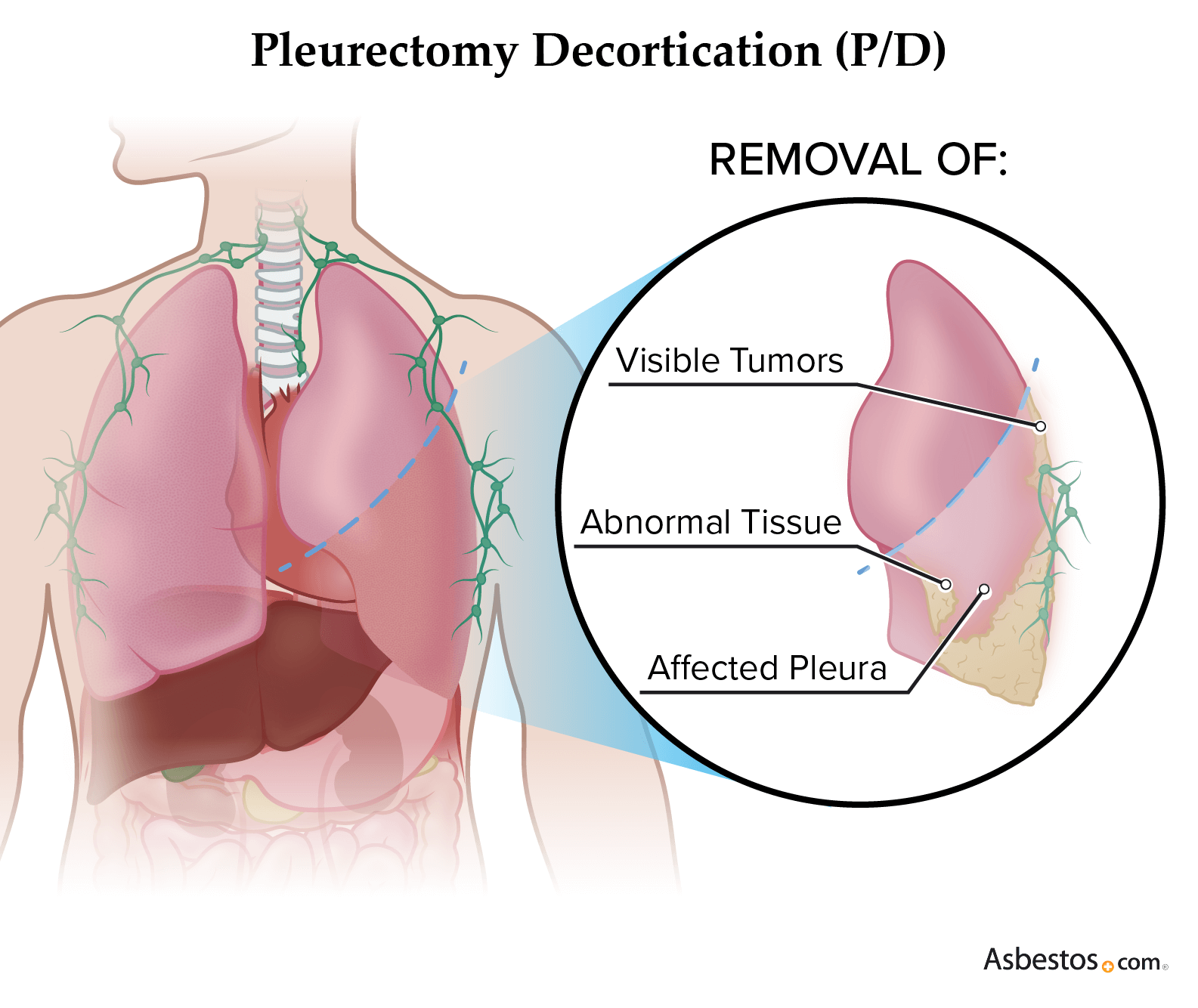
P/D: The pleural lining around the lungs (possibly including the diaphragm and pericardial layers) and all visible tumors are removed as well as nearby lymph nodes. Surgeons scrape the surface of the diseased lung rather than removing the organ.
Pleurodesis: It seals the space between the lung and chest wall to prevent fluid or air from building up again. It causes inflammation that fuses the pleural layers together.
PleurX catheter placement: Surgical placement of a small silicone catheter (PleurX) allows you to drain pleural fluid at home every 2 to 3 days without undergoing another thoracentesis.
Thoracentesis: A doctor can drain pleural fluid with a hollow needle to relieve chest pressure, allowing the lungs to expand to improve breathing.
About 15% to 20% of patients with pleural mesothelioma qualify for aggressive surgery. Specialists will recommend the treatment for mesothelioma that best meets your needs and goals. When deciding between pleurectomy versus pneumonectomy, for example, surgeons will consider your unique medical needs and preferences. These surgeries may take several hours to complete, and recovery time varies depending on the procedure.
Insights From Medical Conferences
“At the IASLC Targeted Therapies of Lung Cancer Meeting, Dr. Leah Backhus and Dr. Gregory Kalemkerian discussed the ever-present debate about whether surgery still has a place in the treatment pathway for pleural mesothelioma. I was especially excited to hear Dr. Backhus discuss pressurized intra-thoracic aerosol chemotherapy, more commonly known as PITAC, and learn that the team at Stanford Health Care recently performed their first case in a mesothelioma patient. The possibility of a new therapeutic avenue for this community is incredibly encouraging.”
Source: Dr. Catherine Perrault, chief medical officer, Medical Outreach at The Mesothelioma Center
The goal of pleurectomy and decortication is to take out as much cancer as possible without removing the lung. The median survival with P/D is 22 months. A 2024 long-term survival analysis published in the journal Clinical Lung Cancer found the P/D group had 10-year overall survival rates of 16%, significantly higher than any other group.
Doctors offer P/D to people with pleural mesothelioma that hasn’t spread too far into the lung or nearby tissue. You must be medically able to tolerate surgery and recovery. Its lung-sparing approach has made P/D the preferred surgical option, achieving outcomes similar to EPP with a reduced risk of complications. P/D may help people live longer. It keeps the lung in place, which helps you breathe better.
But there are some risks. You may have bleeding, air leaking, infection or pain after surgery. Recovery time may be lengthy, but many people feel better as they heal. Doctors and nurses will help you manage side effects. P/D typically takes 3 to 5 hours. Most patients remain in the hospital for 7 to 10 days after surgery before recovering at home.
Survivor Story
Linda Hooper: Undergoing Mesothelioma Surgery
The first treatment for the mesothelioma was a pleurectomy decortication, which is an operation.
They cut through the middle of your back, between your ribs to the almost the middle of your front.
It was supposed to be a eight inch incision, but it looks more like twelve.
It, they had to remove a rib.
They took the cancer that was collected around my the plural, lining of my lung and it was scraped off. I had six lymph nodes cut off. Two of them turned out also positive for mesothelioma.
So I was pretty close to the stage where I was still a candidate to have the operation done, because it hadn’t, spread further.
Extrapleural Pneumonectomy (EPP) for Mesothelioma
The goal of extrapleural pneumonectomy is to take out as much cancer as possible. EPP removes one lung, the lung lining, part of the diaphragm/pericardium and some nearby tissue. Median survival after EPP ranges from approximately 12 to 22 months depending on cell type and stage, with epithelioid patients typically showing the best outcomes.
Doctors may recommend it when the mesothelioma hasn’t spread far, and you’re able to tolerate surgery. Your doctor will check your overall health, lung strength and if the cancer is only on one side of your chest. If your heart and other lung are healthy, you may be able to have an EPP. Doctors also check whether other treatments, such as chemo or radiation, will help after surgery.
EPP can remove most visible cancer and may improve survival, but it carries significant risks. Research published in the European Journal of Cardio-Thoracic Surgery in 2024 found experienced surgical centers had a 90-day mortality rate of 7.2% with EPP compared to nearly 0% for P/D. Removing a lung can make breathing harder and require a longer recovery. This is why doctors don’t often perform EPP today, preferring lung-sparing surgeries. EPP typically takes 4 to 6 hours. Most patients spend approximately 2 weeks recovering in the hospital before going home.
P/D vs. EPP: Comparing Pleural Mesothelioma Surgeries
Key Fact
P/D
EPP
What’s removed
Pleural lining, visible tumors
Entire lung, lining, part of the diaphragm/pericardium
Surgery duration
3–5 hours
4–6 hours
Hospital stay
7–10 days
~2 weeks
Full recovery
3–4 months
3–6 months
90-day mortality
~3.1%
~7.2%
Lung preserved
Yes
No
Peritoneal Mesothelioma Surgery Options
The most effective surgery for peritoneal mesothelioma is tumor removal or cytoreductive surgery with HIPEC. In the first step of this 2-step procedure, all visible tumors in your belly are removed. This can mean removing part or all of the lining around your abdomen (the peritoneum) and parts of your spleen, stomach and intestines if needed. In the second step, a heated chemo wash is applied directly into your belly to kill any remaining cancer cells. Cytoreductive surgery with HIPEC is one of the longest mesothelioma procedures, often taking 6 to 10 hours depending on how extensively tumors have spread. Most patients stay in the hospital for 1 to 2 weeks after surgery.
Surgeries for Peritoneal Mesothelioma
Omenectomy: This is typically done during cytoreductive surgery with HIPEC. An omentectomy removes an apron of the peritoneum called the omentum to remove as much cancerous tissue from your body as possible.
Paracentesis: This is a palliative surgery commonly performed to drain excess fluid buildup. To avoid the need for multiple paracenteses, small, flexible tubes or indwelling peritoneal catheters (tunnel or PeritX) may be inserted to drain fluid. They can be left in place, allowing you to manage ascites at home.
Peritonectomy: This is done during cytoreductive surgery. Peritonectomy removes diseased parts of the peritoneum, the lining around the cavity and organs in your belly.
Cytoreductive surgery with HIPEC improves symptoms and extends survival. Patients who undergo repeat HIPEC with surgery live an average of 67.7 months, according to a 2022 study in Annals of Surgical Oncology. Risks include infection, digestive issues, excessive bleeding and constipation.
This combination is considered the gold standard for treating peritoneal mesothelioma, offering patients an average survival of about 4.5 years (53 months), with some living 10 years or longer. Studies show when combined with systemic chemotherapy, the 5-year survival rate can reach as high as 65% to 80%, a marked improvement compared to other treatments.
Expert Insight
“I think the best treatment for peritoneal mesothelioma is a combination of HIPEC as well as what we call a cell reductive procedure. This includes the peritonectomy procedure.”
Dr. Charles Conway, Director of Surgical Oncology at the Ridley-Tree Cancer Center
FREE MESOTHELIOMA TREATMENT GUIDE
Expert Guidance for Your Mesothelioma Journey
Get answers about treatment, top doctors, and clinical trials from the nation’s most trusted mesothelioma resource.
Surgeries for pericardial mesothelioma focus on relieving symptoms because tumors have often spread into the heart muscle before symptoms appear, leading to diagnoses in advanced stages. While doctors typically can’t remove the tumors, procedures like pericardiectomy and pericardiocentesis can remove affected tissue and drain fluid to reduce pressure and pain. These procedures have varying success rates and carry a higher risk of serious complications.
Surgeries for Pericardial Mesothelioma
Pericardiectomy: Removes as much cancerous tissue as possible from the heart lining, or pericardium. It can relieve symptoms such as difficulty breathing, chest pressure, heart palpitations and fatigue.
Pericardiocentesis: Similar to thoracentesis and paracentesis, but the fluids are removed from around the heart rather than the lungs or abdomen. Doctors treat recurrent pericardial effusions with repeat pericardiocentesis procedures.
These procedures can improve quality of life and relieve symptoms like shortness of breath, coughing and chest pressure. Risks include infection, abnormal heart rate and cardiac arrest. After you get home from surgery, you should contact your doctor if drainage from the incision increases or you notice chest pain or severe symptoms.
Surgery for Testicular Mesothelioma
The most common treatment for testicular mesothelioma is inguinal orchiectomy, a surgery to remove one or both testes along with the spermatic cord. The risks include bleeding, infection, swelling and pain.
A urologic oncologist, a specialist in cancers of the urinary tract and reproductive system, typically performs the surgery. The surgeon may also perform a lymphadenectomy to remove nearby affected lymph nodes.
Disease-specific survival rates are higher among testicular patients compared to pericardial patients. About 58% survive 5 years after diagnosis, with 45% surviving 10 years. Disease-specific survival measures how many people die from the cancer compared to other causes.
The statistics about surgery are based on clinical research and apply only to people diagnosed with different types of mesothelioma cancer. These statistics don’t reflect other surgery stats for the population at large.
Mesothelioma Surgery Benefits and Complications
Mesothelioma surgery can extend survival and relieve symptoms in eligible patients. Pleural surgery reduces chest pain and improves breathing. Peritoneal surgery relieves abdominal pain, swelling and digestive symptoms like constipation. In select cases, surgery offers the potential for long-term survival.
It’s important for surgical candidates to discuss the risks and benefits of different procedures with their surgeons. The most common complications of mesothelioma surgery are pain and swelling around the incision and air leaking. The risks vary by the type of surgery and the patient’s health. Addressing complications quickly is important throughout the recovery process.
Mesothelioma Surgery Complications
Air leaking
Bleeding
Cardiac complications
Dry cough
Fatigue
Infection
Pain after surgery
Pneumonia
More than a decade after her mesothelioma surgery, Susan Dickman tells us the benefits were worth it. She developed an infection 6 weeks after, but it was her only complication.
Susan says, “My husband helped me and my kids. God, all of them helped and got me back to normal.” She says she doesn’t have any lingering side effects and hasn’t had a cancer recurrence.
Michael Cole
Verified Asbestos.com Survivor
Don’t Be Afraid of Aggressive Mesothelioma Treatment
When I was diagnosed with malignant pleural mesothelioma my specialist told me extrapleural pneumonectomy surgery with heated intrathoracic chemotherapy, or HITHOC, was the best course of action for my case. I said, ” I want you to get everything you can see, everywhere you think it might be hiding and everywhere you think it might go.” He was visibly relieved when I told him that.
What Recovery Looks Like After Mesothelioma Surgery
Everyone has a different mesothelioma surgery recovery process, depending on the surgery they’ve had, their overall health and whether any complications arise. Recovery timelines vary by procedure: P/D typically takes 3 to 4 months, while more aggressive surgeries like EPP and HIPEC can take longer. As Dr. Jacques Fontaine told us, EPP “is a tough recuperation that can take 3 to 6 months.”
The recovery process also varies for people who undergo chemo or radiation after surgery. Doctors often tailor multimodal therapy plans. Some people may receive additional therapies soon after surgery, while others may need several weeks of recovery.
For patients who undergo major pleural surgery, particularly EPP, pulmonary rehabilitation typically begins in the hospital before discharge. These supervised breathing exercises help rebuild lung capacity and reduce the risk of post-operative pneumonia. After returning home, many patients continue outpatient pulmonary rehab for several months, alongside physical therapy to rebuild strength and restore normal activity.
Tips for Managing Recovery After Mesothelioma Surgery
Take your medicine: Always take your pain medicine as your doctor says. This will help you feel better and rest more.
Get plenty of rest: Your body needs time to heal. Take naps and pace yourself.
Do breathing exercises: Use your breathing tool or take deep breaths every day. This helps your lungs get stronger and prevents infections.
Eat healthy foods: Try to eat fruits, vegetables and lean protein like chicken or eggs. Good food helps your body heal faster.
Move a little each day: Take short walks or move around a bit when your doctor says it’s safe. This helps with energy and keeps your blood moving.
Tell your doctor about new problems: If you feel worse or have trouble breathing, tell your care team right away. They can help.
Your surgical team will provide guidance to help you prepare for recovery at home. Most surgical teams typically schedule CT scans every 3 months for the first 2 years after surgery, then every 6 months through year 5. These scans help your care team detect recurrence early, when additional treatment options are most effective.
Your oncologist will also monitor blood markers and symptoms at each visit. If imaging shows signs of recurrence, your team may recommend chemotherapy, immunotherapy or additional surgery depending on where the cancer has returned and your overall health.
Survivor Story
Kim Madril: What did the recovery process look like after surgery?
In terms of my recovery, I realized the importance of eating well, getting rest, exercising, positive thoughts, emotional sort of grounding, the value of family and friends and support, and also education, the resources that are currently available for mesothelioma patients.
That had a lot of value too. Some of the home treatments was this sort of cupping thing, which is really uncomfortable.
And there’s some, like, ancient anecdotes that it does help this whole cupping thing, percussion and cupping. I mean, you know, there’s sort of holistic component to it and also medical. And so that was part of his protocol as I had to do this cupping thing. Somebody had to sort of pound my back. It was horrible. Then I had to, lean over a table and do sort of deep breathing.
I hated that, but it was to expand my lung. There was some value to it. Now the physician was Kim. This is why you do the cupping so that you don’t develop too many secretions. You gotta get it out, not to be disgusting, but you’ve gotta, like, you know, cough it up, expectorate, the phlegm.
And then you have to stretch out your lung, and that’s the purpose of this whole stretching thing, and then you’ve gotta walk because you wanna you don’t wanna develop, like, a blood clot. You wanna keep your body active. So I did all that. And I didn’t wanna go outside, so I would walk around and around my mom’s kitchen and sort of her living room. And it was probably about five weeks And that was the time that doctor Cameron said, okay, at about five weeks, that’s when we wanna start the radiation. Probably, Kim, in about three months, you can go back to work.
Or or depending on how radiation goes, some people get symptomatic. Some people will end up with the whole nausea thing.
Sometimes they’re skin issues. Yeah.
And so it depends on a comfort level as well.
But I think probably three to six months you can go back to work. But generally, it takes about a year to recover after the surgery, the symptoms will get less and less. The pain will get less and less.
Next Steps if You’re Considering Mesothelioma Surgery
Before undergoing surgery for mesothelioma, talk to your surgeon to make sure you understand the risks and benefits of the procedure. Ask questions about how the procedure may affect your body, quality of life and lifespan to make an informed decision about mesothelioma surgery.
List title: Questions to Ask Your Doctor
What surgical option is best for me?
What are the benefits of this procedure?
What risks could I face if I choose to have this surgery?
What can I do to reduce my risks of complications?
How can I best prepare for surgery and recovery?
Prepare for surgery following your surgical team’s guidelines. Planning for the recovery process involves building a strong support team at home and making sure your caregivers are prepared to help. Talk to your doctors about follow-up appointments to see if your surgery was successful.
Mesothelioma survivor Michael Cole tells us his caregivers got him through the first phase of recovery. He shares, “You will be largely dependent upon your caregivers at home for several weeks after surgery. The situation will improve, and after a few weeks, you will be able to carry more of the load yourself.”
Michael adds. “With time, it is possible to recover most of one’s abilities, although with a few limitations. Don’t lose hope and never give up!”
Recent Survey Findings
In our recent survey of mesothelioma patients and their loved ones, 79% said surgery improved their condition. Additionally, 75% reported a better quality of life 3 months after treatment, reinforcing clinical evidence of surgery’s benefits.
Common Questions About Surgery for Mesothelioma
What is the survival rate after mesothelioma surgery?
Survival rates after mesothelioma surgery vary by cancer type, stage and procedure. About 24% of early-stage pleural mesothelioma patients live at least 5 years after surgery. A 2024 analysis found the P/D group had 10-year overall survival rates of 16%, significantly higher than any other surgical group. Peritoneal mesothelioma patients have more favorable outcomes. About 50% to 69% of those who undergo cytoreductive surgery with HIPEC live longer than 5 years, with some living 10 years or more. These statistics reflect clinical research and vary based on individual health factors.
Can mesothelioma be removed with surgery?
Yes, aggressive surgeries attempt to remove early-stage mesothelioma completely, but some microscopic cancer cells are often left behind. Chemotherapy and radiation may help to kill the remaining cancer cells.
How successful is surgery for mesothelioma?
About 24% of early-stage mesothelioma patients live at least 5 years after surgery. An EPP and P/D have a risk of failure with mortality rates around 11% and 3.1%, respectively.
How long is the recovery from mesothelioma surgery?
Most patients stay in the hospital for about a week, with full recovery taking several weeks to a few months. Recovery depends on the type of surgery and your overall health. Pain, fatigue and breathing difficulty are common but manageable with support.
Is there an age limit for mesothelioma surgery?
There’s no strict age limit for surgery. While age can be a factor in deciding eligibility, your doctor will consider your overall health, not just your age. People of all ages can successfully undergo surgery if they’re able to tolerate surgery and recovery.
What happens if I’m not eligible for surgery?
Several other treatment options are available to help manage mesothelioma and improve quality of life. These include chemo to kill or slow the growth of cancer cells; immunotherapy to boost your body’s ability to fight cancer; and radiation therapy to shrink tumors and relieve symptoms.
Emerging treatments such as gene therapy, targeted therapies and clinical trials of new drugs may also provide additional options. Additionally, palliative care manages symptoms like pain and includes procedures like fluid drainage to ease breathing difficulties. Consulting with a mesothelioma specialist can help determine your best personalized treatment plan if surgery isn’t an option.
Recommended Reading
Your web browser is no longer supported by Microsoft. Update your browser for more security, speed and compatibility.
If you are looking for mesothelioma support, please contact our Patient Advocates at (855) 404-4592
Get in Touch with a Patient Advocate
Have questions about your diagnosis, treatment options, or support resources? Our Patient Advocates are here to help — for free and with compassion. Whether you're a patient, caregiver, or loved one, we're here to guide you every step of the way.
Top mesothelioma doctors and treatment centers
Financial assistance and legal support
Clinical trials and new treatment options
Emotional support and caregiver resources
Most helpful, steered us in the right direction for treatment. Great source of information and support, the Center followed through on every one of our requests.
Because of their guidance, I was able to navigate getting my mother into MD Anderson when her case got put aside by mistake in all the COVID-19 craziness. Vanessa was amazing and I can’t recommend enough reaching out to them. I thought it was a gimmick to get you to hire a lawyer, but I was so wrong. They truly seemed to want to help meso patients and KNOW what you need to ask and do in order to get help.
Hearing the news about my mother's diagnosis was heartbreaking. I felt lost, I didn't know how I could help or where to seek the best medical care. I started researching specialists online and shortly after, Dr. Smart reached out to me. She has been extremely helpful and encouraging throughout this entire process. Even though we aren't located in her area, she has helped us get in contact and set up appointments with the best doctors/specialists nearby. She has always been available for any questions that we have, and she even sent us a binder full of helpful resources. The patient advocates are amazing and true to their title. Dealing with this process is not easy, but knowing that we have someone like Dr. Smart in our corner is reassuring and we are so grateful for her and The Mesothelioma Center.
My son Carlos was diagnosed with this terrible and unknown disease a few months ago. Thank God we found The Mesothelioma Center along the way, and Vanessa Blanco who provided us with information on hospitals and doctors who have been of great help. I am very grateful to them.
Extremely communicative and helped my dad get an appointment with one of the top centers in Philadelphia. I'm so grateful for this center. They assisted with information on nutrition, legal help, and scheduling appointments. Special thanks to Danielle!
Danielle DiPietro was an invaluable resource for me. Her suggestions and recommendations guided us towards stellar practitioners in our area. Without her advocacy, I feel we would have been receiving less-than-optimal medical and legal care for mesothelioma. Receiving the diagnosis was a shock and I felt lost initially. I wish everyone could take advantage of this FREE assistance.
I was very grateful and appreciative of Dr. Smart from The Mesothelioma Center. She was very helpful to my husband and me. She educated and walked us through the steps, and suggested ideas and questions to ask his doctors. She also provided me with a lot of information that I can read and educate myself about this illness. We need more people like Dr. Smart, who is very educated and you can tell she enjoys the work that she does by the way she assisted my husband and me. We thank the Lord and are grateful that we met Dr. Smart from The Mesothelioma Center.
In January of 2016, my husband was diagnosed with peritoneal mesothelioma. Our first reaction was: what is this and what can we do? He was diagnosed by an oncologist and was scheduled to start chemotherapy. When we arrived home that day, I googled mesothelioma and discovered The Mesothelioma Center had a form to fill out to request additional information. I filled it out and within an hour, I received a phone call from Karen Selby from The Mesothelioma Center asking if I needed any help. Karen was and still is my lifeline. She located a doctor at the Cleveland Clinic who performed surgery and HIPEC on peritoneal mesothelioma patients. My husband was scheduled with an appointment and his surgery was performed on March 3, 2016. He continued with follow-up appointments with the oncologist until a friend of ours passed away from it in 2017. Immediately I sent Karen an email asking if she knew any mesothelioma specialists at the clinic, and of course, I got a prompt response back with a name. Everything was going well until the last CAT scan, which showed it returned. He is now doing chemo and has his next CAT scan scheduled for the end of March with a follow-up for the results with the mesothelioma doctor. Without Karen, I am not sure my husband would still be here. She provided me with so much information along with help in various ways, too numerous to even mention. Thank you to all those who are there to help us.
Asbestos.com. "Mesothelioma Surgery." Last modified September 22, 2026. https://www.asbestos.com/treatment/surgery/.
Asbestos.com is the nation’s most trusted mesothelioma resource
The Mesothelioma Center at Asbestos.com has provided patients and their loved ones the most updated and reliable information on mesothelioma and asbestos exposure since 2006.
Our team of Patient Advocates includes a medical doctor, a registered nurse, health services administrators, veterans, VA-accredited Claims Agents, an oncology patient navigator and hospice care expert. Their combined expertise means we help any mesothelioma patient or loved one through every step of their cancer journey.
More than 30 contributors, including mesothelioma doctors, survivors, health care professionals and other experts, have peer-reviewed our website and written unique research-driven articles to ensure you get the highest-quality medical and health information.
About The Mesothelioma Center at Asbestos.com
Assisting mesothelioma patients and their loved ones since 2006.
Helps more than 50% of mesothelioma patients diagnosed annually in the U.S.
A+ rating from the Better Business Bureau.
5-star reviewed mesothelioma and support organization.
My family has only the highest compliment for the assistance and support that we received from The Mesothelioma Center. This is a staff of compassionate and knowledgeable individuals who respect what your family is experiencing and who go the extra mile to make an unfortunate diagnosis less stressful. Information and assistance were provided by The Mesothelioma Center at no cost to our family.
Professional Contributors Featured In This Article
We Thoroughly vet individuals who are experts in their field to contribute to articles on Asbestos.com. We believe in the integrity and quality of our educational materials, and only publish information that is relevant, factual, and backed by experts.
Registered Nurse and Board Certified Patient Advocate
Karen Selby is a registered nurse and Board Certified Patient Advocate at The Mesothelioma Center with more than 30 years of experience in oncology and thoracic surgery. She worked as an operating room nurse in thoracic surgery at the University of Maryland for 6 years, assisting with surgeries such as lung transplants, pneumonectomies and pleurectomies. She later served as regional director of the tissue procurement program at the University of Florida. Karen joined The Mesothelioma Center in 2009, providing patients with personalized support and resources.
Fact-checked and verified content:
Our fact-checking process begins with a thorough review of all sources to ensure they are high quality. Then we cross-check the facts with original medical or scientific reports published by those sources, or we validate the facts with reputable news organizations, medical and scientific experts and other health experts. Each page includes all sources for full transparency.
Please read our editorial guidelines to learn more about our content creation and review process.






 Dr. Charles Conway , Director of Surgical Oncology at the Ridley-Tree Cancer Center