With cancer, the body often cannot respond to weight loss in a healthy way. This is particularly true if the weight loss is unintentional.
The stress and inflammation on the body during cancer care can prevent the use of fat for fuel. This is true even in people who carry excess body fat or have been told they are overweight or obese.
Instead, patients end up losing lean tissue. Lean tissue is made up of muscle, organs, red blood cells, platelets and immune cells. This is why losing weight unintentionally during cancer treatment is so harmful.
Not only do you feel weak and fatigued from losing muscle mass, but the very cells and tissues needed to keep your immunity and your body strong through treatment are depleted.
This can lead to more severe treatment side effects, treatment dose reductions and breaks in scheduled therapy. These things hinder recovery and make it harder to reach your treatment goals.
Who Loses Weight During Cancer Treatment?
Anyone with cancer can lose weight during treatment. However, certain cancers significantly raise the risk of unintentional weight loss.
People with malignant mesothelioma, myeloma or cancers of the lung, head and neck, kidney, esophagus, pancreas, stomach or intestinal tract often experience unintentional weight loss during treatment.
Cancer patients can require more protein and calories than usual to meet basic nutrition needs, withstand cancer therapy and recover.
An April 2018 study published in the British Journal of General Practice found many cancer patients lose weight without trying before treatment even begins.
Some treatments cause pain when eating and an inability to properly digest food and absorb fats, carbohydrates, vitamins and minerals. Although it sounds scary, a feeding tube and special nutritional formulas can be lifesavers.
All of these things highlight the importance of consulting with a registered dietitian who can develop a tailored plan to meet each patient’s individual nutrition needs.
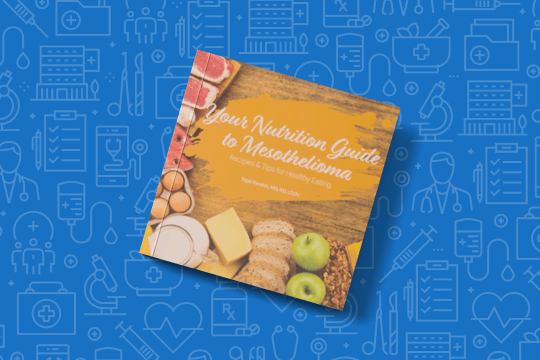
FREE NUTRITION GUIDE + JOURNAL
Nutrition Tips and Recipes for Mesothelioma
Access expert diet and exercise guidance designed specifically for mesothelioma patients to support treatment and overall wellness.
Eat Often: Enjoy multiple small meals throughout the day instead of three large ones.
Snack Frequently: Snack whenever you are hungry. Enjoy what you like without guilt about healthy or unhealthy foods.
Make Liquids Count: Focus on high-calorie liquids. Try smoothies with protein powder, bananas and peanut butter.
Skip Empty Calories: Avoid large amounts of tea, coffee or diet drinks and foods.
Sip Sparingly: Have most liquids after meals. Liquid can fill you up before you have a chance to consume the nutrient-dense foods on your plate.
Focus on Protein: Include poultry, fish, eggs, beans, nuts or peanut butter at each meal or snack.
Juice It: Juice fresh fruits and vegetables to obtain nutrients without filling up. If you don’t own a juicer, blend fruit or vegetables with water, then strain with a cheesecloth. Cheesecloth is inexpensive and available at most grocery stores.
Have Breakfast for Dinner: Consume your favorite foods any time of day. If you love breakfast foods, have them for lunch or dinner.
Mesothelioma treatment can take a toll on your ability to eat well. Ask your doctor or nurse for a referral to a registered dietitian who is a cancer nutrition specialist.
Free Mesothelioma Resources
Get Access to Free Resources for Patients & Loved Ones
Your web browser is no longer supported by Microsoft. Update your browser for more security, speed and compatibility.
If you are looking for mesothelioma support, please contact our Patient Advocates at (855) 404-4592
Fact Checked
Our fact-checking process begins with a thorough review of all sources to ensure they are high quality. Then we cross-check the facts with original medical or scientific reports published by those sources, or we validate the facts with reputable news organizations, medical and scientific experts and other health experts. Each page includes all sources for full transparency.
Reviewed
Asbestos.com is the nation’s most trusted mesothelioma resource
The Mesothelioma Center at Asbestos.com has provided patients and their loved ones the most updated and reliable information on mesothelioma and asbestos exposure since 2006.
Our team of Patient Advocates includes a medical doctor, a registered nurse, health services administrators, veterans, VA-accredited Claims Agents, an oncology patient navigator and hospice care expert. Their combined expertise means we help any mesothelioma patient or loved one through every step of their cancer journey.
More than 30 contributors, including mesothelioma doctors, survivors, health care professionals and other experts, have peer-reviewed our website and written unique research-driven articles to ensure you get the highest-quality medical and health information.
About The Mesothelioma Center at Asbestos.com
Assisting mesothelioma patients and their loved ones since 2006.
Helps more than 50% of mesothelioma patients diagnosed annually in the U.S.
A+ rating from the Better Business Bureau.
5-star reviewed mesothelioma and support organization.
My family has only the highest compliment for the assistance and support that we received from The Mesothelioma Center. This is a staff of compassionate and knowledgeable individuals who respect what your family is experiencing and who go the extra mile to make an unfortunate diagnosis less stressful. Information and assistance were provided by The Mesothelioma Center at no cost to our family.
Dixon, S. (2026, February 12). Managing Unintentional Weight Loss During Mesothelioma Treatment. Asbestos.com. Retrieved September 15, 2026, from https://www.asbestos.com/blog/2018/04/26/unintentional-weight-loss-mesothelioma/
MLA
Dixon, Suzanne. "Managing Unintentional Weight Loss During Mesothelioma Treatment." Asbestos.com, 12 Feb 2026, https://www.asbestos.com/blog/2018/04/26/unintentional-weight-loss-mesothelioma/.
Chicago
Dixon, Suzanne. "Managing Unintentional Weight Loss During Mesothelioma Treatment." Asbestos.com. Last modified February 12, 2026. https://www.asbestos.com/blog/2018/04/26/unintentional-weight-loss-mesothelioma/.
Suzanne Dixon combines her training in nutrition and epidemiology with her passion for helping mesothelioma survivors and their loved ones. She clarifies complex medical science to create essential cancer patient resources.
Fact-checked and verified content:
Our fact-checking process begins with a thorough review of all sources to ensure they are high quality. Then we cross-check the facts with original medical or scientific reports published by those sources, or we validate the facts with reputable news organizations, medical and scientific experts and other health experts. Each page includes all sources for full transparency.
Please read our editorial guidelines to learn more about our content creation and review process.