The symptoms of mesothelioma often mimic more common conditions. Doctors may misdiagnose mesothelioma as the flu, pneumonia or other illnesses. These conditions can be life-threatening for patients with compromised immune systems, such as those already diagnosed with mesothelioma.
Learn more about mesothelioma, asbestos and the steps you can take to fight this disease.
Confusion Between Mesothelioma and Common Conditions
The symptoms of mesothelioma make it challenging to differentiate between it and other, more common diseases. In the early stages, mesothelioma has very few symptoms. As cancer progresses, symptoms become more noticeable.
The early warning signs of mesothelioma are often written off as other, less severe conditions.
Pleural mesothelioma develops on the lining of the lungs. Early signs include a dry cough, difficulty breathing, fever and chest pain. These symptoms mimic a respiratory infection like the flu. Cancer can also mimic symptoms of lower respiratory diseases such as bronchitis and pneumonia.
Peritoneal mesothelioma forms on the abdomen lining and can resemble common digestive conditions such as inflammatory bowel disease and irritable bowel syndrome.
Similar Conditions Lead to Mesothelioma Misdiagnoses
Regardless of the type, misdiagnoses of mesothelioma are common and can delay cancer treatment by several months or even more than a year. A 2021 research study noted that, in some cases, mesothelioma patients may not receive treatment until six months after their initial symptoms.
It took a year and a half and five misdiagnoses for peritoneal mesothelioma survivor Kasie Coleman to find the actual cause of her severe abdominal pain. Doctors thought she had chlamydia, gallstones and ovarian cancer before she was diagnosed correctly.
Diagnosing mesothelioma accurately and as early as possible leads to more treatment options and more prolonged survival. Most doctors don’t consider mesothelioma when treating a patient with shortness of breath, fever or chest pain, mainly during flu season or if the patient has a history of respiratory infections.
Know the common symptoms of mesothelioma. If you have a history of asbestos exposure, seek a second opinion from a mesothelioma specialist.
Someone already diagnosed with mesothelioma is more susceptible to flu complications or pneumonia. While these conditions go away on their own or are treatable for people in good health, they can devastate a patient’s health.
Mesothelioma patients need to take steps to avoid viruses and infection.
The Flu
The flu is a viral infection that attacks your respiratory system. While the common cold develops slowly, flu symptoms typically come on suddenly. They are also more intense and can last longer than the average cold.
Flu Signs That Resemble Mesothelioma Symptoms
Fever
Dry, persistent cough
Night sweats
Fatigue and weakness
The risk of mesothelioma misdiagnosis increases during flu season. Flu symptoms usually ease in two to five days, but a mild cough or sore throat can last two or more weeks.
If flu-like symptoms persist or get worse, see your doctor for another diagnosis, especially if you have a history of asbestos exposure and suspect you may have mesothelioma.
Age can also make distinguishing between the flu and mesothelioma difficult. Adults older than 65 are at higher risk of developing the flu, and most mesothelioma patients are diagnosed at age 65 or older because of the long latency associated with this cancer.
The Flu for Mesothelioma Patients
Flu season happens every year. No one wants it, but people who are healthy and get the flu can usually shake it within a week without complications.
It is unknown if cancer patients are more likely to get the flu than other people. However, those diagnosed with cancer that affects respiratory functions, such as mesothelioma, are at greater risk of having severe problems if they get the flu.
Complications From Influenza Virus
Inflammation in the heart, muscle or brain
Congestive heart failure
Pneumonia
These complications often require hospitalization and may result in death. The flu virus can also significantly impact cancer care, including delaying treatment regimens such as chemotherapy and immunotherapy.
The American Cancer Society recommends getting a flu shot for most cancer patients. However, mesothelioma patients should talk to their doctor to make the right decision. Specific cancer treatments, such as chemotherapy, may cause the flu vaccine not to work as well or not work at all.
The Centers for Disease Control and Prevention recommend that family members, caregivers and anyone else who may be around a cancer patient get a flu shot to prevent the spreading of the virus.
Pneumonia
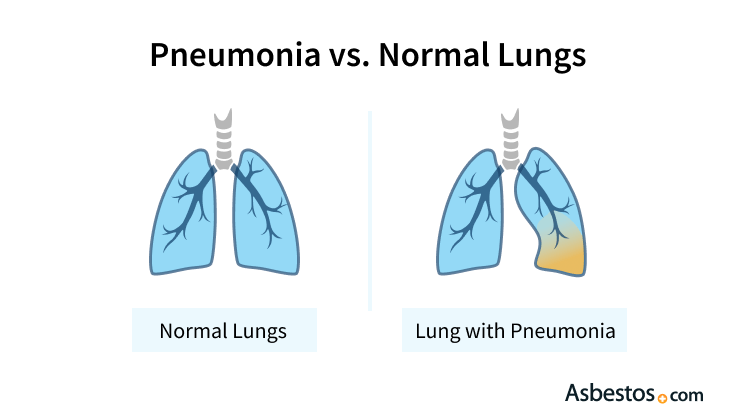
Pneumonia is a common lung infection caused by bacteria, viruses or fungi. The flu virus is a common cause of viral pneumonia in adults.
Pneumonia is an infection in one or both lungs that causes air sacs to fill with fluid.
The symptoms of later-stage mesothelioma are very close to symptoms of pneumonia. The most common similarity is a pleural effusion, a buildup of fluid between tissues that line the outer surface of the lungs and the inside of the rib cage.
Signs of Pneumonia That Resemble Pleural Mesothelioma Symptoms
Pleural effusions
Shortness of breath
Dry cough
Fever, which may be mild or high
Chest pain
Weight loss
The pleural fluid resulting from pneumonia or lung abscess is called parapneumonic effusion (PPE).
According to a 2007 study in Clinical Infectious Diseases, 20 to 57 percent of the 1 million patients hospitalized with pneumonia each year in the U.S. develop PPE.
Pleural effusions occur in approximately 90 percent of pleural mesothelioma cases, causing shortness of breath, dry cough and sharp chest pains. Recurring pleural effusions are a common warning sign of mesothelioma cancer.
Pneumonia for Mesothelioma Patients
Pneumonia can be life-threatening, especially for people diagnosed with cancer. Fighting off the infection can be very challenging for pleural mesothelioma patients.
Precautions to Prevent Pneumonia
Getting a flu vaccine
Washing your hands regularly
Not smoking
Getting plenty of rest
Maintaining a healthy diet
Contracting pneumonia while battling mesothelioma can result in more extended hospital stays, a decreased ability to tolerate treatments and even death.
Identifying pneumonia if you have pleural mesothelioma may be more complex because the symptoms are similar.
FREE NUTRITION GUIDE + JOURNAL
Nutrition Tips and Recipes for Mesothelioma
Access expert diet and exercise guidance designed specifically for mesothelioma patients to support treatment and overall wellness.
Chronic obstructive pulmonary disease is a chronic lung disease that makes it hard for you to breathe. The two main types of COPD are chronic bronchitis and emphysema.
Bronchitis: Increased mucus and inflammation in airways
Emphysema: Destruction and enlargement of air sacs in lungs
Most people with COPD experience a little bit of both, with a predominance of one or the other. Like mesothelioma, most people with COPD don’t experience symptoms until the later stages of the disease.
Signs of COPD That Resemble Mesothelioma Symptoms
Chronic cough
Shortness of breath (dyspnea)
Wheezing
Tightness or pain in the chest
Fatigue
Other symptoms of COPD include blueness in the lips or fingernail beds, frequent respiratory infections and the production of a lot of mucus.
Cigarette smoking causes about 85 to 90 percent of all COPD cases. Environmental toxins like pollution, chemical fumes or asbestos exposure can also trigger the condition. Asbestos exposure is the overwhelming cause of mesothelioma.
COPD for Mesothelioma Patients
It is not uncommon for mesothelioma patients to also have COPD, which may develop before or after the cancer diagnosis.
The causes of the two diseases also overlap. Smoking is the leading cause of COPD and can worsen the symptoms of mesothelioma, while asbestos exposure can increase the likelihood of someone developing COPD.
COPD has no cure, but the condition is treatable. Many people live long lives with COPD.
However, COPD can worsen pleural mesothelioma symptoms and make treating cancer more difficult.
Asthma
Asthma is a chronic lung disease that causes increased mucus and inflammation in the airways.
In this way, it is similar to chronic bronchitis, which COPD can cause. However, asthma is usually diagnosed earlier in life and is associated with allergies.
Asthma is not curable but can be controlled with medication and therapy. Some children with asthma grow out of it in adulthood.
Asthma Signs That Resemble Mesothelioma Symptoms
Coughing
Wheezing
Shortness of breath (dyspnea)
Asthma symptoms may be constant or come and go during asthma attacks.
Asthma attacks can be triggered by exercise, stress or exposure to allergens.
Occupational asthma can be caused by exposure to industrial dust, including asbestos. But most cases have nothing to do with asbestos, while mesothelioma is almost exclusively caused by asbestos exposure.
Asthma for Mesothelioma Patients
Asthma is a relatively common illness. Doctors may misdiagnose pleural mesothelioma signs as asthma symptoms. A delay in diagnosis could lead to more limited treatment options for mesothelioma.
Having asthma at the same time as mesothelioma can worsen breathing difficulties.
Patients must work with their medical team to ensure their asthma is well controlled during cancer treatment while avoiding potentially harmful drug interactions.
Conditions That Mimic Peritoneal Mesothelioma Symptoms
Because peritoneal mesothelioma is so rare, doctors commonly misdiagnose it as an illness with similar symptoms, such as inflammatory bowel disease or irritable bowel syndrome.
Peritoneal mesothelioma is the second most common type of this cancer, accounting for roughly 20% of all cases.
Inflammatory Bowel Disease
Inflammatory bowel disease (IBD) refers to two conditions: Ulcerative colitis and Crohn’s disease.
Ulcerative colitis only occurs in the colon and the rectum. Inflammation is only present in the innermost layer of the lining of the colon.
Crohn’s disease can affect any part of the gastrointestinal tract, but usually occurs in the small intestine before the colon. Inflammation can reach through multiple layers of the walls of the gastrointestinal tract.
Both are characterized by chronic inflammation of the gastrointestinal tract, but some differences exist.
Signs of IBD That Resemble Peritoneal Mesothelioma Symptoms
Abdominal pain
Persistent diarrhea
Unexplained weight loss
Fatigue
A person with peritoneal mesothelioma may be misdiagnosed with IBD because of these symptoms. Doctors may mistake tumors for inflammation even with diagnostic imaging scans like MRIs and CT scans.
Irritable Bowel Syndrome
Irritable bowel syndrome (IBS) is a common disorder that affects the large intestine.
Signs of IBS That Resemble Mesothelioma Symptoms
Abdominal pain
Changes in bowel habits
Diarrhea or constipation (or both)
Unlike IBD, irritable bowel syndrome doesn’t damage the digestive tract or lead to other health problems. Changes in diet, mental health therapies and medicines for diarrhea or constipation can typically treat the condition.
If symptoms of IBS persist, the cause may be a more severe condition such as IBD or cancer.
Celiac Disease
An estimated 1 in 133 Americans have celiac disease, according to Beyond Celiac. It is a severe genetic autoimmune disorder where the ingestion of gluten damages the small intestine and makes it hard for the body to absorb essential nutrients.
Gluten is a common protein in foods like wheat, rye and barley.
Symptoms of celiac disease in adults overlap with many of the symptoms of peritoneal mesothelioma.
Signs of Celiac Disease That Resemble Mesothelioma Symptoms
Abdominal pain
Diarrhea
Constipation
Weight loss
Fatigue
Anemia
There is no treatment for celiac disease other than maintaining a gluten-free diet. It is estimated that 83 percent of people with the disorder do not know they have it. So, the onset of these symptoms could lead someone to believe they have another digestive condition or possibly a type of gastrointestinal cancer. However, several serologic (blood) tests can be used to screen for celiac disease antibodies.
Peritoneal mesothelioma patients can also have celiac disease. These patients should maintain a gluten-free diet to avoid worsening common peritoneal mesothelioma symptoms.
Recommended Reading
Address
1 S. Orange Ave., Suite 301, Orlando, FL 32801
Connect with us
Navigation
Monthly Newsletter
Stay up-to-date on treatment, research, clinical trials, doctors and survivors
The information on this website is proprietary and protected. It is not a substitute for professional medical advice, diagnosis or treatment. Any unauthorized or illegal use, copying or dissemination will be prosecuted. Please read our privacy policy and terms of service for more information about our website.
This website and its content may be deemed attorney advertising. Prior results do not predict a similar outcome.
The Mesothelioma Center’s claim as the most trusted resource is based on our more than 150 5-star Google and BBB reviews. Our organization also helps more than half of all mesothelioma patients annually diagnosed.
Your web browser is no longer supported by Microsoft. Update your browser for more security, speed and compatibility.
If you are looking for mesothelioma support, please contact our Patient Advocates at (855) 404-4592
Fact Checked
Our fact-checking process begins with a thorough review of all sources to ensure they are high quality. Then we cross-check the facts with original medical or scientific reports published by those sources, or we validate the facts with reputable news organizations, medical and scientific experts and other health experts. Each page includes all sources for full transparency.
Reviewed
Asbestos.com is the nation’s most trusted mesothelioma resource
The Mesothelioma Center at Asbestos.com has provided patients and their loved ones the most updated and reliable information on mesothelioma and asbestos exposure since 2006.
Our team of Patient Advocates includes a medical doctor, a registered nurse, health services administrators, veterans, VA-accredited Claims Agents, an oncology patient navigator and hospice care expert. Their combined expertise means we help any mesothelioma patient or loved one through every step of their cancer journey.
More than 30 contributors, including mesothelioma doctors, survivors, health care professionals and other experts, have peer-reviewed our website and written unique research-driven articles to ensure you get the highest-quality medical and health information.
About The Mesothelioma Center at Asbestos.com
Assisting mesothelioma patients and their loved ones since 2006.
Helps more than 50% of mesothelioma patients diagnosed annually in the U.S.
A+ rating from the Better Business Bureau.
5-star reviewed mesothelioma and support organization.
My family has only the highest compliment for the assistance and support that we received from The Mesothelioma Center. This is a staff of compassionate and knowledgeable individuals who respect what your family is experiencing and who go the extra mile to make an unfortunate diagnosis less stressful. Information and assistance were provided by The Mesothelioma Center at no cost to our family.
Selby, K. (2026, February 13). Conditions That Resemble or Worsen Mesothelioma. Asbestos.com. Retrieved March 24, 2026, from https://www.asbestos.com/mesothelioma/symptoms/similar/
MLA
Selby, Karen. "Conditions That Resemble or Worsen Mesothelioma." Asbestos.com, 13 Feb 2026, https://www.asbestos.com/mesothelioma/symptoms/similar/.
Chicago
Selby, Karen. "Conditions That Resemble or Worsen Mesothelioma." Asbestos.com. Last modified February 13, 2026. https://www.asbestos.com/mesothelioma/symptoms/similar/.
Dr. Velotta is a leading thoracic surgeon and pleural mesothelioma specialist at Kaiser Permanente Oakland Medical Center and a Clinical Assistant Surgical Professor at the University of California, San Francisco School of Medicine. With more than 15 years of experience, he leads research efforts in minimally invasive lung cancer surgery, pain management post-thoracic surgery and multimodal mesothelioma treatment. He is recognized for advancing image-guided surgical techniques and improving regional access to specialized mesothelioma care.
Fact-checked and verified content:
Our fact-checking process begins with a thorough review of all sources to ensure they are high quality. Then we cross-check the facts with original medical or scientific reports published by those sources, or we validate the facts with reputable news organizations, medical and scientific experts and other health experts. Each page includes all sources for full transparency.
Please read our editorial guidelines to learn more about our content creation and review process.