$5.5B Talc Settlement Offer May End Baby Powder Lawsuits
Legislation & Litigation
Written by Travis Rodgers | Edited by Amy Edel
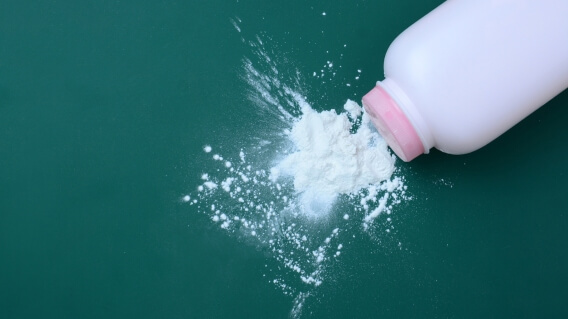
Johnson & Johnson is proposing a $5.5 billion settlement to resolve approximately 76,000 claims and could close out more than a decade of litigation against the company. The lawsuits claim its talc-based baby powder and other talc products cause ovarian cancer.
The proposal won’t take effect automatically. Law firms representing at least 95% of the remaining claimants need to accept the terms before the settlement could become final. This recent offer marks a shift in strategy for J&J, which spent years fighting claims related to ovarian cancer in civil court and through multiple bankruptcy filings.
Attorney and consumer safety advocate Whitney Ray Di Bona shares with us, “For women who developed ovarian cancer after trusting a product they’d used their whole lives, this is long overdue.” Danielle DiPietro, a financial advocate, board-certified Patient Advocate and VA-accredited claims agent, says the proposed ovarian cancer settlement could bring relief to many affected families. She says, “This is a great step in the right direction and will help so many people receive compensation.”
The company still denies that its talc products cause cancer. However, J&J says the settlement lets it move past the litigation and focus on its medical business instead.
Settlement Terms and Timeline
The proposed settlement covers personal injury lawsuits related to ovarian cancer filed in a federal multidistrict litigation in New Jersey. It also covers related cases in state courts across the country. An MDL combines similar lawsuits from different courts into one location, so a single judge can manage them more efficiently. J&J said the deal covers nearly all of its remaining talc-related ovarian cancer claims.
The payment schedule stretches over several years. J&J plans to pay up to $3 billion in 2027, and it won’t owe any additional money until 2028. Attorney Chris Seeger, who represents about 2,500 claimants and helped negotiate the deal, said the final payout has no cap and could reach $7 billion or more, depending on how many eligible people join the settlement.
This proposal covers only existing claims, not future ones. That’s a key difference from an earlier plan J&J tried through its subsidiary, Red River Talc, which sought bankruptcy protection to resolve talc claims through a single $10 billion deal. A bankruptcy court judge rejected that plan last year and J&J chose not to appeal. Instead, the company returned to civil court to keep fighting the remaining cases directly.
A Decade of Courtroom Battles
Ovarian cancer lawsuits against J&J date back to 2009, giving the company more than 15 years of litigation over its talc products. J&J has consistently denied that its talc-based products cause cancer or were asbestos-contaminated.
J&J tried multiple times to resolve its talc liability through bankruptcy filings, a strategy critics call the “Texas two-step.” The company moved its talc liabilities into a subsidiary and then had that subsidiary file for bankruptcy, which can pause lawsuits while a settlement gets worked out. Courts dismissed 3 separate bankruptcy attempts before the Red River Talc proposal met the same fate last year.
Whitney DiBona tells us the settlement’s structure sets it apart from J&J’s earlier attempts. “This deal doesn’t come with a bankruptcy trick attached to it, and that’s exactly why it stands a real chance of getting across the finish line with the support it needs from plaintiffs’ firms.”
Mesothelioma Talc Lawsuits
This new settlement only covers ovarian cancer claims. J&J’s litigation also includes a separate group of mesothelioma talc lawsuits. J&J says it has already resolved about 95% of those mesothelioma claims, but new cases continue to be filed and move through the courts. Several have produced historic verdicts over the past year.
Notable J&J Mesothelioma Verdicts
- $1.5 billion: A Baltimore jury awarded Cherie Craft, a Maryland woman diagnosed with peritoneal mesothelioma, this verdict in December 2025, marking the largest single-plaintiff talc verdict on record.
- $966 million: A Los Angeles jury awarded the family of Mae K. Moore this verdict in October 2025, after Moore died from mesothelioma linked to talc-based baby powder.
- $32 million: A Los Angeles jury awarded the family of Maria Lozano this verdict in June 2026, after Lozano died from mesothelioma following decades of using J&J baby powder.
People who develop mesothelioma from asbestos-contaminated talc can still file talc lawsuits. Mesothelioma talc lawsuits remain active regardless of the ovarian cancer settlement outcome.
Talc, Asbestos and Cancer Risk
Talc is a soft mineral that manufacturers grind into powder for cosmetic and personal care products. Talc deposits often form near asbestos deposits, creating a risk of cross-contamination during mining.
Asbestos is the primary cause of mesothelioma and also causes ovarian cancer and lung cancer. Lab tests found asbestos in J&J’s talc products from 1971 through the early 2000s and the company didn’t share those results with the Food and Drug Administration at the time.
The company stopped selling talc-based baby powder in the U.S. and Canada in 2020 and ended global sales of the product in 2023, switching to a cornstarch-based formula instead.