Electricians are exposed to asbestos when repairing existing wiring in structures constructed when asbestos building materials were widely used. Repetitive and extended exposure can lead to asbestos-related diseases such as mesothelioma and lung cancer.
Quick Facts About Electricians and Asbestos Exposure
Asbestos-Related Disease Risk:
Moderate
States with Highest Employment:
California, Texas, New York, Florida, Illinois
How Are Electricians Exposed to Asbestos?
Electricians and electrical engineers often are exposed to asbestos while repairing, installing or working on older buildings. It also applied to electricians wiring HVAC units or power systems. It also applies electricians installing elevators in older buildings. U.S. veterans who were Navy electricians faced a high risk. They likely contacted chrysotile asbestos wire insulation in the power systems of older vessels.
Asbestos paper lines the door of this older electrical box.
Electricians perform maintenance and repairs on older equipment that may contain asbestos. Often, chrysotile asbestos is an insulator for the wiring in these structures. Without first removing asbestos, any electrical work poses a significant health risk.
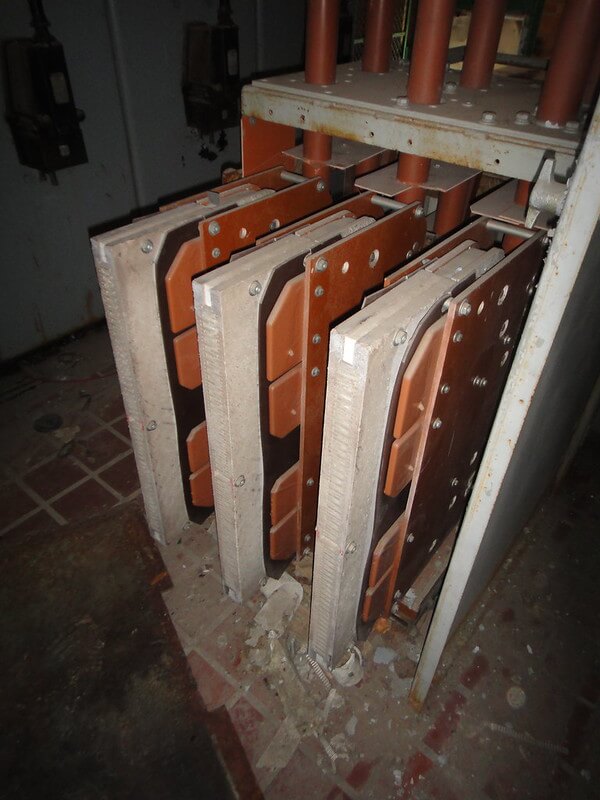
Electrician asbestos exposure can occur when removing old, insulated wiring or breaker boxes. The insulation is made of felted asbestos, and this felt often becomes brittle with age. A 2021 study reported that older arc chutes had about 36% chrysotile asbestos in the plastic molding before the mid-1980s.
Asbestos electrical wire exposure can happen in one of two ways. Like construction workers, electricians may release asbestos fibers as dust into the air while working. Cutting, drilling or removing existing asbestos construction materials releases fibers. Repairing electrical products that contain asbestos wire creates another opportunity for risk.
Several electrical products and machinery, such as turbines, generators and heating units, may contain asbestos. It’s best to exercise caution when working with these older products. If you are unsure they contain asbestos, consult with a professional before removing them.
Electrical products and machinery that may contain asbestos include:
Cable Wraps
Molded asbestos plastic or asbestos paper was cheap. It covered thick electrical cables. As the material degrades and becomes airborne, the wraps pose a health risk.
Turbines
Boilers, pipes and turbines are frequent sources of asbestos in power plants. Turbines produce a large amount of heat and asbestos helped mitigate the risk of fire.
Generators
Manufacturers produced generators with asbestos to reduce overheating and mechanical damage.
Asbestos was used in arc chutes to prevent fires.
Electrical Shielding
Sheets of asbestos cement provide shielding between electrical components. An example includes switches within arc chutes.
Electrical Paper
Also known as flash guards, asbestos insulation paper is present in older electrical boxes to prevent fires. However, paper asbestos can quickly become airborne and inhalable.
Heating Units
High heat can degrade asbestos electrical wire over time. It makes the toxic fibers friable and more easily released into the air.
Hot Water Tanks
Older water heaters contain asbestos in the insulating blanket underneath the metal cover.
Plastic Panels
Moldable plastics that contained asbestos were popular for electrical panels. They resisted heat, moisture, and electricity.
Manufacturers That Made Products Electricians Use
The list of manufacturers using asbestos in products includes many popular name brands. These companies are defendants in claims filed by electricians and electrical engineers.
General Electric: GE manufactured asbestos wiring and cables. They have battled over 400,000 asbestos claims through court cases and settlements.
Union Carbide: Between 1963 and 1985, Union Carbide operated an asbestos mine in California. They manufactured asbestos electrical components such as arc chutes and phase barriers.
Lincoln Electric: During World War II, Lincoln Electric was the largest producer of arc welding equipment globally. The company used asbestos in its products and was also responsible for several U.S. Navy ship repairs.
Westinghouse Electric: Westinghouse Electric manufactured several asbestos electrical components. They included cables, wire, welding rods, paper and panels.
Burnham Holdings: Burnham made HVAC products and electrical accessories with asbestos until the 1980s.
$30B+ IN TRUST FUNDS AVAILABLE
Find the Right Attorney for You
When filing a mesothelioma claim, the right legal representation is everything. We’ll connect you to a top lawyer who will help you secure financial compensation.
Electricians using chrysotile insulation and asbestos parts are at risk for mesothelioma. A 2022 European Commission report noted over 70,000 asbestos-related deaths in 2019.
A 2018 study found asbestos wire contained 75% to 85% chrysotile. Heating the wire can release dangerous fibers into the air.
In 2018, an Italian electrician died from pleural mesothelioma at age 66. Researchers then estimated about 9,000 mesothelioma deaths in Western Europe that year. Early consultation with a mesothelioma specialist could improve survival for electricians.
A 2008 study analyzed 119 workers occupationally exposed to asbestos. Researchers were looking for mesothelioma biomarkers that could predict the risk of disease. The study included a group of electricians.
Researchers use biomarkers, which are proteins in blood, to detect diseases. Higher levels indicate more severe conditions. The study found that heavy asbestos exposure raised mesothelioma biomarker levels in electricians.
Legal Options for Electricians Exposed to Asbestos
Mesothelioma patients may file lawsuits and trust fund claims to seek compensation. The following cases exemplify claims filed by electricians and their loved ones.
Peter Allen served as an electrician’s mate aboard two different Navy vessels and worked in close proximity to crumbling asbestos insulation. He died of malignant pleural mesothelioma in October 2017. His wife, Lorraine, then filed a wrongful death claim with an experienced mesothelioma attorney against Armstrong Pumps Company. The case will proceed with a jury trial in 2021.
On March 23, 2019, electrician George C. Proctor died of malignant mesothelioma just one year after his diagnosis. Before his death, Proctor filed an asbestos lawsuit against the companies responsible for his occupational exposure, including Burnham. In 2020, the New York County Supreme Court agreed the evidence was sufficient to proceed to trial.
Eusebio Jacob was a journeyman electrician at the U.S. Naval Ship Repair Facility in Guam from 1962 to 1985. In 2019, he and his wife, Marta, sued Plastics Engineering Company and Rockwell Automation Inc. for their roles in supplying asbestos products to the U.S. Navy. Doctors diagnosed Jacob in 2018 with malignant mesothelioma and other asbestos-related illnesses.
In 2010, Julie Gundlach filed an asbestos injury lawsuit after developing mesothelioma. She alleged that when her electrician father came home from work, he left his asbestos-covered clothes in the laundry room where Gundlach and her sister played, resulting in a secondary exposure known as “take-home exposure.”
Recommended Reading
Address
1 S. Orange Ave., Suite 301, Orlando, FL 32801
Connect with us
Navigation
Monthly Newsletter
Stay up-to-date on treatment, research, clinical trials, doctors and survivors
The information on this website is proprietary and protected. It is not a substitute for professional medical advice, diagnosis or treatment. Any unauthorized or illegal use, copying or dissemination will be prosecuted. Please read our privacy policy and terms of service for more information about our website.
This website and its content may be deemed attorney advertising. Prior results do not predict a similar outcome.
The Mesothelioma Center’s claim as the most trusted resource is based on our more than 150 5-star Google and BBB reviews. Our organization also helps more than half of all mesothelioma patients annually diagnosed.
Your web browser is no longer supported by Microsoft. Update your browser for more security, speed and compatibility.
If you are looking for mesothelioma support, please contact our Patient Advocates at (855) 404-4592
Fact Checked
Our fact-checking process begins with a thorough review of all sources to ensure they are high quality. Then we cross-check the facts with original medical or scientific reports published by those sources, or we validate the facts with reputable news organizations, medical and scientific experts and other health experts. Each page includes all sources for full transparency.
Reviewed
Asbestos.com is the nation’s most trusted mesothelioma resource
The Mesothelioma Center at Asbestos.com has provided patients and their loved ones the most updated and reliable information on mesothelioma and asbestos exposure since 2006.
Our team of Patient Advocates includes a medical doctor, a registered nurse, health services administrators, veterans, VA-accredited Claims Agents, an oncology patient navigator and hospice care expert. Their combined expertise means we help any mesothelioma patient or loved one through every step of their cancer journey.
More than 30 contributors, including mesothelioma doctors, survivors, health care professionals and other experts, have peer-reviewed our website and written unique research-driven articles to ensure you get the highest-quality medical and health information.
About The Mesothelioma Center at Asbestos.com
Assisting mesothelioma patients and their loved ones since 2006.
Helps more than 50% of mesothelioma patients diagnosed annually in the U.S.
A+ rating from the Better Business Bureau.
5-star reviewed mesothelioma and support organization.
My family has only the highest compliment for the assistance and support that we received from The Mesothelioma Center. This is a staff of compassionate and knowledgeable individuals who respect what your family is experiencing and who go the extra mile to make an unfortunate diagnosis less stressful. Information and assistance were provided by The Mesothelioma Center at no cost to our family.
Whitmer, M. (2026, February 12). Electricians and Asbestos Exposure. Asbestos.com. Retrieved March 12, 2026, from https://www.asbestos.com/occupations/electricians/
MLA
Whitmer, Michelle. "Electricians and Asbestos Exposure." Asbestos.com, 12 Feb 2026, https://www.asbestos.com/occupations/electricians/.
Chicago
Whitmer, Michelle. "Electricians and Asbestos Exposure." Asbestos.com. Last modified February 12, 2026. https://www.asbestos.com/occupations/electricians/.
An occupational scientist or another expert who specializes in occupational hazards reviewed the content on this page to ensure it meets current scientific standards and accuracy.
Arti Shukla, Ph.D., is an internationally renowned asbestos researcher known for her achievements in identifying biomarkers that cause mesothelioma. She is the director of the Shukla Research Lab, as well as a professor of pathology at The University of Vermont Larner College of Medicine.
Fact-checked and verified content:
Our fact-checking process begins with a thorough review of all sources to ensure they are high quality. Then we cross-check the facts with original medical or scientific reports published by those sources, or we validate the facts with reputable news organizations, medical and scientific experts and other health experts. Each page includes all sources for full transparency.
Please read our editorial guidelines to learn more about our content creation and review process.