

Based on Your Reading:
Get Your Free Mesothelioma Guide

Find a Top Mesothelioma Doctor

Access Help Paying for Treatment

In the 1950s, the Hollingsworth & Vose Company produced asbestos cigarette filters for Lorillard Tobacco Company's "Kent Micronite" brand cigarettes. These dangerous filters exposed countless smokers, families and factory workers to cancer-causing chemicals and toxic asbestos.

Written by Travis Rodgers | Scientifically Reviewed by Shannon L. Fitzgerald | Edited by Walter Pacheco | Last Update:


Years Produced:
1952 – 1956

Places Used:
Kent Micronite Cigarettes

Toxicity:
High

Asbestos Use Banned:
Yes

Friable:
Yes
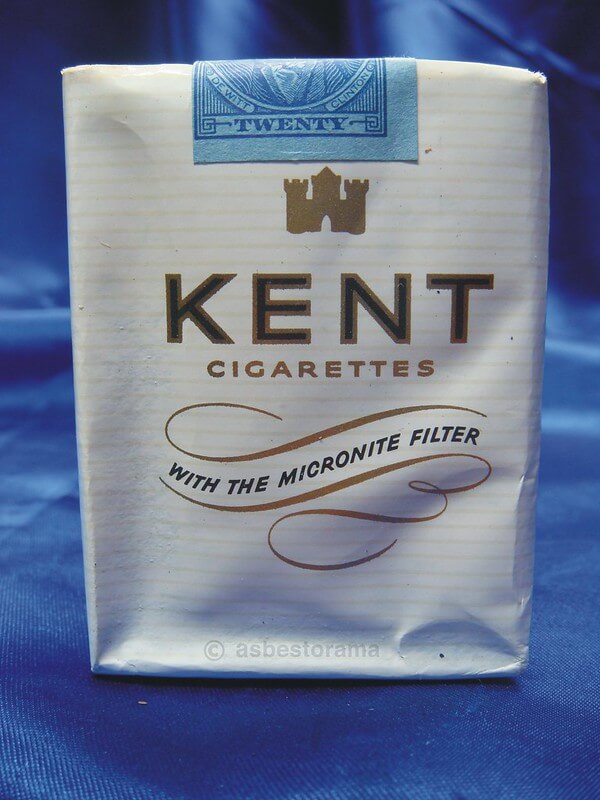
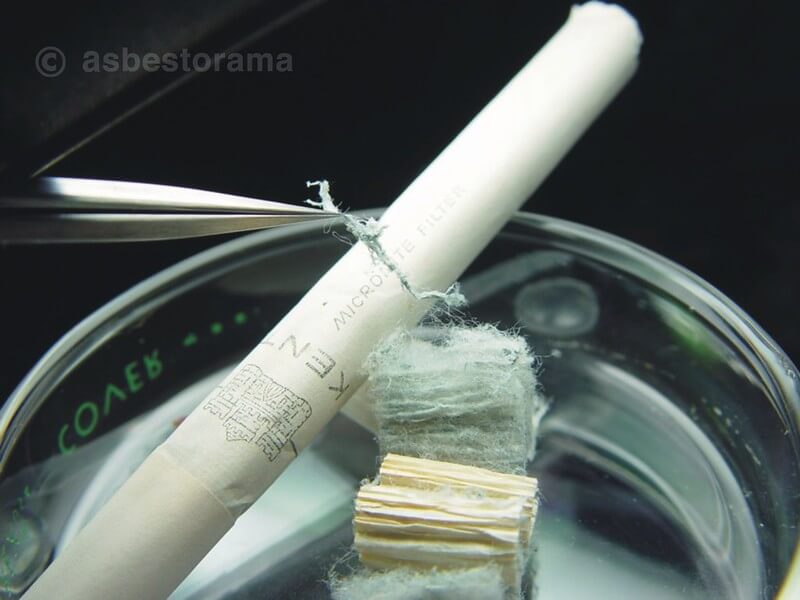
In 1952, the Lorillard Tobacco Company launched its Kent Micronite brand of filtered cigarettes. Each Micronite filter contained about 15% to 30% asbestos. These filters used compressed crocidolite (blue asbestos) fibers blended with cotton and acetate inside crimped crepe paper.
Crocidolite is a kind of asbestos with shorter, thinner and more brittle fibers than chrysotile asbestos, the type used in most asbestos products. No type of asbestos is safe, but because crocidolite fibers are so fine and needle-like, they’re potentially even more hazardous than chrysotile. Of the 6 commercial types of asbestos, crocidolite is generally considered the most hazardous.
The company stopped making Kent Micronite filters in 1956, with some remaining stock staying on shelves until 1957, but not because of any concern over its customers’ health. Smokers didn’t care for the taste of the cigarettes and complained that the filter made inhaling too difficult. In fact, even though the company learned that asbestos particles were leaking into the cigarettes’ smoke in 1954, it didn’t tell the public until nearly 2 years (and 4 billion cigarettes sold) later. Kent cigarettes sold over 13 billion asbestos-filtered cigarettes over 4 years (1952-1956).
Even though several asbestos manufacturers considered developing asbestos cigarette filters, Reynolds Metal Co. filed a patent for a similar product. Reynolds Metals was a major metals and aluminum foil manufacturer that was focusing its research on using aluminum silicate and silicate fibers to filter and cool cigarette smoke. However, only 1 company actually took the idea to market: The Lorillard Tobacco Company.
Another manufacturer, Hollingsworth & Vose Company, produced the asbestos filters that Lorillard used for its Kent Micronite brand. The manufacturing process was especially hazardous to plant employees because it involved mixing dry asbestos with other fibers. This filled the work environment with airborne asbestos dust.
In 2015, tobacco giant Reynolds American Inc., officially acquired Lorillard. As a result, its long-standing subsidiary, RJR Tobacco, was responsible for all asbestos lawsuits connected to Lorillard’s Kent cigarettes. Today, these companies are owned by British American Tobacco, which also manages brands like Camel, Newport and Kodiak. Legal liability remains active, and patients or surviving family members can still seek compensation for medical costs, pain and suffering and other damages.
Get Your Free Mesothelioma Guide
Find a Top Mesothelioma Doctor
Access Help Paying for Treatment
Any exposure to asbestos in cigarette filters significantly increases the risk of developing life-threatening respiratory illnesses, including mesothelioma, lung cancer and asbestosis. Asbestos is the primary cause of pleural mesothelioma, a rare and aggressive cancer.
Asbestos fibers traveled from the cigarette filter into smokers’ lungs with every puff. Even worse, Micronite cigarettes required a “deep draw,” so smokers had to inhale especially hard. This means the dangerous smoke traveled deep into the person’s lung tissue.
Illnesses Linked to Asbestos Cigarette Filters
Smokers who inhaled asbestos fibers are 50 to 90 times more likely to develop lung cancer. In fact, the risk of developing lung cancer from asbestos exposure and cigarette smoking together is exponentially higher than other types of exposure. This “synergistic” effect doesn’t increase your risk of mesothelioma, however.
An internal memo from asbestos company Union Carbide‘s associate medical director shows that, even in the 1970s, industry experts knew how dangerous it was to combine asbestos and other toxins from cigarettes. But Dr. Carl Dernehl, the company’s former toxicologist, tried to focus on cigarette smoking as the primary cause of cancer, not asbestos exposure in this statement: “It has been demonstrated that asbestos workers in the United States apparently do not develop cancer of the lung unless they also smoke cigarettes. So you have here a situation in which an individual is exposed to asbestos and cigarette smoke at the same time. The implications for developing cancer of the lung are obvious.”

Exclusive Content
Dr. Jacques Fontaine: How Asbestos Exposure Increases Lung Cancer Risk
Anyone who smoked Kent Micronite cigarettes between 1952 and 1956 was exposed to asbestos. One study published in Cancer research revealed that smoking a pack of Kent Micronite cigarettes every day for a year would expose a smoker to 131 million carcinogenic crocidolite fibers. The study only analyzed the amount contained in 2 puffs per cigarette, so the actual amount of asbestos the average smoker inhaled was likely much greater.
Like conventional cigarettes, Kent Micronite asbestos cigarette filters also caused secondary exposure. Secondhand smoke contained asbestos particles that put spouses, children, friends, co-workers and even strangers at risk. Factory workers could unknowingly bring asbestos dust home on their clothing, exposing family members to the toxic fibers. Asbestos dust adheres aggressively to clothing, skin and hair.
People at Risk of Asbestos Exposure From Cigarette Filters
H&V factory workers who produced Micronite filters suffered the worst asbestos exposure because they labored in constantly contaminated conditions, often cutting open and handling large burlap bags of raw crocidolite asbestos fibers. A study of 33 laborers from the H&V filter factory found 28 of the workers later died from asbestos-related diseases, including asbestosis, lung cancer and mesothelioma.
Kent manufacturing plant workers who directly handled Micronite filters were at a high risk of asbestos exposure, but they weren’t the only employees impacted. Asbestos in the air could easily affect supervisors, maintenance personnel, equipment technicians and others. According to court records, more than 34 former Lorillard employees working at the company’s New Jersey and Kentucky factories eventually developed mesothelioma.

Our Patient Advocates have more than 50 years of combined experience helping mesothelioma patients.
Chat NowExperienced mesothelioma lawyers have helped many patients file legal claims in asbestos product liability cases. Compensation can help cover medical bills, treatment and ongoing care.
Some jury verdicts in asbestos filter cases have also provided awards for pain and suffering. If asbestos exposure at work led to the death of a loved one, you may still be able to file a wrongful death lawsuit.
Notable Asbestos Cigarette Filter Lawsuits and Settlements
Former customers and employees who developed asbestos-related diseases because of Kent Micronite filters have filed hundreds of lawsuits. Since 2014, Lorillard and RJR Tobacco have paid more than $40 million in asbestos compensation to settle claims. Just between 2021 and 2023, the company paid out more than $21 million to resolve approximately 90 asbestos lawsuits.
In cases involving asbestos in Lorillard’s cigarette filters, it’s common for patients to take multiple tobacco companies or asbestos product manufacturers to court at the same time. An asbestos lawyer can help you identify possible sources of exposure and gather the necessary evidence.
If you believe that smoking Kent cigarettes exposed you to asbestos, you should see a pulmonologist and tell them about your asbestos exposure history. Doctors often recommend Low-Dose Computed Tomography scans to look for signs of developing lung cancer or mesothelioma.
Annual cancer screenings can also be important for surviving family members who lived with a person who smoked Kent cigarettes or worked with asbestos. Catching asbestos-related cancers early can improve treatment outcomes.
It’s important to find a specialist if you’re diagnosed with an asbestos-related disease because treatment is highly specialized. An expert can tailor treatment to your unique case.
Kent Micronite cigarettes, made by the Crane, Lorillard Tobacco Company were the only major brand sold with asbestos filters. From 1952 to 1956, the filters contained blue crocidolite asbestos manufactured by the Hollingsworth & Vose Company. Lorillard produced at least 12 billion Kent Micronite cigarettes during this 4-year period before switching to a different filter material.
Smoke from Kent Micronite cigarettes sold between 1952 and 1956 did contain asbestos. A 1995 laboratory study found that smoking a pack of Kent Micronite cigarettes every day for a year would expose a smoker to roughly 131 million microscopic crocidolite asbestos fibers carried directly into the lungs. Modern cigarette filters made with cellulose acetate don’t contain asbestos.
Extremely dangerous. Crocidolite, the asbestos type used in Kent Micronite filters, is the most lethal form of asbestos and a WHO Group 1 carcinogen. A pack-a-day smoker inhaled an estimated 131 million crocidolite fibers each year directly into deep lung tissue, where the fibers can trigger mesothelioma, lung cancer, asbestosis and laryngeal cancer decades later. Asbestos exposure combined with cigarette smoking multiplies lung cancer risk roughly 50 times compared to smoking alone.
If you smoked Kent cigarettes during the 1952 to 1956 window, you were exposed to crocidolite asbestos and should tell your doctor about your history. Kent Micronite cigarettes with asbestos filters were sold from 1952 to 1956. The packs carried the slogan “The greatest health protection in cigarette history” and marketed the filters as a safety innovation. After 1956, Lorillard replaced the asbestos filter with a different material but kept the Kent brand name, so smoking Kent cigarettes after 1956 didn’t involve asbestos exposure.
Yes. Multiple lawsuits against Crane, Lorillard Tobacco Co. and Hollingsworth & Vose Co. have resulted in multi-million-dollar verdicts for people who smoked Kent Micronite cigarettes and later developed mesothelioma or lung cancer. Notable verdicts include $8 million for U.S. veteran Richard DeLisle in 2018 and $3.75 million for Tajie Major’s family in 2017. If you smoked Kent Micronite cigarettes between 1952 and 1956 and have since been diagnosed with an asbestos-related illness, you may qualify to file a claim. An experienced asbestos attorney can review your case at no cost.
Your web browser is no longer supported by Microsoft. Update your browser for more security, speed and compatibility.
If you are looking for mesothelioma support, please contact our Patient Advocates at (855) 404-4592
The Mesothelioma Center at Asbestos.com has provided patients and their loved ones the most updated and reliable information on mesothelioma and asbestos exposure since 2006.
Our team of Patient Advocates includes a medical doctor, a registered nurse, health services administrators, veterans, VA-accredited Claims Agents, an oncology patient navigator and hospice care expert. Their combined expertise means we help any mesothelioma patient or loved one through every step of their cancer journey.
More than 30 contributors, including mesothelioma doctors, survivors, health care professionals and other experts, have peer-reviewed our website and written unique research-driven articles to ensure you get the highest-quality medical and health information.
My family has only the highest compliment for the assistance and support that we received from The Mesothelioma Center. This is a staff of compassionate and knowledgeable individuals who respect what your family is experiencing and who go the extra mile to make an unfortunate diagnosis less stressful. Information and assistance were provided by The Mesothelioma Center at no cost to our family.LashawnMesothelioma patient’s daughter


Asbestos.com. (2026, June 2). Asbestos Cigarette Filters. Retrieved October 15, 2026, from https://www.asbestos.com/products/cigarette-filters/
"Asbestos Cigarette Filters." Asbestos.com, 2 Jun 2026, https://www.asbestos.com/products/cigarette-filters/.
Asbestos.com. "Asbestos Cigarette Filters." Last modified June 2, 2026. https://www.asbestos.com/products/cigarette-filters/.
An occupational scientist or another expert who specializes in occupational hazards reviewed the content on this page to ensure it meets current scientific standards and accuracy.

Dr. Shannon Fitzgerald is a toxicologist and pharmacist with extensive experience in pharmaceutical and environmental science. She works in education and consults on both pharmaceutical and environmental science matters.
Our fact-checking process begins with a thorough review of all sources to ensure they are high quality. Then we cross-check the facts with original medical or scientific reports published by those sources, or we validate the facts with reputable news organizations, medical and scientific experts and other health experts. Each page includes all sources for full transparency.
Please read our editorial guidelines to learn more about our content creation and review process.

