Many vinyl products were made with asbestos. Manufacturers used asbestos in flooring and vinyl wallpaper until the 1980s to improve heat and fire resistance, and enhance durability and flexibility. The cushioned backing of vinyl sheet flooring commonly contained asbestos. Many workers exposed to asbestos developed related diseases such as mesothelioma.
Many brands of vinyl wallpaper, floor tiles, sheet flooring and old siding were made with asbestos for its durability and heat resistance. Some vinyl products didn’t contain asbestos but were contaminated with asbestos backings and adhesives.
Several manufacturers phased out using the mineral in their products as the public became more aware of the health risks associated with asbestos exposure. Older homes and buildings may still contain legacy asbestos vinyl products, and people may encounter them when salvage or vintage shopping.
Vinyl Products That Contained Asbestos
Backing for flooring and wallpaper
Floor tiles
Gaskets
Sheet flooring
Siding
Wallpaper
Some asbestos vinyl gaskets are still in use. However, the Biden administration in 2024 finalized the U.S. Environmental Protection Agency’s final rule banning ongoing uses of one specific type of asbestos, chrysotile, which “bans most sheet gaskets that contain asbestos.” Some gaskets in nuclear power plants still use asbestos for safety reasons, but these gaskets aren’t vinyl products.
Some people may worry their vinyl records contain asbestos. Production of vinyl records began in the 1930s when asbestos was heavily used in many industries. Although asbestos wasn’t added to more modern vinyl records, pre-1950s shellac records often contained asbestos, which was used as a filler to help prevent damage from very heavy record player needles used at the time.
Asbestos Products Used to Install Vinyl Products
Vinyl asbestos tile and vinyl gaskets weren’t the only products that exposed workers to the toxic mineral. During installation or removal, contractors frequently used other materials that contained asbestos fibers.
Asbestos-Containing Products Used With Vinyl Products
Asbestos insulation: Mechanics who replaced vinyl gaskets on motors frequently worked near various types of asbestos insulation.
Caulking: Vinyl siding installers often needed to remove and replace window caulk that contained asbestos.
Drywall joint compound: Workers used joint compound to finish walls and fill imperfections before painting or applying vinyl wallpaper. Many mesothelioma cases involve exposure to asbestos dust from these products.
Underlayment and tile backing: Some felt and rubber backings for vinyl flooring products contained asbestos fibers. Installers also used asbestos underlayment with some carpeting, linoleum and wood floors.
Wallpaper adhesives and floor mastics: Vinyl-finished wallpapers generally used asbestos-containing adhesives. Most black mastic (flooring adhesive) contained asbestos in the 1960s and 1970s.
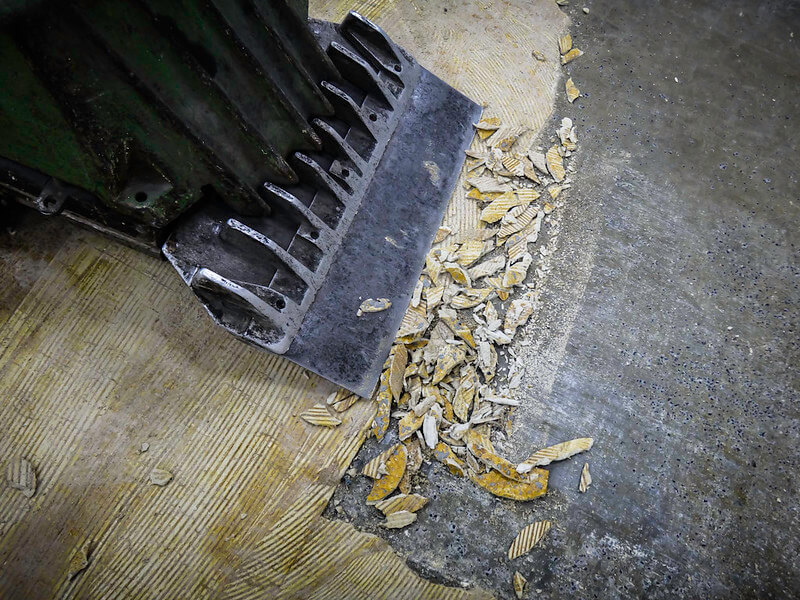
Many of these associated materials are nonfriable, meaning you can’t easily crumble or crush them. Disturbing or removing them through renovation, repair or demolition can release asbestos fibers into the air.
Manufacturers of Asbestos Vinyl Products
Goodyear, Sears-Roebuck and other manufacturers have produced vinyl products containing asbestos for decades. Many of these companies made asbestos vinyl wallpaper and flooring.
People used these products in homes, schools and buildings across the country. Some companies also created more than one type of vinyl product with asbestos.
Asbestos Vinyl Product Brands
Some asbestos vinyl manufacturers owned several brands or product divisions. For example, the American Biltrite Rubber Co. sold vinyl asbestos products under the Amtico brand name. Its Prego floor tile contained asbestos.
Vinyl Product Brands That Used Asbestos
Armstrong World Industries: Armstrong produced asbestos-containing vinyl tile, felt backing, gaskets and adhesives. When it filed for bankruptcy in 2000, the company faced more than 170,000 asbestos lawsuits.
Congoleum: Congoleum-Nairn was a major manufacturer of asbestos vinyl flooring in the U.S. It sold asbestos products under the names Gold Seal, Vinylbest, Flor-Ever, Wonderflor and Luxury Cushioned Vinyl.
GAF: The General Aniline and Film Corporation used more than 70,000 tons of asbestos in 1979 alone. Its asbestos products included Airtred sheet vinyl flooring, roofing felts and gaskets. It also owned the Mastic Tile, Ruberoid, and Sandura brands.
Kentile: From the 1950s to the 1970s, Kentile was one of the largest vinyl flooring manufacturers. There was asbestos in its Kentile asphalt vinyl tiles, KenFlex, Kencork and Kenrubber product lines.
John’s Manville: A major asbestos product manufacturer, Johns Manville produced Colorbestos siding and shingles, Asbestoguard adhesive, and vinyl-finished Colorlith asbestos-cement sheets for “stone” countertops.
Asbestos trust funds set aside money for future asbestos claims from people affected by the manufacturer’s products or exposed to asbestos on the job. Each trust fund has a different payout percentage. For example, Celotex currently pays a maximum of $130,000 to mesothelioma patients. An experienced asbestos lawyer can help you determine if you’re eligible to file a claim.
Free Mesothelioma Guide
Comprehensive information on diagnosis, treatment and support options for families.
Damaged or aging vinyl products that contain asbestos can release tiny toxic fibers into the air. Inhaling asbestos fibers can cause them to stick in the lining of the lungs. This may lead to inflammation or scarring. Over time, this can cause diseases like mesothelioma, asbestosis or lung cancer.
Registered nurse and oncology writer at The Mesothelioma Center, Sean Marchese, says, “Asbestos fibers trapped in the body for long periods of time can damage cells. The DNA in those cells becomes damaged over time, which can lead to the formation of cancer.”
Studies show asbestos exposure can also happen from normal use of asbestos-containing vinyl products. For example, vinyl flooring can break down from normal wear and tear or maintenance, releasing asbestos fibers. These fibers are so light and aerodynamic that they can remain suspended for hours or even days.
Who’s at Risk?
Those who have handled asbestos vinyl every day are most at risk for exposure and developing an asbestos-related disease. This particularly includes those who manufactured or installed vinyl asbestos products.
Today, those who still work with asbestos vinyl gaskets are at risk. People who maintain or remove legacy asbestos vinyl wallpaper, siding or flooring are also at a higher risk. This risk affects not only professionals but also do-it-yourself home renovators.
If you have a history of asbestos exposure, finding a doctor with experience in accurately diagnosing and treating diseases like mesothelioma and asbestos lung cancer can help. Finding signs of lung damage or the development of cancer early often affords patients more treatment options, resulting in better outcomes.
Compensation for Exposure to Asbestos Vinyl Products
Manufacturers of vinyl asbestos products have paid millions of dollars in mesothelioma compensation in personal injury and wrongful death lawsuits.
Notable Asbestos Vinyl Product Verdicts and Settlements
$70.8 million verdict: A California jury awarded $70.8 million to U.S. Navy machinist Robert Whalen in 2014. He developed mesothelioma from exposure to vinyl-like components containing asbestos like John Crane gaskets and seals.
$23 million verdict: In March 2024, a New York appeals court upheld a $23 million verdict awarded to a steamfitter who developed mesothelioma after asbestos exposure working with vinyl-like products such as Jenkins Bros gaskets.
$2.58 million in settlements: A licensed contractor in New York received $2.58 million in settlements from several distributors and manufacturers of vinyl flooring and other products like ceiling tiles. The plaintiff, who installed flooring and other construction materials for drug stores across the state, developed mesothelioma after working for nearly a decade with asbestos-containing vinyl products.
The 2024 Mealey’s Litigation Report shows the average verdict for an asbestos lawsuit is $20.7 million. An average asbestos settlement ranges from $1 million to $2 million. Any compensation you might receive will depend on the details of your individual case. A mesothelioma attorney can help you file a claim and build a case if you’ve been exposed to asbestos in vinyl products.
$30B+ IN TRUST FUNDS AVAILABLE
Find the Right Attorney for You
When filing a mesothelioma claim, the right legal representation is everything. We’ll connect you to a top lawyer who will help you secure financial compensation.
Identifying and Handling Asbestos Vinyl Wallpaper and Other Products
Asbestos can become friable when sheet flooring is removed.
You can’t see asbestos in vinyl products such as flooring, wallpaper or siding. If you think a product has asbestos, call a licensed abatement professional for testing and removal. Licensed experts must follow all local, state and federal guidelines for asbestos disposal.
If removal isn’t possible, under certain circumstances, you can have asbestos encapsulated. This seals the materials and helps keep harmful fibers from becoming airborne. Encapsulation can be a cheaper option than removal. The encapsulation process uses spray or brush methods on materials that contain asbestos. This helps lower the risk of exposure. A trained professional must handle asbestos encapsulation.
DIY home renovation projects can expose you to asbestos. Removing older vinyl wallpaper, siding or flooring tiles can be risky. These projects can release harmful asbestos fibers into the air that you and your family breathe.
Recommended Reading
Your web browser is no longer supported by Microsoft. Update your browser for more security, speed and compatibility.
If you are looking for mesothelioma support, please contact our Patient Advocates at (855) 404-4592
Fact Checked
Our fact-checking process begins with a thorough review of all sources to ensure they are high quality. Then we cross-check the facts with original medical or scientific reports published by those sources, or we validate the facts with reputable news organizations, medical and scientific experts and other health experts. Each page includes all sources for full transparency.
Reviewed
Asbestos.com is the nation’s most trusted mesothelioma resource
The Mesothelioma Center at Asbestos.com has provided patients and their loved ones the most updated and reliable information on mesothelioma and asbestos exposure since 2006.
Our team of Patient Advocates includes a medical doctor, a registered nurse, health services administrators, veterans, VA-accredited Claims Agents, an oncology patient navigator and hospice care expert. Their combined expertise means we help any mesothelioma patient or loved one through every step of their cancer journey.
More than 30 contributors, including mesothelioma doctors, survivors, health care professionals and other experts, have peer-reviewed our website and written unique research-driven articles to ensure you get the highest-quality medical and health information.
About The Mesothelioma Center at Asbestos.com
Assisting mesothelioma patients and their loved ones since 2006.
Helps more than 50% of mesothelioma patients diagnosed annually in the U.S.
A+ rating from the Better Business Bureau.
5-star reviewed mesothelioma and support organization.
My family has only the highest compliment for the assistance and support that we received from The Mesothelioma Center. This is a staff of compassionate and knowledgeable individuals who respect what your family is experiencing and who go the extra mile to make an unfortunate diagnosis less stressful. Information and assistance were provided by The Mesothelioma Center at no cost to our family.
Rodgers, T. (2026, May 12). Asbestos in Vinyl Products. Asbestos.com. Retrieved September 17, 2026, from https://www.asbestos.com/products/vinyl-products/
MLA
Rodgers, Travis. "Asbestos in Vinyl Products." Asbestos.com, 12 May 2026, https://www.asbestos.com/products/vinyl-products/.
Chicago
Rodgers, Travis. "Asbestos in Vinyl Products." Asbestos.com. Last modified May 12, 2026. https://www.asbestos.com/products/vinyl-products/.
My primary support since being diagnosed with Mesothelioma, over 2 years ago, has been this company. Their monthly nationwide support group has been a tremendous help for me. I have learned about others' treatments and have been able to freely discuss mine, knowing others walk the same walk as I do and fully understand. Karen Selby, the nurse and patient advocate, has helped me so much. I call her and she delivers. She's experienced in Thoracic surgeries, is supportive, kind, knowledgeable, and makes a patient feel very cared for! The whole staff are polite, caring, and will help with Mesothelioma victims' many needs. I feel very blessed to have this Organization by my side as I live with this cancer.
I found out about The Mesothelioma Center while researching Peritoneal Mesothelioma days after being diagnosed with malignant cancer. While a lot of the 'Mesothelioma' websites are actually law firms just trying to get your business, theirs is a user-friendly, comprehensive website set up to aid patients, their loved ones, and/or caregivers with all things related to a cancer diagnosis from asbestos exposure. I was soon put in touch with one of their doctors, Snehal Smart, M.D., who immediately sent me a packet of general information, a book on surviving Mesothelioma, and offered me assistance in finding doctors, reputable law firms, financial help, support groups, and so much more! The Mesothelioma Center's website is, in my opinion, the best resource for anyone suffering from cancer due to asbestos. Dr. Smart is amazing! She is very knowledgeable and helpful, but she is also a very kind, caring doctor who appears to go the distance whether she is researching a pertinent topic, making suggestions, providing contacts, or just being a good listener on the other end of the phone. In addition, Dr. Smart referred me to a law firm who is now fighting to get me compensation for the negligence of those defendants whose products exposed me to asbestos and caused my subsequent cancer. Thank you, TMC and Dr. Smart, for helping me determine the best treatment plan for my cancer and being part of my miracle. I am currently cancer-free and back to being a mom to my precious daughter. The Mesothelioma Center, their website, and their staff rock!!
I just want to take this time to thank Mesothelioma Center for all the information you provide. The survival stories are inspiring and give hope where hope is needed! Thanks to you, I have met many others on the site and continue to converse with them. Keep up the good work. I am always looking forward to your posts! Thank you, Richard Delisle.
My brother was recently diagnosed with mesothelioma. I began researching it online. The information I received from The Mesothelioma Center is all-inclusive. No need to look anywhere else! The first phone call was with Karen, and she answered all my questions with ease. She also had a calming effect by presenting all the options available for my brother and his family. Thank you!
My father was recently diagnosed with mesothelioma. We, as a family, were devastated. We were uncertain where to even start, so we reached out to The Mesothelioma Center. They were absolutely amazing. They provided physicians in our area who specialize in this type of cancer because it is so rare. They also set us up with a firm who specializes in getting funds that are set aside to help with our medical bills. I’m so glad we made the phone call. They were very knowledgeable, supportive, sincere, and true patient advocates.
An occupational scientist or another expert who specializes in occupational hazards reviewed the content on this page to ensure it meets current scientific standards and accuracy.
Dr. Shannon Fitzgerald is a toxicologist and pharmacist with extensive experience in pharmaceutical and environmental science. She works in education and consults on both pharmaceutical and environmental science matters.
Fact-checked and verified content:
Our fact-checking process begins with a thorough review of all sources to ensure they are high quality. Then we cross-check the facts with original medical or scientific reports published by those sources, or we validate the facts with reputable news organizations, medical and scientific experts and other health experts. Each page includes all sources for full transparency.
Please read our editorial guidelines to learn more about our content creation and review process.