


Asbestos includes six minerals: Actinolite, amosite, anthophyllite, chrysotile, crocidolite and tremolite. These minerals are divided into two groups: Amphibole and serpentine asbestos. Every type of asbestos is known to cause cancer.

Written by Sean Marchese, MS, RN | Scientifically Reviewed by Diana Zuckerman, Ph.D. | Edited by Amy Edel | Last Update:

The different types of asbestos include chrysotile, crocidolite, amosite, tremolite, anthophyllite and actinolite. The Asbestos Hazard Emergency Response Act of 1986 classifies these 6 minerals as commercial types of asbestos. All types of asbestos can cause mesothelioma, lung cancer and asbestosis.
Because of their structure and chemical makeup, all types of asbestos can get stuck in the body, causing irritation and potentially serious diseases. No particular asbestos type is more prone to causing a specific disease. About 5% to 10% of people exposed to asbestos at work will develop a related cancer, according to a 2025 study.
Asbestos was widely used in the U.S. starting in the 1800s. Manufacturers added it to insulation, pipes, cement, roofing and flooring because it stopped fires. Doctors began reporting that the mineral caused mesothelioma in the 1940s.
In the 1970s, the U.S. began regulating asbestos. They banned spray-on asbestos insulation in 1973. In 1989, the U.S. Environmental Protection Agency tried banning most asbestos products, but a court blocked it, banning only 6 products. In 2024, the EPA announced a plan to ban chrysotile asbestos. Other types of asbestos haven’t been banned in the U.S., but they also are no longer imported.
Asbestos is classified into 2 categories: serpentine and amphibole. They differ in shape and chemical makeup. These factors are key in determining their danger to human health.
Serpentine asbestos has curly fibers made up of sheets of crystals. Chrysotile is the only type of asbestos in the serpentine family. It has historically accounted for more than 95% of all asbestos used worldwide.
Repeated exposure to chrysotile asbestos causes respiratory diseases and cancer. These diseases include asbestosis, lung cancer and mesothelioma.
Amphibole asbestos has straight, needle-shaped fibers. This group has 5 types of asbestos: amosite, crocidolite, tremolite, anthophyllite and actinolite. Studies show lower exposure to amphibole asbestos causes more cancer cases than low exposure to serpentine asbestos. Recent research indicates exposure to amphibole asbestos causes severe autoimmune conditions in addition to cancer and respiratory conditions.


Chrysotile asbestos, also known as “white asbestos,” is considered to be responsible for causing the most cases of mesothelioma in the U.S. While chrysotile isn’t the most dangerous type of asbestos, it was used far more than other types of asbestos. About 90% to 95% of all asbestos used in buildings and products was chrysotile.
The National Institute for Occupational Safety and Health says people should treat chrysotile asbestos like other dangerous asbestos. Even minimal exposure is dangerous, according to the European Commission. The institution’s Scientific Committee on Toxicity, Ecotoxicity and the Environment says: “Chrysotile is a proven carcinogen … Thus a cautionary approach is that there is no threshold for the carcinogenic effect of this agent.”
Products Containing Chrysotile Asbestos
Most U.S. asbestos products made in the 20th century contained chrysotile. Its use in products for the oil and nuclear industry continue today. In March 2024, the EPA announced a ban on chrysotile asbestos. The ban will roll out in phases over 12 years, giving companies time to establish replacements.
Older construction materials are the most common way people encounter chrysotile asbestos now. Small amounts of amphibole asbestos are often found in chrysotile deposits. These trace amounts increase its toxicity. But exposure to only chrysotile asbestos is still medically risky.

Exclusive Content
Karen Selby: The Widespread Use and Hidden Dangers of Asbestos
Amosite asbestos is also known as “brown asbestos.” Its fibers are long, straight and brittle, with a distinctive rod-like shape. Research confirms exposure to amosite asbestos can cause mesothelioma.
A report Frontiers of Public Health published in May 2025 estimates risk of mesothelioma increases after breathing in about 1 amosite fiber per cubic centimeter of air over a year. This level could often be found in jobs like construction or factory work. Repeated exposure over time, such as doing laundry for someone who worked with amosite asbestos, can still cause mesothelioma.
Products Containing Amosite Asbestos
The EPA says amosite is the second most commonly used type of asbestos in the U.S. In its natural state, amosite is known as grunerite. It was mainly mined in South Africa. The name “amosite” comes from the acronym for the Asbestos Mines of South Africa.
Crocidolite is the most dangerous type of asbestos. The fibers of this blue mineral are extremely thin, allowing them to lodge more easily in lung tissue. For this reason, crocidolite is linked to pleural mesothelioma, which forms in the lining of the lungs.
Products Containing Crocidolite Asbestos
Resistance to seawater corrosion made it useful in naval shipyards. High-temperature insulation manufacturers use crocidolite for its heat resistance and strength. The most common mining sites for this type of asbestos, with fine, fibrous crystals, were in Bolivia, Australia and South Africa.

Discover financial assistance programs, insurance guidance, and veteran benefits to help cover your mesothelioma treatment expenses.
Get Financial HelpTremolite, unlike the other commercial forms of asbestos, was rarely intentionally added to products. When other minerals like talc or vermiculite are mined, tremolite asbestos can contaminate them. As a result, products like talc-based baby powder can become contaminated with tremolite, posing a risk of mesothelioma.
Products Containing Tremolite Asbestos
Mining nephrite jade, used for gemstones, also poses a risk. Nephrite is made of tremolite and actinolite. Tremolite asbestos can be white, gray, green or translucent. Impurities in its composition change its color. Even incidental tremolite contamination is still hazardous enough to cause mesothelioma and lung cancer.
Anthophyllite is one of the rarest types of asbestos and doesn’t have a long history of commercial use. It typically appears in shades of gray, green or brown. Anthophyllite asbestos has long, thin, brittle fibers that can easily break into microscopic pieces. This makes it possible to penetrate tissues and lead to lung cancer or mesothelioma.
Products Containing Anthophyllite Asbestos
It doesn’t have the same strength or heat resistance as other types of asbestos. This factor made anthophyllite less useful and more rare in buildings or factories. The mining of this mineral began in Finland. Various other countries around the world mined smaller deposits. Anthophyllite asbestos is sometimes found in deposits of talc and vermiculite.
Actinolite asbestos is a less common type of asbestos. Its fibrous, elongated crystals are green to gray. They can be silky or shiny. The long, needle-like amphibole asbestos fibers are more durable. They can penetrate deeper into lung tissue, raising their potential to cause mesothelioma and lung cancer.
Products Containing Actinolite Asbestos
It wasn’t used as much in products or building materials because it is harder to work with than other types of asbestos. However, it was used in insulation materials, particularly in high-temperature applications. Actinolite asbestos deposits have been found in the U.S., Canada, Finland and Australia.
Identifying types of asbestos in homes can be challenging, but it’s possible with professional testing methods. It’s often colorless, odorless and too small to see with the naked eye. To identify asbestos that can pose a serious risk of mesothelioma and other asbestos-related diseases, it’s best to hire a professional.
Professionals use specialized tests to check for asbestos. These tests include air sampling, bulk material testing (testing solid materials like insulation or tiles) and looking at samples under a microscope. Microscopic analysis can show exactly what type of asbestos is present. This helps experts safely remove it or seal it off.
Professional Asbestos Testing Methods
Asbestos abatement expert and industrial hygienist Tony Rich tells us, “The fibers can be notably discernable in instances where materials are damaged, revealing their fibrous composition. However, in many cases, the asbestos fibers may be microscopic in size and too small for observation without the aid of microscope instrumentation.”
Rich adds, “The presence of asbestos in residential settings is often dependent upon the age of the structure. The older the home, the more likely asbestos can be found.”
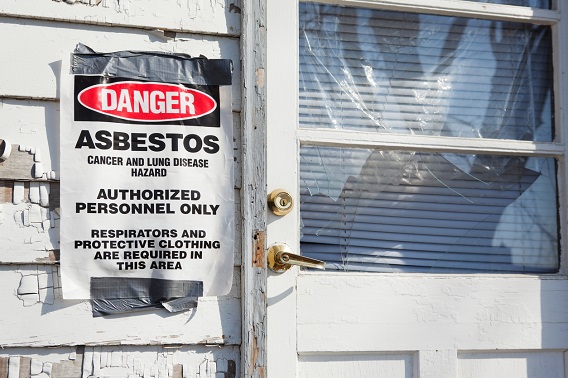
For many years, asbestos was a popular material used for the construction of homes and buildings because the mineral is resistant to electricity, heat…

Many advocates have worked for a full ban on all types of asbestos in the U.S., but currently only partial bans are in place. The ban announced in March 2024 added chrysotile asbestos to the list of those types already banned under the Toxic Substances Control Act.
Types of asbestos, particularly chrysotile have been allowed in certain products under specific conditions in the U.S. Within the 2024 chrysotile ban, industries where there are safety concerns, like nuclear waste containment, are given time to find suitable replacements.
More than 50 countries have completely banned all 6 types of asbestos. Globally, conventions like the Rotterdam Convention require labeling and control over chrysotile asbestos.
While some types of asbestos may be more hazardous than others, all are dangerous. Crocidolite is the most dangerous asbestos type because its sharp, needle-like fibers penetrate lung tissue easily.
Leading health agencies, including the World Health Organization and the EPA classify all types of asbestos as carcinogenic. All identified forms of asbestos can cause asbestosis, malignant mesothelioma, lung cancer, ovarian cancer, laryngeal cancer and other serious diseases.
No amount of asbestos exposure is completely safe. Even one-time exposure can be harmful. Asbestos is made of tiny fibers you can breathe in without knowing. These fibers can get stuck in your lungs. The risk of getting sick is small if you were only exposed once, but it’s still there. If you think you were exposed, tell a doctor. They can help you stay healthy and watch for any problems in the future.
Asbestos can contaminate various minerals, including talc and vermiculite, which are commonly used in everyday products. Talc, used in products like baby powder, cosmetics, paint and ceramics, may naturally contain asbestos, posing a risk of exposure. This has led to numerous legal cases involving talc-containing products contaminated with asbestos.
Vermiculite, another mineral used in insulation and soil improvement, can also be contaminated with asbestos, especially when sourced from mines like the one in Libby, Montana, which contained tremolite asbestos. In addition to these minerals, asbestos has been mined intentionally for its properties and can still be found in older construction materials, such as insulation, roofing and flooring.
No, asbestos laws don’t differ based on the types of asbestos fibers. Laws instead vary depending on how dangerous the asbestos-containing material is to remove. The most dangerous categories of asbestos product removal require increased safety measures and training to perform.
Your web browser is no longer supported by Microsoft. Update your browser for more security, speed and compatibility.
If you are looking for mesothelioma support, please contact our Patient Advocates at (855) 404-4592
The Mesothelioma Center at Asbestos.com has provided patients and their loved ones the most updated and reliable information on mesothelioma and asbestos exposure since 2006.
Our team of Patient Advocates includes a medical doctor, a registered nurse, health services administrators, veterans, VA-accredited Claims Agents, an oncology patient navigator and hospice care expert. Their combined expertise means we help any mesothelioma patient or loved one through every step of their cancer journey.
More than 30 contributors, including mesothelioma doctors, survivors, health care professionals and other experts, have peer-reviewed our website and written unique research-driven articles to ensure you get the highest-quality medical and health information.
My family has only the highest compliment for the assistance and support that we received from The Mesothelioma Center. This is a staff of compassionate and knowledgeable individuals who respect what your family is experiencing and who go the extra mile to make an unfortunate diagnosis less stressful. Information and assistance were provided by The Mesothelioma Center at no cost to our family.LashawnMesothelioma patient’s daughter


Asbestos.com. (2026, February 9). Types of Asbestos. Retrieved October 12, 2026, from https://www.asbestos.com/asbestos/types/
"Types of Asbestos." Asbestos.com, 9 Feb 2026, https://www.asbestos.com/asbestos/types/.
Asbestos.com. "Types of Asbestos." Last modified February 9, 2026. https://www.asbestos.com/asbestos/types/.
An occupational scientist or another expert who specializes in occupational hazards reviewed the content on this page to ensure it meets current scientific standards and accuracy.

Diana Zuckerman is the founder and president of the National Center for Health Research. She develops prevention strategies and treatments for programs such as the Cancer Prevention and Treatment Fund.
Our fact-checking process begins with a thorough review of all sources to ensure they are high quality. Then we cross-check the facts with original medical or scientific reports published by those sources, or we validate the facts with reputable news organizations, medical and scientific experts and other health experts. Each page includes all sources for full transparency.
Please read our editorial guidelines to learn more about our content creation and review process.

