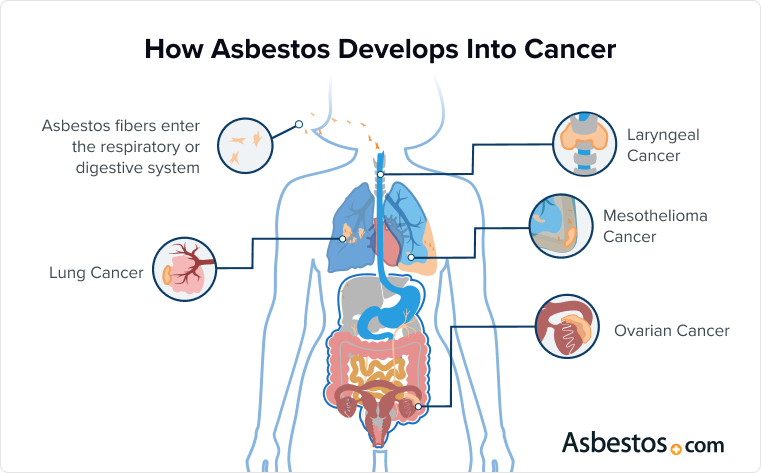
Asbestos is a group of 6 naturally occurring mineral fibers once used in thousands of U.S. products because of its resistance to heat, electricity and corrosion. It is carcinogenic and linked to mesothelioma, lung cancer, laryngeal cancer and ovarian cancer.
Learn more about mesothelioma, asbestos and the steps you can take to fight this disease.
Karen Selby, RN: What is Asbestos and Why is it Dangerous?
Asbestos was so widely used because it's an amazing product.
It's a God made mineral. It's it's a rock, and it has great attributes, it's a fire retardant, it's an insulator, and it's free, it's a part of the earth. And that's why it was used in so many products because it was just an amazing product. It was put in so many different things, anything that could potentially catch fire, or anything that, needed to stay insulated or warm, whether it be ceiling tiles or flooring or walls or anything in our homes or anything in the industry.
For example, machines that blow or have a a motor in it are always in insulated with something. So in case it sparks or catches fire, it's gonna be insulated. Well, back in the day, it was insulated with asbestos products. So if potentially catch fire, it would, you know, put it out because it's great fire retardant.
The unfortunate thing is it can be a health hazard. It causes cancer, and because it's a fine rock or mineral, when it becomes disturbed, it becomes airborne. When it becomes airborne, it can be ingested or in inhaled. And oftentimes, if you get an accumulation of inhaling something so microscopic, you can't see it, it can become a future health hazard.
Karen Selby, RN: What is Asbestos and Why is it Dangerous?
Asbestos was so widely used because it's an amazing product.
It's a God made mineral. It's it's a rock, and it has great attributes, it's a fire retardant, it's an insulator, and it's free, it's a part of the earth. And that's why it was used in so many products because it was just an amazing product. It was put in so many different things, anything that could potentially catch fire, or anything that, needed to stay insulated or warm, whether it be ceiling tiles or flooring or walls or anything in our homes or anything in the industry.
For example, machines that blow or have a a motor in it are always in insulated with something. So in case it sparks or catches fire, it's gonna be insulated. Well, back in the day, it was insulated with asbestos products. So if potentially catch fire, it would, you know, put it out because it's great fire retardant.
The unfortunate thing is it can be a health hazard. It causes cancer, and because it's a fine rock or mineral, when it becomes disturbed, it becomes airborne. When it becomes airborne, it can be ingested or in inhaled. And oftentimes, if you get an accumulation of inhaling something so microscopic, you can't see it, it can become a future health hazard.
What Is Asbestos?
Asbestos is a natural mineral that is resistant to heat and corrosion. It was widely used in insulation, automotive parts such as brake pads and building materials, including roof and floor tiles. The U.S. Environmental Protection Agency, Occupational Safety and Health Administration, and the World Health Organization all agree there is no known safe level of asbestos exposure.
Key Facts About Asbestos
Asbestos exposure: An estimated 27 million U.S. workers were exposed to asbestos between 1940 and 1979, according to The Agency for Toxic Substances and Disease Registry. Legacy asbestos in older buildings and equipment still poses a risk.
Banned uses: The EPA finalized a ban on the chrysotile type in March 2024, but advocates are still calling for a total U.S. asbestos ban. More than 70 countries have banned asbestos.
Carcinogen: Asbestos is classified as a Group 1 Carcinogen to Humans, according to The International Agency for Research on Cancer.
Public health effect: Asbestos is the primary cause of mesothelioma cancer and there are nearly 3,000 diagnoses in the U.S. each year. There are approximately 40,000 deaths each year from asbestos-related diseases, according to the International Commission on Occupational Health and Institute for Health Metrics and Evaluation.
Asbestos fibers are microscopic and float in the air. As Dr. Jacques Fontaine, thoracic surgeon and director of the Mesothelioma Research and Treatment Center at Moffitt Cancer Center tells us, the “very fine fibers” of the mineral “can be inhaled.” They can become stuck in the lining around the lungs called the pleura.
Dr. Fontaine explains, “Those fibers keep irritating the pleura, so the pleura gets inflamed. And over the years, that chronic inflammation can cause a genetic mutation of cells and then they start growing uncontrollably and form cancers like mesothelioma or lung cancer.” The time from exposure and initial irritation to the development of cancer is called the latency period. For mesothelioma, the latency period is 20 to 60 years from initial asbestos exposure.
What Are the Health Effects of Asbestos Exposure?
Asbestos causes mesothelioma, lung, laryngeal and ovarian cancers. The amount of asbestos inhaled and the duration of exposure generally increases the risk according to The ATSDR. But even brief or low exposure can cause mesothelioma.
Chuck Gast, a survivor of pleural mesothelioma, shared with us his experience of developing the disease just 6 weeks after working with asbestos at a furnace factory. “I was 27 years old and never thought something like this would come back to haunt me. That’s one job I should have never taken,” he said.
Asbestos exposure can also cause noncancerous conditions such as asbestosis (irreversible scarring of lung tissue). It can also cause diffuse pleural thickening, pleural effusion (fluid buildup) and pleurisy, which all affect the lining of the lungs.
Connect With a Top Mesothelioma Specialist
Get help contacting a top mesothelioma doctor and scheduling appointments.
How Long After Asbestos Exposure Do Symptoms Appear?
Asbestos-related diseases typically develop 20 to 60 years after first exposure, with no symptoms during that period. This contributes to why a mesothelioma diagnosis can come as a shock. The exposure may have happened early in a career, long before any symptoms appear.
Smoking also significantly increases the risk of asbestos-related lung cancer. People who both smoke and have been exposed to asbestos face a much higher combined risk than those with either factor alone.
People with a history of occupational or household asbestos exposure should tell their doctor and discuss periodic lung monitoring. The Mesothelioma Center’s Patient Advocates can connect you with a mesothelioma specialist.
Disease
Condition Type
Latency
Primary Risk Group
Asbestosis
Noncancerous, lung scarring (fibrosis)
15 years or more
Heavy, long-term occupational exposure
Laryngeal cancer
Cancer, larynx
Research suggests around 30 to 40+ years; still being studied
Occupational inhalation exposure; IARC Group 1 causal link confirmed
Lung cancer
Cancer, lung tissue
15 to 35 years
Smokers with asbestos exposure; occupational workers
Mesothelioma
Cancer, lining of the lungs (pleural) or abdomen (peritoneal)
Women with occupational or secondary exposure; IARC Group 1 causal link confirmed
Pleural plaques
Noncancerous, pleural thickening
20 to 30 years
Any person with asbestos exposure; most common indicator of past exposure
Types of Asbestos
The 6 types of commercial asbestos are chrysotile, crocidolite, tremolite, amosite, anthophyllite and actinolite. Other types of asbestos-like minerals exist naturally; together, they are called asbestiform minerals. All types of asbestos cause mesothelioma cancer, with amosite and crocidolite posing the greatest risk.
Six Types of Asbestos
Actinolite (Green Asbestos)
This form of asbestos has a harsh texture and is less flexible than the others. Mining companies did not seek to mine this type of asbestos. Actinolite occurs near other commercial asbestos types. That’s how it ends up in asbestos products. It was sometimes found in furnace linings and high-temperature insulation.
Amosite (Brown Asbestos)
It was most used in cement sheets and pipe insulation. Amosite is also in insulating boards, ceiling tiles and thermal insulation products. It’s reportedly more carcinogenic than chrysotile. But it’s not as dangerous as crocidolite.
Anthophyllite (Yellow Asbestos)
It was used in small amounts for specialized insulation and construction. It also occurs as a contaminant in chrysotile asbestos, vermiculite and talc. It is a rare, natural silicate mineral, and it may have a grey, dull green or white color.
Chrysotile (White Asbestos)
The most used form of asbestos. It was used in roofs, ceilings, walls and floors. Manufacturers used chrysotile asbestos in brake linings, gaskets and boiler seals. It was used as insulation for pipes, ducts and appliances. This form accounts for approximately 90% to 95% of asbestos found in buildings.
Crocidolite (Blue Asbestos)
It was used to insulate steam engines. Blue asbestos was also used in some spray-on coatings and pipe insulation. It was also used in plastics and cement products. It’s the most carcinogenic type of asbestos. It is linked to a higher risk of mesothelioma because of its brittle, needle-like fibers that become easily airborne.
.
Tremolite (Color Varies)
It is in deposits of chrysotile asbestos, vermiculite and talc. Some insulation products, paints, sealants, and roofing materials contain it. Tremolite can be white, green, gray and transparent. It’s more carcinogenic than other types but less so than crocidolite.
The 6 main types of asbestos fall into 2 categories: amphibole and serpentine. Only chrysotile falls into the serpentine category. The rest are amphiboles.
Serpentine asbestos fibers are long, curly and white. These properties made serpentine asbestos easier to use in the production of fireproof clothing and textiles. Amphibole asbestos fibers are brittle, needle-like and range in color from green to blue to brown. Amphibole fibers offer superior heat and acid resistance, as well as structural rigidity.
Common Uses of Asbestos
Asbestos was commonly used in industry and construction from the late 1800s to the 1980s. It was added to building materials, insulation, fireproofing and brakes because its strong fibers resist heat and electricity.
Asbestos was deliberately added to products to strengthen them and improve their heat resistance, particularly in building materials, cloth, paper, cement and plastic. These past uses have led to asbestos exposure in occupational settings, public buildings, and homes throughout the United States. While the U.S. is no longer mining or using asbestos in consumer products, the risk remains for blue-collar workers who work with legacy asbestos products.
Today, asbestos can contaminate products that use talc because this mineral forms in ther earth near asbestos. When mined asbestos can get mixed in. Talc is still used today in some cosmetics, like eye shadow or body powders. It was the main ingredient in Johnson & Johnson’s baby powder globally until 2023.
How Can People Be Exposed to Asbestos?
Most people are exposed to asbestos at work, especially in power plants, chemical plants, steel and textile mills, factories, shipyards and automotive repair shops. Workers can bring asbestos fibers home on their clothes and bodies, exposing their families.
Asbestos can also be found in homes, public buildings and the environment. People living near natural deposits or contaminated sites may be exposed to asbestos. Older municipal water systems that use asbestos cement pipes are another potential source of environmental exposure. Many consumer products in the U.S. once contained asbestos.
Expert Insight
“Asbestos is everywhere… I could probably go through every profession that involves any type of hands-on work where you’re building something or putting something together, where you could find a component part that has asbestos in it.”
Kevin Paul, mesothelioma lawyer at Ferraro Law Firm
Occupations With High Asbestos Use
Asbestos was widely used in manufacturing, construction, power generation and the military. Workers in these diverse fields encountered asbestos and unknowingly brought asbestos fibers home. This caused secondhand exposure among their families and others in the house. Although modern safety regulations, like on-site showers and uniform changes, have been put in place, a common 30- to 50-year latency period means many individuals are only now seeing the effects of asbestos exposure.
The Agency for Toxic Substances and Disease Registry reported that from 1940 to 1979, around 27 million workers were exposed to aerosolized asbestos fibers. Today, about 1.3 million workers in construction and industry still face asbestos exposure risks. Regulations have made workplaces safer, but some jobs, such as those in the chlor-alkali industry, still pose risks of asbestos exposure.
U.S. companies produced thousands of asbestos-containing products until the 1980s. Legacy products found during renovation or demolition work currently cause the most exposure.
Discontinued Asbestos Building Materials
Asbestos adhesives, sealants and coatings
Asbestos cement
Asbestos-reinforced plastics
Asbestos roofing felt
Vinyl asbestos floor tiles
Long-term exposure to asbestos-containing products typically occurs in occupational settings. These include factories, plants, construction sites and schools. Short-term exposure often happens at home during DIY renovations or working with car brakes.
Asbestos products for consumers are no longer made in the U.S., but they once included toasters, ovens, ironing pads and hair dryers. Cosmetics and toys have also exposed people to asbestos-contaminated talc.
Which Companies Made and Sold Asbestos Products?
The top asbestos manufacturers in the U.S. included Johns Manville, W.R. Grace & Co., Pittsburgh Corning and Armstrong Industries. These companies produced and sold asbestos-containing products for decades while concealing evidence of the health risks to workers and consumers. Many of the trust funds available to mesothelioma patients today were established through bankruptcy proceedings against these manufacturers.
The history of asbestos use dates to prehistoric times. The word “asbestos” originates from the Ancient Greek word for “inextinguishable” or “indestructible.” Early humans added it to strengthen pottery. Ancient Egyptians used asbestos in embalming to preserve pharaohs’ bodies. The ancient Greeks used its fire-resistant qualities for lamp wicks and funeral shrouds. In the Middle Ages, asbestos fibers were woven into textiles like tablecloths and clothing.
How Asbestos Became Widely Used in the 20th Century
The Industrial Revolution vastly increased asbestos use because of its insulating and fireproofing properties. In the late 19th and early 20th centuries, asbestos was added to many products, including construction materials, automotive parts and household items. Large-scale mining began at the end of the 19th century, and by the early 20th century, asbestos was integrated into more than 3,000 products.
When Did Countries Start Banning Asbestos?
Asbestos was widely used, but health concerns ramped up significantly in the early 20th century, when workers in mines and factories showed high rates of lung issues. The first case of asbestosis was documented in 1924. By the 1960s, researchers linked asbestos exposure to mesothelioma, a rare cancer.
Because of rising health risk evidence, many countries started limiting asbestos use in the 1970s. The U.S. Environmental Protection Agency set guidelines to reduce asbestos exposure, and industries pursued safer alternatives. More than 70 countries now have a national ban on asbestos, including all members of the European Union.
Asbestos Laws & Regulations
The EPA and OSHA primarily enforce asbestos regulations. These laws govern asbestos removal in buildings, worker exposure limits, disposal standards and notification requirements before demolition or renovation. State laws often add further restrictions to the federal standards.
Although U.S. manufacturers gradually stopped producing most asbestos products by the late 1980s, imported building materials such as roofing, joint compounds and gaskets, still potentially contain asbestos. The EPA requires testing, safety protocols and proper disposal to reduce exposure risks for workers and the public.
A 2019 EPA rule also requires manufacturers to seek government approval before reintroducing any discontinued asbestos-containing products, including vinyl floor tiles, cement, roofing felt, adhesives, sealants and coatings, giving the agency the right to review health risks before those products can be sold.
Explain the history of the asbestos cover-up in the U.S.
The history of the asbestos industry is actually kind of a nasty one. It unfortunately involves a lot of very respected companies in the United States. I’m not gonna name those specific companies, but large multinational corporation And as early as the early nineteen hundreds, people understood that asbestos was dangerous. Doctors started seeing cases, and they started testing for it, and understanding that these vessels was largely what was making people sick. Unfortunately, this is really a tale of corporate greed because what happened was when the company started realizing, oh, man, we’re exposing our employees to these dangerous asbestos containing products. They covered it up. They didn’t wanna get sued, and there’s lots of documentation about this. Their writing letters to their, insurance companies. What should we do? They’re conspiring with their insurance companies to keep it under wraps. They did not wanna get sued. So eventually, when it started coming out, again, in the seventies and eighties on a national level, and the lawyer started digging in on, Hey, what happened? How come this didn’t come out sooner? They started finding reams and reams of dock show that this was a cover up, and it’s one of the reasons why. In mesothelioma, it’s usually a pretty clear cut case. If you’ve got mesot Elioma, somebody is liable. The companies don’t typically want to take these cases to court because they know the evidence is stacked heavily against them. So it’s really just a typical situation, and you kinda hear about these sometimes where people are putting money over employees.
Is Asbestos Banned?
In March 2024, the EPA’s final rule prohibits the ongoing use of chrysotile asbestos in the U.S. Chrysotile is the only type still imported into the country. Chlor-alkali companies still using this form of asbestos have 12 years to discontinue use.
U.S. manufacturers have stopped using asbestos and now use safer alternatives like polyurethane foam, silica fabric, cellulose fiber and thermoset plastic flour. These options are often cheaper, offer safer functional advantages and can effectively replace asbestos in cloth, insulation and paper.
Expert Insight
“Prevention is the only cure to asbestos-caused illnesses. By banning asbestos, we limit exposure. Asbestos causes 40,000 deaths each year.”
Linda Reinstein, co-founder of the Asbestos Disease Awareness Organization
The phase-out of asbestos began when significant medical evidence linked asbestos to cancer and chronic lung disease. Labor unions began to fight back. American companies phased out most uses of asbestos in the 1980s, after courts ruled in the 1970s that asbestos manufacturers were strictly liable for failing to warn workers about the product’s dangers. By then, it was too late for the workers who handled asbestos products for decades.
1973
An asbestos insulator won the first major asbestos lawsuit.
1960s
Medical studies confirmed asbestos causes mesothelioma.
1933
Johns Manville settled 11 asbestosis lawsuits.
1930s
Asbestos companies conducted secret research into health effects and kept the results hidden.
1927
A worker filed the first known successful workers’ compensation claim for asbestos-related disease in Massachusetts.
Late 1800s
Asbestos mining became a big industry. It supplied raw and pure asbestos for industrial products.
Most of the asbestos that remains in buildings today is legacy asbestos. Asbestos is relatively safe if undisturbed. However, renovations, demolition, fire or natural disasters can release its fibers. These microscopic fibers can become airborne and be inhaled. Asbestos fibers are often exceptionally light and may remain airborne for around 48-72 hours. Older materials should always be professionally tested before beginning any project that may disturb them.
Asbestos Exposure Lawsuits
Hundreds of thousands of patients and families have filed asbestos lawsuits. They cover medical bills and lost wages. Most lawsuits settle out of court, averaging $1 million to $2 million. People diagnosed with mesothelioma or asbestos-related lung cancer may also be eligible for compensation through asbestos trust funds, lawsuits or VA benefits.
Loved ones who develop mesothelioma through secondhand asbestos exposure to asbestos may file a legal claim. People with mesothelioma may also file a claim against an asbestos trust fund. There is more than $30 billion available in active asbestos trust funds. You can hire mesothelioma lawyers who specialize in asbestos litigation.
These claims hold the asbestos industry liable for the harm they’ve caused. Manufacturers hid evidence of the mineral’s health hazards. For years, they continued exposing workers and consumers.
Insight From a Mesothelioma Specialist
“I was working with a patient in California. From the moment he got diagnosed, he reached out to The Mesothelioma Center, really looking for medical guidance and just a support resource. He was overwhelmed with joy with the settlement that he received.”
Danielle DiPietro, Financial and Patient Advocate and VA-Accredited Claims Agent
How to Protect Yourself From Asbestos Exposure
Employers need to keep workplaces safe to avoid asbestos exposure and protect workers. Homes, military bases, offices, schools and public buildings built before the 1980s are most likely to contain legacy asbestos materials.
It’s not safe for untrained individuals to remove asbestos. The EPA advises homeowners to avoid removing anything that could be asbestos. It’s better to hire certified asbestos professionals to protect your family.
In homes built before 1980, asbestos-containing materials are most commonly found in the following locations:
Attic and wall insulation, especially vermiculite-based products
Vinyl floor tiles and the adhesive backing beneath them
Textured ceiling paint and patching compounds
Roofing shingles and exterior siding
Pipe insulation and duct wrap
Insulation around furnaces and wood-burning stoves
These materials are generally not dangerous if they are in good condition and left undisturbed. The risk comes when they are damaged, drilled, sanded or removed without proper precautions.
Experts are trained to prevent asbestos exposure. Sometimes, leaving asbestos materials in place or sealing them is safer. For the best advice, talk to a certified local asbestos abatement expert. The EPA and the Consumer Product Safety Commission stress that you cannot visually distinguish a product containing asbestos from one that does not.
These agencies frequently update their websites with new information on upcoming bills, initiatives and other asbestos-related news.
Common Questions About Asbestos
How much asbestos exposure is dangerous?
There’s no known safe level of asbestos exposure, according to the EPA, OSHA and the World Health Organization. Even brief or low-level exposure carries some risk. Cumulative and occupational exposures carry the highest risk, but individual susceptibility varies.
How can you identify asbestos products?
The only way to identify asbestos is through lab testing or professional inspection. Microscopic asbestos fibers have no smell or taste. They’re not easily identified by sight. Homeowners should hire a licensed asbestos professional to collect samples for testing.
Friable asbestos materials, like old pipe lagging or popcorn ceilings, are easy to break or crumble by hand. When damaged, they can release toxic dust into the air. Nonfriable materials, like floor tiles or cement siding, keep asbestos fibers trapped as long as they remain undisturbed. Sawing, scraping or smashing the product may release fibers.
What are the first signs of asbestos exposure?
Exposure to asbestos fibers has no initial signs or symptoms. The first signs of asbestos poisoning include the beginning symptoms of related diseases, typically years later. Asbestos-related diseases often begin with shortness of breath, a dry cough and chest or abdominal pain. With a common 20- to 60-year latency period, many people don’t realize they were dangerously exposed until decades later.
How can you be tested for asbestos exposure?
Tests can detect asbestos fibers in lung tissue, lung fluid, urine, stool and mucus. The best way to confirm asbestos exposure is to examine a biopsy of lung tissue, which is rather invasive. These tests cannot generally determine how much asbestos is trapped in lung tissue. They also can’t predict whether a disease will develop.
Should I see a doctor if I have been exposed to asbestos?
Anyone with a history of asbestos exposure, occupational or household, should tell their doctor and ask about cancer screenings. Let your doctor know right away if you develop any symptoms such as shortness of breath, a persistent dry cough, or chest pain.
Doctors typically begin with a physical examination and chest X-ray. They may also order pulmonary function tests or a CT scan to look for early signs of lung disease. If asbestos-related disease is suspected, ask for a referral to a specialist. After a mesothelioma diagnosis, get a second opinion from a mesothelioma specialist.
What compensation is available for asbestos exposure?
People diagnosed with mesothelioma or other asbestos-related diseases may be eligible for compensation through asbestos trust funds, lawsuits or VA benefits. Trust funds hold more than $30 billion set aside for asbestos-related disease claims. A lawsuit lets patients seek damages directly from negligent manufacturers. Veterans with service-connected exposure may qualify for VA disability benefits.
Recommended Reading
Your web browser is no longer supported by Microsoft. Update your browser for more security, speed and compatibility.
If you are looking for mesothelioma support, please contact our Patient Advocates at (855) 404-4592
Fact Checked
Our fact-checking process begins with a thorough review of all sources to ensure they are high quality. Then we cross-check the facts with original medical or scientific reports published by those sources, or we validate the facts with reputable news organizations, medical and scientific experts and other health experts. Each page includes all sources for full transparency.
Reviewed
Asbestos.com is the nation’s most trusted mesothelioma resource
The Mesothelioma Center at Asbestos.com has provided patients and their loved ones the most updated and reliable information on mesothelioma and asbestos exposure since 2006.
Our team of Patient Advocates includes a medical doctor, a registered nurse, health services administrators, veterans, VA-accredited Claims Agents, an oncology patient navigator and hospice care expert. Their combined expertise means we help any mesothelioma patient or loved one through every step of their cancer journey.
More than 30 contributors, including mesothelioma doctors, survivors, health care professionals and other experts, have peer-reviewed our website and written unique research-driven articles to ensure you get the highest-quality medical and health information.
About The Mesothelioma Center at Asbestos.com
Assisting mesothelioma patients and their loved ones since 2006.
Helps more than 50% of mesothelioma patients diagnosed annually in the U.S.
A+ rating from the Better Business Bureau.
5-star reviewed mesothelioma and support organization.
My family has only the highest compliment for the assistance and support that we received from The Mesothelioma Center. This is a staff of compassionate and knowledgeable individuals who respect what your family is experiencing and who go the extra mile to make an unfortunate diagnosis less stressful. Information and assistance were provided by The Mesothelioma Center at no cost to our family.
Asbestos.com. (2026, May 7). Asbestos. Retrieved May 15, 2026, from https://www.asbestos.com/asbestos/
MLA
"Asbestos." Asbestos.com, 7 May 2026, https://www.asbestos.com/asbestos/.
Chicago
Asbestos.com. "Asbestos." Last modified May 7, 2026. https://www.asbestos.com/asbestos/.
My primary support since being diagnosed with Mesothelioma, over 2 years ago, has been this company. Their monthly nationwide support group has been a tremendous help for me. I have learned about others' treatments and have been able to freely discuss mine, knowing others walk the same walk as I do and fully understand. Karen Selby, the nurse and patient advocate, has helped me so much. I call her and she delivers. She's experienced in Thoracic surgeries, is supportive, kind, knowledgeable, and makes a patient feel very cared for! The whole staff are polite, caring, and will help with Mesothelioma victims' many needs. I feel very blessed to have this Organization by my side as I live with this cancer.
I found out about The Mesothelioma Center while researching Peritoneal Mesothelioma days after being diagnosed with malignant cancer. While a lot of the 'Mesothelioma' websites are actually law firms just trying to get your business, theirs is a user-friendly, comprehensive website set up to aid patients, their loved ones, and/or caregivers with all things related to a cancer diagnosis from asbestos exposure. I was soon put in touch with one of their doctors, Snehal Smart, M.D., who immediately sent me a packet of general information, a book on surviving Mesothelioma, and offered me assistance in finding doctors, reputable law firms, financial help, support groups, and so much more! The Mesothelioma Center's website is, in my opinion, the best resource for anyone suffering from cancer due to asbestos. Dr. Smart is amazing! She is very knowledgeable and helpful, but she is also a very kind, caring doctor who appears to go the distance whether she is researching a pertinent topic, making suggestions, providing contacts, or just being a good listener on the other end of the phone. In addition, Dr. Smart referred me to a law firm who is now fighting to get me compensation for the negligence of those defendants whose products exposed me to asbestos and caused my subsequent cancer. Thank you, TMC and Dr. Smart, for helping me determine the best treatment plan for my cancer and being part of my miracle. I am currently cancer-free and back to being a mom to my precious daughter. The Mesothelioma Center, their website, and their staff rock!!
I just want to take this time to thank Mesothelioma Center for all the information you provide. The survival stories are inspiring and give hope where hope is needed! Thanks to you, I have met many others on the site and continue to converse with them. Keep up the good work. I am always looking forward to your posts! Thank you, Richard Delisle.
My brother was recently diagnosed with mesothelioma. I began researching it online. The information I received from The Mesothelioma Center is all-inclusive. No need to look anywhere else! The first phone call was with Karen, and she answered all my questions with ease. She also had a calming effect by presenting all the options available for my brother and his family. Thank you!
My father was recently diagnosed with mesothelioma. We, as a family, were devastated. We were uncertain where to even start, so we reached out to The Mesothelioma Center. They were absolutely amazing. They provided physicians in our area who specialize in this type of cancer because it is so rare. They also set us up with a firm who specializes in getting funds that are set aside to help with our medical bills. I’m so glad we made the phone call. They were very knowledgeable, supportive, sincere, and true patient advocates.
An occupational scientist or another expert who specializes in occupational hazards reviewed the content on this page to ensure it meets current scientific standards and accuracy.
Our fact-checking process begins with a thorough review of all sources to ensure they are high quality. Then we cross-check the facts with original medical or scientific reports published by those sources, or we validate the facts with reputable news organizations, medical and scientific experts and other health experts. Each page includes all sources for full transparency.
Please read our editorial guidelines to learn more about our content creation and review process.





 Linda Reinstein , co-founder of the Asbestos Disease Awareness Organization