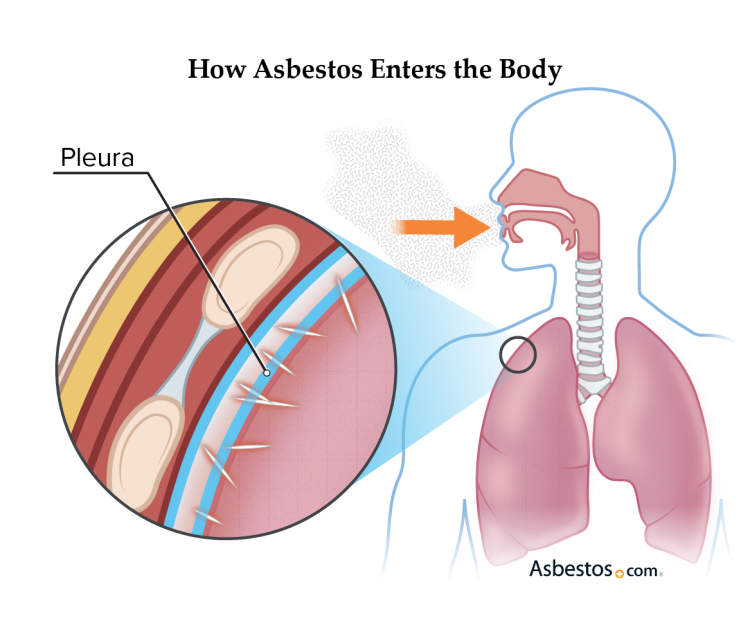
Asbestos is a toxic mineral made of tiny, heat-resistant fibers. When disturbed, it releases dangerous microscopic fibers into the air. Breathing in these fibers can lead to serious diseases, such as mesothelioma, lung cancer and asbestosis.
Tim Povtak: What is asbestos exposure and how does it happen?
When we talk about asbestos exposure, we essentially mean the inhalation of asbestos fibers or the ingestion of asbestos fibers. And remember, we're not talking about something you can see.
These are microscopic fibers of asbestos. And usually, the problem is when asbestos ages, that's when it becomes so dangerous. When the products are first made, you're probably not going to have a problem with them.
But as they age, and they start to see wear and tear in the products, these little fibers get loose. And that's how you ingest them, or you Inhale them, and it gets into your lungs. It gets into your body. And they slowly, slowly causes a problem.
And 20, 30, 40 years from now, from then, you're going to have problems with health problems.
Tim Povtak: What is asbestos exposure and how does it happen?
When we talk about asbestos exposure, we essentially mean the inhalation of asbestos fibers or the ingestion of asbestos fibers. And remember, we're not talking about something you can see.
These are microscopic fibers of asbestos. And usually, the problem is when asbestos ages, that's when it becomes so dangerous. When the products are first made, you're probably not going to have a problem with them.
But as they age, and they start to see wear and tear in the products, these little fibers get loose. And that's how you ingest them, or you Inhale them, and it gets into your lungs. It gets into your body. And they slowly, slowly causes a problem.
And 20, 30, 40 years from now, from then, you're going to have problems with health problems.
What Is Asbestos Exposure?
Asbestos exposure happens when microscopic airborne asbestos fibers are inhaled or ingested. Risk increases with fiber concentration and repeated or longer exposures. However, there’s no safe level of exposure.
How People Get Exposed
Environmental: Living near mines, industrial and manufacturing plants or damaged older buildings raises exposure risk.
Occupational: Disturbing old asbestos products like insulation, tiles, brake parts or ship materials releases fibers into the air.
Secondary: Fibers carried home on clothing, hair, gear or tools expose family members.
Asbestos fibers may take up to 48 to 72 hours to settle in an undisturbed environment. Breathing in asbestos fibers can lead to mesothelioma, lung cancer and asbestosis. It’s the No. 1 cause of work-related deaths in the world.
Most asbestos exposure happens at work, especially in construction, shipbuilding and in military occupations. Common sources include disturbed building materials, shipyard and construction work, brake and industrial dust and secondhand fibers inadvertently brought home from a worksite. The material was widely used in many products and industries.
Types of Asbestos and Their Relative Dangers
All asbestos types can cause cancer. Some are more potent per fiber when airborne. Amphibole types such as crocidolite and amosite are generally more potent per fiber. The term “asbestos” actually refers to 6 distinct minerals: chrysotile, amosite, crocidolite, tremolite, anthophyllite and actinolite.
Types of Asbestos
Chrysotile (white asbestos): This type of asbestos is considered the primary cause of most mesothelioma cases in the U.S. It’s also the most widely used type of asbestos.
Crocidolite (blue asbestos): Although used in fewer products, this type is considered the most dangerous form of asbestos because of its thin, needle-like fibers that are more easily inhaled and lodged in lung tissue.
Amosite (brown asbestos): This was the second most common commercial form of asbestos and remains hazardous because of its straight, sharp fibers.
Tremolite, anthophyllite and actinolite: These forms were rarely used in products but may occur as contaminants in talc, vermiculite and other minerals. They also carry serious health risks and may cause mesothelioma if fibers are inhaled.
Chrysotile was the most widely used in commercial products, making it the most commonly encountered form. This asbestos type accounts for 90-95% of asbestos used in building materials.
Who Is at Risk of Asbestos Exposure?
Workers in construction, shipyards, industrial plants, mechanics, firefighters and veterans historically face higher risk. Family members can be harmed through secondhand carry-home fibers on clothing, hair or tools. Mesothelioma becomes a risk with continued exposure.
Workers at Risk for Asbestos Exposure
Construction workers
Family members of asbestos workers
Firefighters
Industrial workers
Mechanics
Power plant workers
Shipyard workers
Veterans
Risk spikes when old asbestos products are disturbed without proper testing, controls and protective equipment. Using cosmetics with talc that contains asbestos also puts people at risk. People can breathe in asbestos from living near contaminated sites. Disasters can also disturb asbestos in buildings.
“I first came in contact with asbestos through the brakes of cars,” mesothelioma survivor Epifanio Figueroa told us. “I also used to be a mechanic for our household. So, I would disassemble cars and come into contact with asbestos.”
Occupational Exposure
Occupational asbestos exposure is the No.1 cause of mesothelioma. Before the bans on asbestos, many industries used it in products and buildings. This put millions of workers in danger. U.S. workers in mining, heavy industry and all construction trades were often exposed to asbestos fibers while on the job.
Auto mechanics and other workers still face risks today. Companies must lower these risks to ensure worker safety. Asbestos removal workers must follow the right abatement steps. If they don’t, there’s a high risk of exposure to airborne asbestos fibers.
Sean Marchese: Occupations at High Risk of Asbestos Exposure
The occupations that are highest risk for asbestos exposure are usually blue collar workers or first responders, people that are dealing with unexpected events frequently. Even construction workers and people in industries such as engineering, deal with older materials and older items and objects that may have asbestos in them.
Houses that were built before the 1980s have a high chance of containing asbestos in construction materials, and so firefighters and construction workers that deal with damaged household materials often find themselves exposed to asbestos in high amounts.
Product Exposure
Vintage bottle warmer with asbestos insulation.
Asbestos companies made many products, from building materials to appliances. They added it to insulation, drywall, ceiling and floor tiles. Offices, schools and public buildings built before the 1980s might still have asbestos. Older military housing and private homes may contain asbestos products.
Asbestos can be found in automotive parts, planes, trains and other machinery. It was used in brakes, clutches and other friction products.
Asbestos-contaminated talc also presents an exposure risk. Baby powder, makeup and many kids’ products have shown asbestos in recent tests.
Military personnel faced asbestos exposure during the 20th century. All branches of the U.S. armed forces used it for fireproofing to keep them safe. Old asbestos products are still a risk today. Veterans are also at risk of exposure abroad.
Service members on Navy vessels or military vehicles and aircraft from the 1930s to the 1970s were at high risk. Naval shipyard workers were another high-risk group. They were exposed to toxic materials while working on Navy vessels. Even short-term exposure could lead to illness later in life.
Buildings on military bases often used asbestos. Some still pose risks today. Service members with asbestos-related diseases can get VA help for benefits and health care.
“If the majority of a veteran’s exposure was on active-duty matters, then the VA can approve mesothelioma for benefits,” says Aaron Munz, former U.S. Army Captain and director of the Veterans Department at The Mesothelioma Center.
Environmental asbestos exposure happens from industrial operations. Living near an asbestos mine or manufacturing plant can lead to this type of exposure.
Asbestos mine tailings used in roads and driveways is another example. Driving on contaminated materials kicks up asbestos dust. Repeated environmental exposure over time can lead to illness later in life.
Work that releases asbestos fibers threatens nearby communities. Even short exposure has caused disease in those who live near asbestos operations. This exposure happens when manmade or natural disasters strike. Tornadoes, earthquakes, hurricanes and fires can harm buildings that have asbestos. First responders and cleanup crews are most at risk.
A manmade example of disaster exposure is the 2001 World Trade Center terrorist attack. The twin towers’ collapse released tons of asbestos into New York City’s air. Researchers now track those exposed. A study showed 70% of emergency responders had respiratory issues in the years after the attack.
Secondary exposure can also lead to mesothelioma. Some call it indirect or secondhand exposure. It happens when asbestos workers take fibers home on their clothing, hair or skin. Family members and others in the home can breathe in these fibers. This increases their risk of disease.
Before regulations in the 1980s, there were more cases of secondary exposure. New cases still arise. This is especially true for women and children exposed to asbestos decades ago, as they are now showing symptoms. The highest risk in homes was for women who laundered contaminated clothes.
Mesothelioma survivor Carla Fasolo is one of those people who developed the disease from secondhand exposure. “I’d go down to the boiler room where my dad worked. It was very dusty. There were chunks of gray, fibrous stuff,” Carla told us. “I didn’t know it was asbestos. I’d pick it up and play with it. I helped my mother with the laundry, shaking it, getting the dust off his clothes.
When tiny asbestos fibers are inhaled, they slip past the lungs’ usual defense mechanisms and become lodged. Over many years, these fibers irritate lung tissue and cause repeated damage, which can eventually lead to cancer.
Steps of Asbestos Exposure
Entry and lodging: When asbestos fibers are inhaled, they travel deep into the lungs, reaching the smaller airways and air sacs. Some fibers can also move into the pleura (thin lining around the lungs) or the peritoneum (thin lining of the abdominal cavity).
Cell injury: The immune system sends special cells to remove the asbestos fibers. But because these fibers are long and hard to break down, the cells get stuck and release harmful chemicals, such as reactive oxygen species. These chemicals can damage nearby cells.
Ongoing inflammation and scar tissue: Since the body cannot fully remove the fibers, it keeps reacting to them. This causes long-term inflammation and the buildup of scar tissue (fibrosis), which changes how the lungs and their linings work.
DNA damage and mutation buildup: The inflammation, chemical release and direct contact between fibers and cells can harm the DNA inside cells. This damage interferes with normal repair processes and leads to mutations that may cause cancer over time.
Tumor growth and spread: These changes can take many years to develop. Eventually, some injured cells begin to grow out of control, forming cancers such as mesothelioma or lung cancer.
As researchers continue to study this, it is clear that the physical and chemical properties of asbestos fibers, such as length, durability and chemical composition, play crucial roles in how the body responds and whether diseases develop.
Asbestos fibers are microscopic and extremely durable, so the body can’t clear them well. Stuck fibers drive long-term inflammation and scarring in the lungs and their linings, and over time that damage can cause DNA changes that lead to cancer and other diseases. There’s no safe exposure. Heavier or repeated exposures increase the chance of disease.
Cancer Types Exposure to Asbestos Causes
The most common cancers caused by asbestos exposure are mesothelioma and lung cancer. Asbestos exposure causes about 4% of lung cancer cases. Symptoms appear 20 to 60 years after exposure.
Asbestos-Related Cancers
Laryngeal cancer: Asbestos exposure, smoking and heavy drinking raise the risk of this cancer.
Lung cancer: This type of cancer develops in lung tissue. When those with a history of asbestos exposure also smoke, the risk of developing it greatly increases.
Mesothelioma: This cancer may develop in the lining of the lungs, abdomen, heart or testes. The primary cause is asbestos exposure.
Ovarian cancer: This is the fifth most common cancer in women. It is linked to talc contaminated with asbestos. Cases of this cancer are increasing from exposure to contaminated baby powder.
Asbestos fibers can travel to various organs and lead to scarring. This leads to DNA damage, which can result in cancer.
Other Diseases Asbestos Exposure Causes
Some lung diseases from asbestos, such as asbestosis and pleural plaques, are not cancerous but can still harm your health and daily life. Those diagnosed have had enough asbestos exposure to be at risk for cancer later in life.
Asbestos-Related Lung Conditions
Asbestosis
Atelectasis
Diffuse pleural thickening
Pleural effusion
Pleural plaques
Pleurisy
Make an appointment with your doctor if you notice signs of asbestos exposure. Difficulty breathing, cough and chest pain are common symptoms of these conditions.
“Any time you move, you cough, you laugh, you bend over, or you get in a car with an active case of pleurisy you feel pain. Anything that rubs up against the pleural sack is very painful.”
Kevin Hession, pleural mesothelioma survivor
Asbestos Diseases, Locations and Symptoms
Symptoms of each type of mesothelioma vary by where tumors form. Sometimes, these symptoms mimic less serious conditions.
As with all asbestos-related diseases, their latency periods and locations make them harder to spot. Make an appointment with your doctor if you notice these signs of asbestos exposure.
Asbestos-Related Diseases by Type, Latency Period and Symptoms
Asbestos-Related Disease
Asbestos-Related Disease
Affected Area
Typical Latency Period (Years)
Common Initial Symptoms
Mesothelioma
(Pleural/Peritoneal)
Lining of lung/abdomen (pleura/peritoneum)
20 to 60 Years
Shortness of breath, chest pain, unexplained weight loss, fatigue
Asbestosis
Lung tissue
10 to 30 Years
Persistent, dry cough, shortness of breath, crackling sound when breathing
Asbestos-Related Lung Cancer
Lung tissue
15 to 35 Years
Chronic cough, chest pain, coughing up blood, chronic respiratory infections
Pleural Plaques
Lining of the lungs
20 to 30 Years
Often asymptomatic, but chest pain or trouble breathing may occur
How to Protect Yourself from Asbestos Exposure
Safety measures are needed at work to prevent asbestos exposure. Employers need to ensure workplaces are safe from asbestos exposure. If an employer is careless, workers can report it. They must tell the Occupational Safety and Health Administration.
People can also take steps to protect themselves and their families. The U.S. Environmental Protection Agency offers guidelines to prevent exposure.
How to Prevent Exposure
Avoid bringing asbestos fibers home from work.
Avoid disturbing old insulation or tiles.
Clean contaminated shoes and clothing at the jobsite and take a shower before returning home.
Don’t disturb asbestos products and do not dry sweep asbestos dust.
Employers in at-risk industries must provide workers with the facilities to do so.
Hire professionals for asbestos removal.
Wear a respirator in high-risk areas.
“Asbestos-related disease is 100% preventable,” Dr. Ken Takahashi told us. He directs the Asbestos Disease Research Institute in Australia. “That fact motivates me. It should motivate all of us. If we stopped using asbestos, by definition, we could stop asbestos disease.”
What to Do After Suspected Exposure
Taking quick action after suspected asbestos exposure can help protect your health. Here’s what to do in the short and long term.
Your Next Steps
Long-term: Ask your doctor about baseline imaging and periodic follow-up based on your exposure history and risk.
This week: Notify your employer or property manager, request an asbestos survey if applicable and document the date, location and activity.
Today: Leave the area, avoid changing clothes indoors and seal clothing in a disposable bag.
A detailed exposure history, including dates, locations and activities, helps doctors make faster and more accurate diagnoses. The more specific the record, the more effectively a physician can assess risk and recommend screening.
Employer & Property Owner Duties Under U.S. Asbestos Laws
In the U.S., employers and building owners have legal duties when materials containing asbestos are present. These OSHA and EPA rules help protect workers and occupants.
Employee Protections
Employer obligations: They must identify asbestos-containing materials, monitor exposures, post warning signs, train workers and provide protective equipment.
Owner/property manager obligations: The EPA guidance for building owners and property managers outlines expectations such as inspecting buildings for asbestos-containing materials, implementing an operations and maintenance program and notifying occupants when asbestos-containing materials are present or disturbed.
By knowing these legal responsibilities, you can ask the right questions of your employer or property manager, such as, “Has an asbestos survey been done?” and ensure you’re working or living in a safe environment.
Common Questions About Asbestos Exposure
Can one-time exposure to asbestos be dangerous?
There’s no safe amount of asbestos. A single, high-intensity exposure can be harmful, but the risk of asbestos-related diseases increases with repeated or long-term exposure. If you suspect exposure, write down the date, location and materials involved and ask your doctor about regular screenings with baseline imaging and symptom monitoring.
What should you do if you were exposed to asbestos dust?
How long after exposure to asbestos do symptoms appear?
Symptoms often take decades to appear. Typical latency is 20 to 60 years for mesothelioma, about 10 to 30 years for asbestosis and 15 to 35 years for asbestos-related lung cancer. See a doctor if you notice a persistent cough, shortness of breath, chest pain or unexplained weight loss.
How much exposure to asbestos dust is dangerous?
There’s no safe threshold. Risk depends on fiber concentration, how long and how often you were exposed and whether the space was enclosed and dusty. Avoid disturbing suspect materials and use proper protective equipment if work must proceed.
Can I claim any compensation after asbestos exposure?
If you have an asbestos-related disease, you might be eligible for compensation. You may qualify to claim mesothelioma compensation from:
If you got sick from asbestos exposure, you should talk to a specialized asbestos lawyer. They can advise you and help you get the compensation you deserve.
What are the first signs of asbestos exposure?
The first signs of asbestos exposure include pain, loss of appetite, fever and excessive sweating. Fatigue, weakness and unexplained weight loss can also be common.
Recommended Reading
Your web browser is no longer supported by Microsoft. Update your browser for more security, speed and compatibility.
If you are looking for mesothelioma support, please contact our Patient Advocates at (855) 404-4592
Fact Checked
Our fact-checking process begins with a thorough review of all sources to ensure they are high quality. Then we cross-check the facts with original medical or scientific reports published by those sources, or we validate the facts with reputable news organizations, medical and scientific experts and other health experts. Each page includes all sources for full transparency.
Reviewed
Asbestos.com is the nation’s most trusted mesothelioma resource
The Mesothelioma Center at Asbestos.com has provided patients and their loved ones the most updated and reliable information on mesothelioma and asbestos exposure since 2006.
Our team of Patient Advocates includes a medical doctor, a registered nurse, health services administrators, veterans, VA-accredited Claims Agents, an oncology patient navigator and hospice care expert. Their combined expertise means we help any mesothelioma patient or loved one through every step of their cancer journey.
More than 30 contributors, including mesothelioma doctors, survivors, health care professionals and other experts, have peer-reviewed our website and written unique research-driven articles to ensure you get the highest-quality medical and health information.
About The Mesothelioma Center at Asbestos.com
Assisting mesothelioma patients and their loved ones since 2006.
Helps more than 50% of mesothelioma patients diagnosed annually in the U.S.
A+ rating from the Better Business Bureau.
5-star reviewed mesothelioma and support organization.
My family has only the highest compliment for the assistance and support that we received from The Mesothelioma Center. This is a staff of compassionate and knowledgeable individuals who respect what your family is experiencing and who go the extra mile to make an unfortunate diagnosis less stressful. Information and assistance were provided by The Mesothelioma Center at no cost to our family.
Whitmer, M. (2026, June 19). Asbestos Exposure. Asbestos.com. Retrieved July 31, 2026, from https://www.asbestos.com/exposure/
MLA
Whitmer, Michelle. "Asbestos Exposure." Asbestos.com, 19 Jun 2026, https://www.asbestos.com/exposure/.
Chicago
Whitmer, Michelle. "Asbestos Exposure." Asbestos.com. Last modified June 19, 2026. https://www.asbestos.com/exposure/.
My primary support since being diagnosed with Mesothelioma, over 2 years ago, has been this company. Their monthly nationwide support group has been a tremendous help for me. I have learned about others' treatments and have been able to freely discuss mine, knowing others walk the same walk as I do and fully understand. Karen Selby, the nurse and patient advocate, has helped me so much. I call her and she delivers. She's experienced in Thoracic surgeries, is supportive, kind, knowledgeable, and makes a patient feel very cared for! The whole staff are polite, caring, and will help with Mesothelioma victims' many needs. I feel very blessed to have this Organization by my side as I live with this cancer.
I found out about The Mesothelioma Center while researching Peritoneal Mesothelioma days after being diagnosed with malignant cancer. While a lot of the 'Mesothelioma' websites are actually law firms just trying to get your business, theirs is a user-friendly, comprehensive website set up to aid patients, their loved ones, and/or caregivers with all things related to a cancer diagnosis from asbestos exposure. I was soon put in touch with one of their doctors, Snehal Smart, M.D., who immediately sent me a packet of general information, a book on surviving Mesothelioma, and offered me assistance in finding doctors, reputable law firms, financial help, support groups, and so much more! The Mesothelioma Center's website is, in my opinion, the best resource for anyone suffering from cancer due to asbestos. Dr. Smart is amazing! She is very knowledgeable and helpful, but she is also a very kind, caring doctor who appears to go the distance whether she is researching a pertinent topic, making suggestions, providing contacts, or just being a good listener on the other end of the phone. In addition, Dr. Smart referred me to a law firm who is now fighting to get me compensation for the negligence of those defendants whose products exposed me to asbestos and caused my subsequent cancer. Thank you, TMC and Dr. Smart, for helping me determine the best treatment plan for my cancer and being part of my miracle. I am currently cancer-free and back to being a mom to my precious daughter. The Mesothelioma Center, their website, and their staff rock!!
I just want to take this time to thank Mesothelioma Center for all the information you provide. The survival stories are inspiring and give hope where hope is needed! Thanks to you, I have met many others on the site and continue to converse with them. Keep up the good work. I am always looking forward to your posts! Thank you, Richard Delisle.
My brother was recently diagnosed with mesothelioma. I began researching it online. The information I received from The Mesothelioma Center is all-inclusive. No need to look anywhere else! The first phone call was with Karen, and she answered all my questions with ease. She also had a calming effect by presenting all the options available for my brother and his family. Thank you!
My father was recently diagnosed with mesothelioma. We, as a family, were devastated. We were uncertain where to even start, so we reached out to The Mesothelioma Center. They were absolutely amazing. They provided physicians in our area who specialize in this type of cancer because it is so rare. They also set us up with a firm who specializes in getting funds that are set aside to help with our medical bills. I’m so glad we made the phone call. They were very knowledgeable, supportive, sincere, and true patient advocates.
Professional Contributors Featured In This Article
We Thoroughly vet individuals who are experts in their field to contribute to articles on Asbestos.com. We believe in the integrity and quality of our educational materials, and only publish information that is relevant, factual, and backed by experts.
Diana Zuckerman is the founder and president of the National Center for Health Research. She develops prevention strategies and treatments for programs such as the Cancer Prevention and Treatment Fund.
Fact-checked and verified content:
Our fact-checking process begins with a thorough review of all sources to ensure they are high quality. Then we cross-check the facts with original medical or scientific reports published by those sources, or we validate the facts with reputable news organizations, medical and scientific experts and other health experts. Each page includes all sources for full transparency.
Please read our editorial guidelines to learn more about our content creation and review process.