According to asbestos statistics from the World Health Organization, more than 90,000 people die annually from asbestos-related diseases around the globe. CDC data from 2022 shows mesothelioma claimed 2,236 lives in the U.S. Asbestos exposure also raises the risk of noncancerous diseases.
Learn more about mesothelioma, asbestos and the steps you can take to fight this disease.
Decades of research have proven that exposure to asbestos, a naturally occurring mineral, causes cancer and other nonmalignant diseases. Those exposed to asbestos are at risk of developing mesothelioma, asbestosis and pleural abnormalities. Asbestos exposure deaths connected to various occupations have risen 20.2% in the U.S. from 1990 to 2019.
91%
The percentage of the approximately 255,000 global asbestos-related deaths that are attributed to work-related exposure.
Asbestos played a vital role in American commercial product manufacturing throughout the 20th century. It was used in thousands of products before the introduction of regulations in the 1970s. According to the World Health Organization, approximately 125 million people globally are still exposed to occupational asbestos.
Key Facts About Asbestos
Asbestos has been banned in more than 60 countries, though only partially in the U.S.
Asbestos exposure is the No. 1 cause of work-related deaths in the world.
Approximately 255,000 people die from asbestos-related diseases globally each year.
About 1.3 million U.S. workers in construction and general industry are at risk of exposure today.
Types of Asbestos
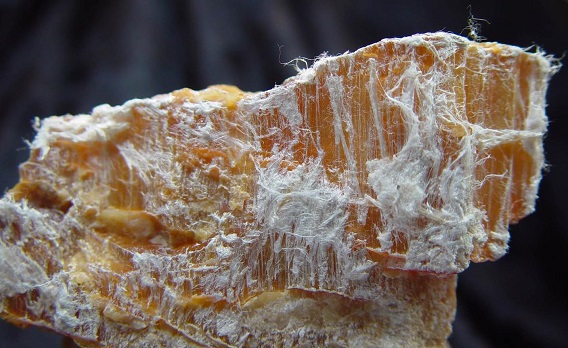
Six types of asbestos mineral fibers occur naturally throughout the world. Each asbestos type has a unique structure and different uses in manufacturing.
There are 2 categories of asbestos: Serpentine and amphibole. Chrysotile asbestos belongs to the serpentine category, and the 5 other types belong to the amphibole category.
Actinolite asbestos is less common than other asbestos types. It can occur as a contaminant in chrysotile asbestos, talc and vermiculite. Actinolite asbestos was traditionally used in drywall, insulation, cement and paint products.
Amosite asbestos, also known as brown asbestos, is often in construction materials. Manufacturers used this asbestos type in roofing, cement and insulation for homes. Amosite fibers range in color from green-brown to gray.
Anthophyllite asbestos was used in limited amounts to make construction materials such as insulation and cement. This fiber may have a white, gray or dull green color. Anthophyllite can contaminate talc, chrysotile asbestos and vermiculite.
Chrysotile asbestos is the most common type of commercially available asbestos. It’s made of long, flexible fibers. Manufacturers use chrysotile asbestos in car parts, including brake blocks and gaskets. This mineral is also found in construction materials and insulation.
Crocidolite asbestos (blue asbestos) consists of fine fibers easily inhaled into the lungs. This makes crocidolite one of the most deadly types of asbestos. It was previously used to make insulation, cement products, tiles and plastics.
Tremolite asbestos is a heat-resistant type of asbestos no longer mined for commercial use. It may be found as a contaminant in talc-based beauty products, including makeup and talcum powder. Roofing, insulation and paint products also included tremolite.
Its potential to cause fatal diseases led the Environmental Protection Agency to announce a ban on chrysotile asbestos. Supporters of the ban hope it will protect Americans from the harmful effects of asbestos.
Joining 50 other countries that have already banned asbestos, the United States is now banning chrysotile asbestos. The Biden administration has officially finalized the…
Asbestos has become less common in recent years, as the EPA has pushed for banning the mineral. In 2019, the U.S. consumed 450 tons (900,00 pounds) of asbestos. This number dropped significantly to 150 tons (300,000 pounds) in 2023. Imports of asbestos mineral fibers and asbestos-containing products have also declined in the last few decades.
Today consumers may encounter asbestos in contaminated beauty products such as talcum powder. It’s also present in automotive parts such as gaskets, brakes and clutches. Older buildings are sources of legacy asbestos-containing materials such as cement, roofing and insulation.
Carla Fasolo
Verified Asbestos.com Survivor
Asbestos Exposure and a Life Changed
Carla’s mesothelioma was linked to a history of asbestos exposure. “It started with me going down to the Oneida County Courthouse in Utica, New York, with my dad,” she told The Mesothelioma Center. “I would go down there with him, and it was very dusty in the boiler room. There would be chunks of gray, fibrous stuff down there. I didn’t know what it was, but I’d pick it up and play with it.”
Anyone who works with asbestos products is at risk of exposure. Individuals in certain industries are at the highest risk, including construction workers, manufacturers and military personnel. Those who served in the military may have been exposed in Navy shipyards or in combat when buildings were destroyed.
Individuals who live with a worker exposed to asbestos can experience secondary exposure. Washing a worker’s clothing is a common source of secondary exposure. Those who live with others who work with asbestos should know the signs of exposure.
High Asbestos Exposure Risk Occupations
Auto mechanics
Boilermakers
Construction workers
Electricians
Firefighters
Industrial workers
Insulators
Millers
Miners
Plumbers
Power plant workers
Shipyard workers
Geographic location also influences asbestos exposure. Certain states have natural asbestos deposits or heavily relied on asbestos-related industries for jobs.
Residents of Libby, Montana, have a long history of exposure and asbestos-related deaths. Other states associated with environmental asbestos exposure include Washington, Pennsylvania and California.
Diseases Asbestos Exposure Can Cause
Numerous scientific studies have proven exposure to asbestos causes cancerous and noncancerous diseases. Asbestos fibers are extremely fine and easy to inhale deep within the lungs. The fibers lodge in the lung tissue, creating inflammation that eventually leads to mesothelioma or pleural diseases.
Mesothelioma is the most well-known disease resulting from contact with asbestos. This cancer has a long latency period following asbestos exposure. It may take 20 to 60 years for an individual to develop mesothelioma.
Recent research has also found using talc-based powder on the genitals raises the risk of ovarian cancer. The U.S. Food and Drug Administration has found some talc products are contaminated with asbestos.
Get Help Paying for Treatment
Get help paying for mesothelioma treatment by accessing trust funds, grants and other options.
Recent asbestos statistics show consumption has fallen dramatically in the U.S. in recent years. Since 2018, U.S. manufacturers have used less than 500 tons of asbestos, compared to more than 800,000 tons in 1973. Mining operations have ceased in the United States, but the chloralkali industry imported 224 tons of asbestos in 2022 and used stores of it for production in 2023.
Latest Asbestos Statistics
Global asbestos production fell from 4.8 million metric tons in the 1970s to 1.3 million metric tons in 2023.
Consumption of imported asbestos has fluctuated with 450 tons consumed in the U.S. in 2020 and 150 tons consumed in 2023.
Occupational asbestos exposure was responsible for 209,481 deaths in 2016. This equates to more than 70% of all work-related cancer fatalities.
The FDA also monitors talc products for asbestos contamination. A 2024 report announced that the FDA found no asbestos in tested talc products in 2023. However, 66% of 1,032 cosmetic talc products tested as part of litigation were positive for asbestos between 1948 and 2017.
Asbestos Exposure Studies
Exposure studies reveal much about health effects and who is at risk of developing an asbestos-related disease. Individuals may have asbestos exposure at work or through asbestos-contaminated products.
One study investigated genital talc use and the risk of ovarian cancer. It found that women with a sister who had breast cancer were 1.17 to 3.34 times more likely to develop ovarian cancer after using talc.
Researchers have also studied where asbestos fibers collect in the body following exposure. Apart from the lungs, fibers tend to collect in abdominal organs, including the colon. Asbestos exposure is known to raise the risk of colorectal cancers. Studies are investigating other abdominal cancer types associated with asbestos, including kidney cancer.
Asbestos-Related Disease Statistics
Statistics show thousands of Americans are diagnosed with asbestos-related conditions each year. This includes both malignant and benign asbestos-caused diseases.
Latest Asbestos-Related Disease Statistics
In 2021, the latest year for which data are available, the CDC reported there were 209,500 new cases of lung and bronchus cancer.
About 4% of all lung cancer cases in the U.S. are attributed to asbestos exposure.
States with the highest rate of new mesothelioma cases in 2021 were Delaware, Idaho, Minnesota and New Hampshire. The rate was 1.0 in 100,000 people.
The state with the highest total number of new mesothelioma cases in 2021 was California, with 284 new diagnoses.
In many cases, there are no cures for asbestos-related cancers and diseases. Global health authorities continue seeking bans on asbestos import and manufacturing to prevent disease.
Asbestos-Related Death Statistics
Of all the conditions, asbestos-related lung cancer claims the most lives. Mesothelioma is a rare cancer and is, therefore, the second-leading cause of death from asbestos exposure.
Latest Asbestos-Related Death Statistics
In 2022, the CDC reported that 2,236 people died of mesothelioma in the U.S.
Asbestos-related lung cancer causes an estimated 6,000 deaths in the U.S. each year.
The state with the highest mesothelioma death rate in 2022 was Montana, with 1.3 in 100,000 people dying from the disease.
The state with the highest total number of mesothelioma-related deaths in 2022 was California, with 208 deaths.
Mesothelioma and other asbestos-related conditions can take decades to develop. This means deaths may continue for a long time after bans and regulations have reduced exposure to asbestos.
Asbestos Treatment Cost and Compensation Statistics
The cost of mesothelioma treatment can average up to $12,000 per month. Surgeries, chemotherapy, immunotherapy and radiation therapy for mesothelioma quickly add up.
Cancer treatment in the U.S. is costly, running an estimated $208.9 billion in 2020, according to the National Cancer Institute. Healthcare costs are expected to continue rising, particularly for chemotherapy.
The surgical bill, anesthesia and hospital stay alone for one week with the surgery was $160,000. The radiation treatment was $30,000, I think.
Kim Madrill, pleural mesothelioma survivor
Family members who have lost a loved one to mesothelioma can file an asbestos claim for compensation. The average mesothelioma settlement ranges from $1 million to $2 million.
$30B+ IN TRUST FUNDS AVAILABLE
Find the Right Attorney for You
When filing a mesothelioma claim, the right legal representation is everything. We’ll connect you to a top lawyer who will help you secure financial compensation.
Organizations have come together to create more awareness of asbestos exposure and its related diseases. Nonprofit organizations, government agencies and hospitals offer invaluable information and resources on asbestos.
The Patient Advocates at The Mesothelioma Center work with mesothelioma survivors and their families to provide asbestos facts and information. This valuable resource is available to individuals with mesothelioma and their families so they may access treatment centers, specialists and other helpful insights.
Recommended Reading
Your web browser is no longer supported by Microsoft. Update your browser for more security, speed and compatibility.
If you are looking for mesothelioma support, please contact our Patient Advocates at (855) 404-4592
Fact Checked
Our fact-checking process begins with a thorough review of all sources to ensure they are high quality. Then we cross-check the facts with original medical or scientific reports published by those sources, or we validate the facts with reputable news organizations, medical and scientific experts and other health experts. Each page includes all sources for full transparency.
Reviewed
Asbestos.com is the nation’s most trusted mesothelioma resource
The Mesothelioma Center at Asbestos.com has provided patients and their loved ones the most updated and reliable information on mesothelioma and asbestos exposure since 2006.
Our team of Patient Advocates includes a medical doctor, a registered nurse, health services administrators, veterans, VA-accredited Claims Agents, an oncology patient navigator and hospice care expert. Their combined expertise means we help any mesothelioma patient or loved one through every step of their cancer journey.
More than 30 contributors, including mesothelioma doctors, survivors, health care professionals and other experts, have peer-reviewed our website and written unique research-driven articles to ensure you get the highest-quality medical and health information.
About The Mesothelioma Center at Asbestos.com
Assisting mesothelioma patients and their loved ones since 2006.
Helps more than 50% of mesothelioma patients diagnosed annually in the U.S.
A+ rating from the Better Business Bureau.
5-star reviewed mesothelioma and support organization.
My family has only the highest compliment for the assistance and support that we received from The Mesothelioma Center. This is a staff of compassionate and knowledgeable individuals who respect what your family is experiencing and who go the extra mile to make an unfortunate diagnosis less stressful. Information and assistance were provided by The Mesothelioma Center at no cost to our family.
An occupational scientist or another expert who specializes in occupational hazards reviewed the content on this page to ensure it meets current scientific standards and accuracy.
Yvonne Waterman, Ph.D., is the founder of the European Asbestos Forum and a specialist in asbestos litigation. Waterman has worked to build a global network of professionals fighting for a future without asbestos exposure and disease.
Fact-checked and verified content:
Our fact-checking process begins with a thorough review of all sources to ensure they are high quality. Then we cross-check the facts with original medical or scientific reports published by those sources, or we validate the facts with reputable news organizations, medical and scientific experts and other health experts. Each page includes all sources for full transparency.
Please read our editorial guidelines to learn more about our content creation and review process.









 Kim Madrill , pleural mesothelioma survivor