Mesothelioma survivors are living longer than ever before. While typical survival is 12 to 21 months with treatment, some people have lived more than 25 years. Long-term survival is possible with advanced treatments, early detection and comprehensive care from specialized mesothelioma doctors.
Kim Madril: Mesothelioma survivor shares her story.
My name is Kim Madril, and I'm 62 years old. I was diagnosed with pleural mesothelioma, in July of 2019, and I am a mesothelioma survivor. I woke up one early morning at 3 a.m.
And I had this sharp shooting pain on the left side. And so my PCP finally said, Kim, let's just get CAT scan. Okay?
And it was July of 2019 when I was definitively diagnosed. I did run marathons. I was active.
I climbed Mount Kilimanjaro. It just didn't seem real. I think my mom having lost her husband at 55, you know.
I think she thought, oh my gosh. Am I gonna lose my kid? My surgery ended up being about 8 hours.
When I woke up, I remember thinking, I made it. I made it. And, really, after that, I thought okay, you're gonna be fine, Kim.
You're gonna be fine. My advice for anyone currently battling mesothelioma is to be well educated. Know that there are resources out there that you're not really alone.
You really aren't, even if you don't have a husband, a wife, a partner, or children, or siblings. There are people out there that will help you. Seek them out.
Kim Madril: Mesothelioma survivor shares her story.
My name is Kim Madril, and I'm 62 years old. I was diagnosed with pleural mesothelioma, in July of 2019, and I am a mesothelioma survivor. I woke up one early morning at 3 a.m.
And I had this sharp shooting pain on the left side. And so my PCP finally said, Kim, let's just get CAT scan. Okay?
And it was July of 2019 when I was definitively diagnosed. I did run marathons. I was active.
I climbed Mount Kilimanjaro. It just didn't seem real. I think my mom having lost her husband at 55, you know.
I think she thought, oh my gosh. Am I gonna lose my kid? My surgery ended up being about 8 hours.
When I woke up, I remember thinking, I made it. I made it. And, really, after that, I thought okay, you're gonna be fine, Kim.
You're gonna be fine. My advice for anyone currently battling mesothelioma is to be well educated. Know that there are resources out there that you're not really alone.
You really aren't, even if you don't have a husband, a wife, a partner, or children, or siblings. There are people out there that will help you. Seek them out.
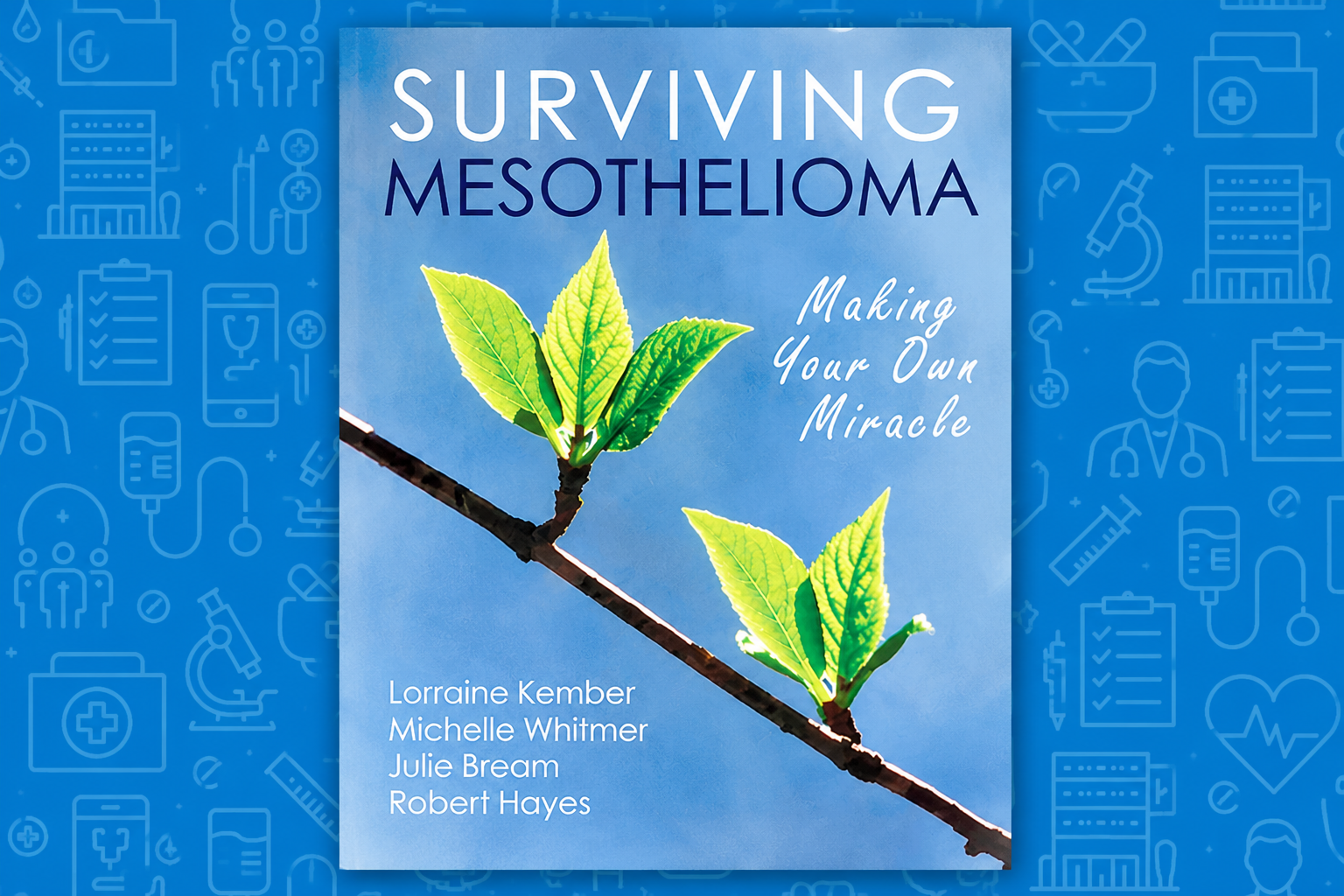
“Linda came to us and… she was in complete shock. I provided her with an educational resource packet, which explains the diagnosis, has a hundred questions and answers, which really helps people narrow down some questions that they have regarding this diagnosis. We even have a surviving mesothelioma book, which actually adds a little hope to patients because it talks about other patients' journeys.”
Missy Peterson, Medical Outreach Director at The Mesothelioma Center
“I've had some great patients. I've been very lucky over the years, not only in my practice, but in my training… thankful to have many memories of really, really impressive warriors, which these patients are.”
Andrea Wolf, Thoracic Surgeon, Director of the New York Mesothelioma Program at Mount Sinai
“First thing that's really important to someone who's been diagnosed with mesothelioma, first thing is take a step back. Take a good, deep breath. The world isn't going to end on that day. It may feel that way, but it's not going to end on that particular day. Catch your breath and then start asking yourself questions. What is my next step? What should I be doing?”
Kevin H., pleural mesothelioma survivor
Long-term survivors often worked with experienced mesothelioma specialists.
23% of advanced pleural mesothelioma patients lived 3+ years with immunotherapy and chemotherapy (2023 clinical trial).
Peritoneal mesothelioma tends to have better survival rates than pleural mesothelioma.
Women show more than double the 5-year survival rate compared to men in some studies.
Average survival with treatment: 12-21 months.
“Linda came to us and… she was in complete shock. I provided her with an educational resource packet, which explains the diagnosis, has a hundred questions and answers, which really helps people narrow down some questions that they have regarding this diagnosis. We even have a surviving mesothelioma book, which actually adds a little hope to patients because it talks about other patients' journeys.”
Missy Peterson, Medical Outreach Director at The Mesothelioma Center
“I've had some great patients. I've been very lucky over the years, not only in my practice, but in my training… thankful to have many memories of really, really impressive warriors, which these patients are.”
Andrea Wolf, Thoracic Surgeon, Director of the New York Mesothelioma Program at Mount Sinai
“First thing that's really important to someone who's been diagnosed with mesothelioma, first thing is take a step back. Take a good, deep breath. The world isn't going to end on that day. It may feel that way, but it's not going to end on that particular day. Catch your breath and then start asking yourself questions. What is my next step? What should I be doing?”
Kevin H., pleural mesothelioma survivor
Long-term survivors often worked with experienced mesothelioma specialists.
23% of advanced pleural mesothelioma patients lived 3+ years with immunotherapy and chemotherapy (2023 clinical trial).
Peritoneal mesothelioma tends to have better survival rates than pleural mesothelioma.
Women show more than double the 5-year survival rate compared to men in some studies.
Average survival with treatment: 12-21 months.
Surviving Mesothelioma
A person with mesothelioma is called a survivor from the time they’re diagnosed and for the rest of their life. If you’re living with this cancer, you’re a mesothelioma survivor.
Some people live much longer than expected, even reaching mesothelioma remission. This is often achieved with the help of advanced and sometimes aggressive treatments, a strong care team and a proactive approach to their health.
Because it’s a rare and aggressive cancer, mesothelioma survivors form a strong community of people who have faced unique challenges. There are many ways survivors, caregivers, and their families help one another. Sharing their insights and firsthand experiences in online communities such as private Facebook support groups and getting involved in awareness and advocacy efforts helps others in a similar situation.
Why Do Some Mesothelioma Patients Live Longer Than Others?
How long you may live with mesothelioma depends on where your tumors first developed, how far the cancer has spread, your overall health and how well your body responds to treatment. While some factors like age and cell type are outside your control, working with an experienced specialist to find the best treatment for your diagnosis can have a real impact on your outcome.
Getting a diagnosis before the cancer spreads gives you access to more treatment options, including surgery. Cell type also plays a role, as people with epithelioid mesothelioma generally survive longer than those with sarcomatoid tumors. Pursuing multimodal mesothelioma treatment and seeking a second opinion from a mesothelioma specialist can make a meaningful difference.
Newer treatments are helping more patients live longer, even those with late-stage disease. A 2023 clinical trial showed 23% of people with advanced pleural mesothelioma lived more than 3 years when treated with both immunotherapy and chemo. Peritoneal mesothelioma patients who qualify for cytoreductive surgery with HIPEC can live between 31 and 103 months.
Factors That May Extend Mesothelioma Survival
Factor
What the Data Show
Age
About 75% of people diagnosed before age 50 survive at least 1 year, compared to 44% of those diagnosed at age 65 or older
Nutrition
People who maintain good nutrition survive an average of 18 months, compared to 11 months for those with poor nutrition
Stage
People with stage 1 or 2 mesothelioma have a 5-year survival rate of 20.6%, compared to 9.2% for stage 4
Cell Type
People with epithelioid mesothelioma who undergo surgery survive around 18 months on average, while those with sarcomatoid tumors average 5 to 11 months
Gender
Women with pleural mesothelioma have a 5-year survival rate of 21.42%, compared to 9.3% for men
Treatment
Pleural patients who received surgery, chemo and radiation averaged 21.7 months survival, compared to 10.2 months for those who chose no treatment
Tumor Location
Peritoneal mesothelioma has a 5-year survival rate of 65%, compared to 12% for pleural mesothelioma
Exclusive Content
Mesothelioma Survivors: Beating the Odds
The doctors who originally diagnosed the condition, they believed that I would have less than six months to live.
It was the day that I went to Doctor. Google to find out all about mesothelioma. What Doctor. Google told me on the day that I looked at was I had ninety days of life following the diagnosis of mesothelioma. I’m now here after four years, and I’m stronger than ever.
Don’t believe all the horror stories. Take this as your own personal journey, not as somebody else’s journey that you’re hitching a ride on.
Catch your breath and then start asking yourself questions.
What is my next step? What should I be doing? First was a place, a center that I could go to to receive treatment. And once we had that scheduled, then at least I knew that I was going be looked at and that we’re going to figure out what was the right thing for me.
It’s been more a case of accepting what’s happening, but at the same time not giving up. It’s more a matter of I do what I need to do day to day and maybe something as difficult after the surgery is finding a way to manage pain and to continue breathing. It can be taking my medicine, it can be eating, it can be all of these things whether I feel like it or not.
I am most proud of pushing myself, pushing myself to go for that walk when I didn’t want to, pushing myself to eat food where I felt like it just wasn’t going to sit well, but I knew that I had to eat. This is what you need to do. You didn’t get this far to not keep doing what you need to do to get better.
There have been times that I was not able to do these things on my own and I really depended on my wife to help me.
If you have family support, take what you can. If somebody offers to help, this is really difficult for me, say yes. They were there every day. I don’t know how I would have been able get through it without the support that they gave me.
It is entirely possible that you will live a long, productive, happy life after your diagnosis. Your life is not over.
I want the people who are following me who found out about it last week that they might be able to live four or five or six or ten years.
It’s a condition I have, but it’s not a condition I’m going to surrender to.
What New Research Says About Mesothelioma Survival in 2026
Mesothelioma treatment has changed significantly in recent years, and the latest research gives patients real reasons for hope. Immunotherapy has become a standard part of care for many people with mesothelioma. The FDA has approved 2 immunotherapy combinations for inoperable pleural mesothelioma: Opdivo (nivolumab) paired with Yervoy (ipilimumab) and Keytruda (pembrolizumab) combined with chemo. The CheckMate 743 trial showed that patients who received Opdivo and Yervoy lived a median of 18.1 months, compared to 14.1 months with chemo alone.
Our exclusive 2025 survey asked more than 200 survivors, caregivers and loved ones about their experiences. The survey found that 22% of respondents included immunotherapy in their treatment plan and 11% said treatment led to remission or becoming cancer-free. Among those who reached remission, 23% had surgery. Every remission case involved some form of treatment, and for many people, finding the right combination made the difference.
Surviving Mesothelioma Book
A Survivor’s Guide to Living With Mesothelioma
Learn about Judy Glezinski’s inspiring journey as a mesothelioma survivor, and get tips on how to improve your prognosis.
Support for Mesothelioma Survivors and Their Families
Finding out that you or a loved one has mesothelioma can feel overwhelming, but you don’t have to go through it alone. There are many resources for mesothelioma caregivers and survivors. Patient Advocates, for example, are a key resource for families living with mesothelioma.
They can connect you with mesothelioma-specific support groups, financial assistance, and mesothelioma specialists with experience successfully treating survivors with similar cases. Our Patient Advocate team can also help with your claims for VA benefits, help you navigate insurance, assist with scheduling your appointments, and offer personalized support throughout your journey. Their assistance is always free.
Mesothelioma Resources and Support
Educational resources: Information covering details about this rare cancer, treatment options, specialized cancer centers and experts to help guide you from The Mesothelioma Center at Asbestos.com can help you make empowered choices.
Financial support: There are a variety of financial assistance options available. Patient Advocates can help you understand and navigate these options. The VA-accredited claims agents in our Veterans Department can also help you file your benefits claim.
Firsthand experiences: The survivors we work with generously share their personal, firsthand experiences with the community in our series of Stories From Survivors. They also share tips and answer questions from fellow survivors and caregivers when hosting webinars.
Patient advocacy: Our Patient Advocate team brings extensive and diverse experience to the support they offer mesothelioma survivors and their loved ones. With medical doctors, veterans, a registered nurse, a certified oncology patient navigator and experts in medical and hospice outreach, this unique mesothelioma resource is here to support survivors.
Support groups: Support groups help build an essential community and offer an opportunity to exchange ideas and information. Our online support group is open to patients and caregivers with a mental health counselor facilitating discussions.
Many resources are also available for families coping with the physical and emotional challenges of helping a loved one cope with mesothelioma. These resources include tips for emergency planning, diet and nutrition, communication strategies for speaking with specialists and avoiding caregiver burnout.
How The Mesothelioma Center Helps Patients Improve Survival
The Patient Advocates at The Mesothelioma Center help match patients with doctors and medical resources. They also offer continued free support, guiding survivors and their loved ones through the health care system. People we’ve helped have shared stories about how we’ve supported them and their families.
Mesothelioma caregiver Lee B. tells us, “Patient Advocate Karen Selby has been my angel. I can’t tell you how amazing she has been through every step of the way. Her knowledge has been golden for us. From connecting us with specialists to just bouncing ideas off her, I couldn’t have done this for Michael without her. We’d be lost.”
FREE MESOTHELIOMA GUIDE
Expert Guidance for Your Mesothelioma Journey
Get answers about treatment, top doctors, and financial support from the nation’s most trusted mesothelioma resource.
New treatments, medical advancements and earlier detection have helped mesothelioma survivors live longer and improve their chances of survival. Their stories show that it’s possible to keep fighting and not give up. These survivor stories offer hope and encouragement to others on the same journey.
Featured Long-Term Survivors
Carla F. (Pleural): Diagnosed in 2021 after severe back pain made lying down impossible. Following chemotherapy and immunotherapy, she continues to thrive with her husband of 47 years. Exposed to asbestos through her father’s workplace and contaminated work clothes.
Epifanio F. (Peritoneal): Diagnosed in 2016 when his stomach began swelling uncontrollably. Six chemo treatments at Brigham and Women’s Hospital reduced his tumors to nearly undetectable levels. Exposed through automotive brake work and building demolition oversight.
Kim Mardil (Pleural): Diagnosed in July 2019. Following surgery, she is now a 5+ year survivor who continues to inspire others in the mesothelioma community.
Tamron Little (Peritoneal): Diagnosed in 2007 while pregnant, initially misdiagnosed as a fibroid tumor. After HIPEC surgery, she has remained cancer-free for 18+ years.
Tami P. (Peritoneal): Diagnosed in December 2021 after a burning sensation on her left side led to testing that revealed both peritoneal mesothelioma and esophageal cancer. She underwent HIPEC surgery, cytoreductive surgery and radiation at the Mayo Clinic. After a recurrence in 2024, she started immunotherapy and continues to fight with the support of her family and The Mesothelioma Center’s support group.
Joey B. (Pleural): Diagnosed in 2018 after experiencing trouble breathing and fluid on his lungs. He underwent pleurectomy and decortication surgery at Brigham and Women’s Hospital, then chemo and immunotherapy. Now an 8 year survivor, Joey credits his faith, his wife Teresa and staying active. His asbestos exposure happened during a decade working as an HVAC mechanic in older buildings and on asbestos-insulated boilers.
Raeleen P. (Peritoneal): Diagnosed with stage 3 peritoneal mesothelioma in October 2014 at age 36, after initial misdiagnosis as a ruptured ovarian cyst and ovarian cancer. She sought out mesothelioma specialist Dr. Walley Temple at the Tom Baker Cancer Centre in Calgary, who performed a 10-hour cytoreductive surgery with HIPEC. Now a 12 year survivor, she credits her son Tyce as her greatest source of strength. Her asbestos exposure traces back to infancy, when her father renovated her grandparents’ 1950s-era home in 1979.
I had pain in my back, and I couldn’t lay down. The pain was unbearable. We went right to the hospital. The emergency room, they did an x-ray and came back and the doctor told me that I had a large tumor. Then they ended up doing a biopsy. And that’s how they found out that I had mesothelioma. I was scared. I went online, and I found this, you know, organization at Asbestos.com. And, I had talked to Karen, and she was very encouraging, and, she helped me a lot. She sent me information that I mean, I never dreamed there was that much information about it. She was so positive about doing well and getting better. She was awesome. She’s, she’s an awesome lady. I ended up having chemo, and I think it’s called immunotherapy. After my third, therapy, the tumor had shrunk quite a bit. And that was amazing. To me, that was awesome, you know. My husband, Anthony. He ended up doing everything. He did the housework. He cooked. I just didn’t think he would take over the way he did. Just support me as much as he did. He’s an awesome guy. I had so many people just be there to help me and support me through this. Thank you. Thank you for being there for me and doing what you did for me.
Mesothelioma survivor shares her story.
[PIANO MUSIC PLAYING] I’m Tamron Little. I am from Winston-Salem, North Carolina. I am a wife to a veteran of 13 years and counting and a mom of four. I have two boys and two girls. When I was first diagnosed when I was pregnant, I was told I had a fibroid tumor. And even after my pregnancy, I was still told I had a fibroid tumor. And asking women in my family, because fibroid tumors run in my family, they’re like, oh, it’s fine. You’re going to be OK. So I really didn’t think too much of it. But when I was told that I had cancer, it was a shocker. The doctor came in and I remember it like it was yesterday. And he said, you have cancer. Mesothelioma, to be exact. It really didn’t register because I was just like in the Twilight Zone. And everybody was moving around me and all of these emotions were going on. And I was just– felt like I was kind of stuck just– wow. Oh my gosh. And they were coming in and telling me, people don’t survive much with this. And they was just giving me all this. And I’m just like, I haven’t even heard of mesothelioma. First of all, what is mesothelioma? I met Dr. Levine and he is a specialist in mesothelioma. He told me about a surgery and it’s called the HIPEC surgery, which he was very confident in. Since the HIPEC procedure, I have not had any cancer recurrences. So I’m a 13 year and counting survivor. You can survive and have a thriving life after mesothelioma. Asbestos.com is a great resource because I didn’t have hardly anything when I was first diagnosed. I had to go to different places to find out information that just made me even more fearful. But being able to go to one place, Asbestos.com, and get everything that you need in one place is great. I mean, I would recommend it for anybody. [PIANO MUSIC PLAYING]
Mesothelioma survivor shares his story.
My name is Epifanio Figueroa. In my days when I was a young kid, they didn’t tell us that asbestos was bad for you. I I knew it once I was sick. I think that’s one of the things that have caused a lot of damage to people, Not knowing, not having that information because the people that actually manufacture all those things don’t want us to know how dangerous it is. It started with my stomach growing, being getting bigger, and it didn’t stop getting bigger. We went to Brigham Young. There, I got six chemotherapies. The tumors in my body were diminishing to the point that, the last time that I went, the doctor says we can’t see almost anything there. And I feel great. I’m alive because of my wife. She was my mentor, my advisor. I owe her my life. That’s that’s what I can tell you. To all my buddies that have mesothelioma, once you get off the treatment, sweep that under the rug and keep on going forward.
Stories From Our Wall of Hope
Our Wall of Hope features stories mesothelioma survivors have personally shared with us. Many of these survivors share firsthand insights into their long-term survival and the challenges they overcame. Survivors share details about treatments they chose to have and the ways they’ve improved their personal outlook or prognosis. Their stories showcase their resilience and hope for the future.
Patricia’s love of travel wouldn’t let her stay down after the chemotherapy, pleurectomy and decortication surgery. Before treatment, she had traveled to 47 states and five continents. “I learned a long time ago, you can lose everything, but that travel experience, it never goes away,” she said.
In 2016, Quincy turned his diagnosis into an opportunity for stand-up comedy, appearing on The Ellen DeGeneres Show and later having an HBO special filmed after chemotherapy. Following cytoreductive surgery and a second round of chemotherapy, Quincy has returned to performing stand-up comedy.
Alexis was diagnosed with peritoneal mesothelioma in 2007 at age 37. She had major surgery that removed part of her diaphragm, yet she kept her wedding plans in place. Alexis and her husband don’t know how many wedding anniversaries they will have, but they celebrate their time together.
Michelle wanted something special to commemorate her 10-year milestone as a mesothelioma survivor. She had an artist tattoo “FAITH” on her left wrist, where she could see it anytime she needed help. “I do believe everything happens for a reason, and I have faith that God has a plan for me.”
Trina traveled the country and loved every minute of it after recovering from a combination of cytoreductive surgery and heated chemotherapy. She was diagnosed young at 36, which gave her a fighting chance at long-term survival. “The diagnosis was devastating”, Trina said.
Ruth opted against the conventional treatments following her peritoneal mesothelioma diagnosis in 1999. She found Quantum Immunotherapy, in Freeport, Bahamas, which focused on rebuilding her immune system. She now relies on vitamins, supplements and herbal formulas to stay healthy.
Kevin H. is passionate about sharing his story and reaching out to other mesothelioma survivors. Kevin was diagnosed with pleural mesothelioma in August 2021. His goal is to raise awareness about this rare cancer and help others who are on similar journeys.
Raeleen is a 10-year survivor. She was diagnosed with peritoneal mesothelioma when she was only 36 years old. “The day that I was told I was going to die I was 36 years old and a mother,” Raeleen told us. Now she’s sharing some advice for other survivors on the same journey as herself.
Michael talks about some of the key beliefs he has when it comes to surviving mesothelioma. He also shares some of the most difficult things about his mesothelioma journey.
Just one year after his diagnosis and surgery, Shaun returned to his physically demanding job. “I’m moving along pretty well,” Shaun shared. “I have good people I work around and they understand there are certain things that I can’t do to because of the risk of hurting myself. But I work with some good people and they look out for me.”
We honor the stories of mesothelioma survivors who lived their lives to the fullest before they died. Their stories serve as a reminder of the medical advancements needed to cure this disease.
Tim originally decided against surgery and chemotherapy when he was diagnosed with pleural mesothelioma in 2002, but his daughter convinced him otherwise. He underwent an extrapleural pneumonectomy at Brigham and Women’s Hospital. He was among America’s longest-living male pleural mesothelioma survivors. Tim died in December 2023.
Cheryl’s diagnosis didn’t limit her desire to serve others. She worked as a board-certified family physician and volunteered in her community. “I try to live every day as positively as I can,” Cheryl said Her treatments included a pleurectomy and decortication surgery, chemotherapy and immunotherapy. Cheryl died in October 2023.
Emily found the best mesothelioma surgeon at the time, Dr. David Sugarbaker. Emily credited Sugarbaker for her nearly 10-year survival with pleural mesothelioma. Despite being forced to retire from nursing, she continued caring for others by volunteering and supporting the mesothelioma community. Emily died in May 2022.
Col. Doug T. served as chief of operations for the Long Range Precision Fires Cross-Functional Team at the Fort Sill Army Base. He was diagnosed with pleural mesothelioma in May 2020 and underwent extensive treatment at the Baylor Medical Center in Houston. “When I was diagnosed with mesothelioma it made me realize the disproportionate number of veterans who develop cancer compared to their civilian counterparts,” he said. Doug died in May 2021.
Sydney R., of Katy, Texas, never forgot what she learned fighting for her life as a child more than 60 years ago, framing her perspective as she battled malignant pleural mesothelioma. She was diagnosed in 2011. “If you’re unlucky enough to get this disease (mesothelioma), then you better put your big-girl clothes on, and come ready for a fight,” she said. “It’s the only way you’re going to make it through. You have to be aggressive.”
Andy survived a horrific motorcycle crash in 2004 that almost killed him, and he had every intention of surviving his 2010 diagnosis of pleural mesothelioma. Andy was not a surgical candidate because his cancer had already metastasized, but he found something better. With the help of mesothelioma specialist Dr. David Jablons, Andy enrolled in a clinical trial involving amatuximab. He also used medical cannabis. Andy died in 2017.
Wayne N. knew exactly what caused the mesothelioma cancer that pushed him into an earlier-than-planned retirement as a union electrician in Cincinnati, Ohio. Wayne believed his mesothelioma developed after a 35-year career as an electrician handling insulation material. He was diagnosed in 1991. A good friend and fellow union member he worked close with died from mesothelioma. Wayne died in 2016.
Sissy Hoffman was first diagnosed with pleural mesothelioma in 1996 and told she had 6 months to live. She survived 29 years after her diagnosis, passing away in January 2025. She lived in New York, California and Georgia, teaching and directing schools. In her retirement she volunteered, sharing her time mentoring others.
Dr. Berlinda Love, a pastor and podcaster, just received a diagnosis of pericardial mesothelioma in June 2024. The 71-year-old spiritual leader went to her doctor because of a nagging cough she’d been dealing with for quite a while.
Yes. Some patients have survived mesothelioma. Patients typically live 12-21 months with treatment. But survivors like Tamron Little and Kim Mardil have lived several years after their diagnoses. These survivors underwent treatment plans that included surgery, chemotherapy and radiation therapy.
What are some long-term effects or complications of mesothelioma?
Mesothelioma and its treatment may cause long-term nerve pain, edema, weight loss and fatigue. Breathing difficulties and digestive issues may result from pleural or peritoneal mesothelioma, respectively.
How often should mesothelioma survivors undergo follow-up appointments or scans?
The frequency of follow-up appointments depends on the patient and the type of treatment they receive. Your doctor may recommend scans every three or four months, and routine check-ups may occur more frequently.
Can mesothelioma recur after treatment?
Yes, unfortunately, mesothelioma commonly recurs after treatment. Depending on the stage of the disease, recurrences may be treated with surgery, immunotherapy, chemotherapy or radiation. Many patients have lived for years with mesothelioma thanks to effective treatment of recurring tumors.
Recommended Reading
Your web browser is no longer supported by Microsoft. Update your browser for more security, speed and compatibility.
If you are looking for mesothelioma support, please contact our Patient Advocates at (855) 404-4592
Fact Checked
Our fact-checking process begins with a thorough review of all sources to ensure they are high quality. Then we cross-check the facts with original medical or scientific reports published by those sources, or we validate the facts with reputable news organizations, medical and scientific experts and other health experts. Each page includes all sources for full transparency.
Reviewed
Asbestos.com is the nation’s most trusted mesothelioma resource
The Mesothelioma Center at Asbestos.com has provided patients and their loved ones the most updated and reliable information on mesothelioma and asbestos exposure since 2006.
Our team of Patient Advocates includes a medical doctor, a registered nurse, health services administrators, veterans, VA-accredited Claims Agents, an oncology patient navigator and hospice care expert. Their combined expertise means we help any mesothelioma patient or loved one through every step of their cancer journey.
More than 30 contributors, including mesothelioma doctors, survivors, health care professionals and other experts, have peer-reviewed our website and written unique research-driven articles to ensure you get the highest-quality medical and health information.
About The Mesothelioma Center at Asbestos.com
Assisting mesothelioma patients and their loved ones since 2006.
Helps more than 50% of mesothelioma patients diagnosed annually in the U.S.
A+ rating from the Better Business Bureau.
5-star reviewed mesothelioma and support organization.
My family has only the highest compliment for the assistance and support that we received from The Mesothelioma Center. This is a staff of compassionate and knowledgeable individuals who respect what your family is experiencing and who go the extra mile to make an unfortunate diagnosis less stressful. Information and assistance were provided by The Mesothelioma Center at no cost to our family.
Asbestos.com. (2026, October 7). Mesothelioma Survivors. Retrieved October 15, 2026, from https://www.asbestos.com/mesothelioma/survivors/
MLA
"Mesothelioma Survivors." Asbestos.com, 7 Oct 2026, https://www.asbestos.com/mesothelioma/survivors/.
Chicago
Asbestos.com. "Mesothelioma Survivors." Last modified October 7, 2026. https://www.asbestos.com/mesothelioma/survivors/.
The Patient Advocates are absolutely amazing and helpful! I am so very pleased with the information and the emotional support that I have received from everyone! When I felt all hope was lost, Amy gave me great information and was so compassionate. I do not feel alone, and I know there is strong support for anyone dealing with this tragic disease. I received a FREE information package, including a recipe book, information on the disease, a toll-free number to contact for assistance, and a book with the answers to 100 questions that are commonly asked. This information alone was worth my time! I read for hours and hours, and just that alone—knowledge—can be a great comfort. To fully understand this disease, to just have the knowledge!!! Thank you all!! Thank you so, so much.
I found out about The Mesothelioma Center while researching peritoneal mesothelioma days after being diagnosed with the malignant cancer. While a lot of the 'Mesothelioma' websites are actually law firms just trying to get your business, theirs is a user-friendly, comprehensive website set up to aid patients, their loved ones, and/or caregivers with all things related to a cancer diagnosis from asbestos exposure. I was soon put in touch with one of their doctors, Snehal Smart, M.D., who immediately sent me a packet of general information, a book on surviving mesothelioma, and offered me assistance in finding doctors, reputable law firms, financial help, support groups, and so much more! The Mesothelioma Center's website is, in my opinion, the best resource for anyone suffering from cancer due to asbestos. Dr. Smart is amazing! She is very knowledgeable and helpful, but she is also a very kind, caring doctor who goes the distance whether she is researching a pertinent topic, making suggestions, providing contacts, or just being a good listener on the other end of the phone. In addition, Dr. Smart referred me to a law firm who is now fighting to get me compensation for the negligence of those defendants whose products exposed me to asbestos and caused my subsequent cancer. Thank you, TMC and Dr. Smart, for helping me determine the best treatment plan for my cancer and being part of my miracle. I am currently cancer-free and back to being a mom to my precious daughter. The Mesothelioma Center, their website, and their staff rock!!
I reached out and talked to Aaron a couple of weeks before my diagnosis of malignant mesothelioma. He was very helpful and gave me a lot of information at that time. I have talked to him several times since and always gotten my questions answered. Aaron is very knowledgeable and has been very helpful and supportive. He also sent me a comprehensive packet of information, including info on nutrition, legal help, and medical resources.
My brother was recently diagnosed with mesothelioma. I began researching it online. The information I received from The Mesothelioma Center is all-inclusive. No need to look anywhere else! The first phone call was with Karen, and she answered all my questions with ease. She also had a calming effect by presenting all the options available for my brother and his family. Thank you!
My Dad was diagnosed with mesothelioma, and thankfully The Mesothelioma Center was the first place I called. Snehal Smart answered the phone immediately and was very helpful. She immediately sent us an information packet and answered questions. She followed up each week to see how things were going and if we had any questions. She also connected us with a lawyer. I highly recommend this Center.
Registered Nurse and Board Certified Patient Advocate
Karen Selby is a registered nurse and Board Certified Patient Advocate at The Mesothelioma Center with more than 30 years of experience in oncology and thoracic surgery. She worked as an operating room nurse in thoracic surgery at the University of Maryland for 6 years, assisting with surgeries such as lung transplants, pneumonectomies and pleurectomies. She later served as regional director of the tissue procurement program at the University of Florida. Karen joined The Mesothelioma Center in 2009, providing patients with personalized support and resources.
Fact-checked and verified content:
Our fact-checking process begins with a thorough review of all sources to ensure they are high quality. Then we cross-check the facts with original medical or scientific reports published by those sources, or we validate the facts with reputable news organizations, medical and scientific experts and other health experts. Each page includes all sources for full transparency.
Please read our editorial guidelines to learn more about our content creation and review process.