Epithelioid, sarcomatoid and biphasic are the three main types of mesothelioma cells. Epithelioid is the most common type and offers the best prognosis. Meanwhile, sarcomatoid is rare and has a poor prognosis. Biphasic has a mix of both cell types, and prognosis depends on the ratio of each.
Learn more about mesothelioma, asbestos and the steps you can take to fight this disease.
What Are the Different Types of Mesothelioma Cells?
Mesothelioma tumors contain epithelioid, sarcomatoid or biphasic cells. Epithelioid cells are the most common. Each cell type influences how the tumor grows and responds to treatment. Doctors study these cells through histology to identify their characteristics and customize a treatment plan for you.
Key Facts About Mesothelioma Cells
A biopsy is the only way to confirm mesothelioma cell type. Pathologists then study the tissue through histology to identify cell characteristics.
Cell type and tumor location determine which treatments are available, including surgery eligibility, chemotherapy protocols and whether immunotherapy is appropriate.
A peritoneal mesothelioma study found a median survival of 55 months for people with epithelioid cells. People with sarcomatoid or biphasic cells had a median survival of 7 to 13 months.
Epithelioid cell types often respond well to chemotherapy. Sarcomatoid and biphasic types are increasingly treated with immunotherapy such as Opdivo (nivolumab) and Yervoy (ipilimumab).
Studying mesothelioma cells and tissues under a microscope is called histology. It helps reveal their structure and behavior. Histology captures key details about mesothelioma cells, which doctors note in your pathology report.
Epithelioid cells often form clusters or sheets of oval or cube-shaped cells with clear centers visible under a microscope. Sarcomatoid cells are rarer and spindle-shaped. Biphasic cells are a mix of epithelioid and sarcomatoid. A few rare subtypes exist, but most cases fall into these 3 categories.
Epithelioid mesothelioma cells respond better to treatment than other types, offering the most favorable prognosis. They’re typically uniform with somewhat predictable growth patterns. These tumors aren’t as aggressive and respond well to intensive treatment like surgery and chemo.
Pleural mesothelioma survivor Christine Shippen shared her advice with us. She said, “Be advised by your doctor or oncologist what the best treatment is for you. There are other treatments available depending on how fit you are.”
Reflecting on her 6 years as a survivor, she added, “Give yourself time to come to terms if you can. The longer I live, I continue to thank God for giving me the willpower to believe I will fight the fight to the end. My perspective remains always positive.”
Prognosis Snapshot
A peritoneal mesothelioma study found a median survival of 55 months for people with epithelioid cells and 7 to 13 months for those with sarcomatoid or biphasic cells. These figures apply specifically to peritoneal mesothelioma and don’t represent all mesothelioma types.
Sarcomatoid Mesothelioma Cells
Sarcomatoid Cell
Sarcomatoid mesothelioma cells occur in 10% to 20% of cases. They’re associated with the least favorable prognosis and the most limited response to standard treatments. This is the most aggressive cell type, which can make treatment more challenging. Sarcomatoid cells develop quickly and don’t respond as well to typical treatments. People with this cell type often receive a diagnosis at later mesothelioma stages and may need more aggressive treatment protocols.
Diagnosed with sarcomatoid mesothelioma, Wally Rogers far surpassed his initial prognosis. After experiencing serious side effects from chemo, Wally tried Keytruda (pembrolizumab), saying, “It’s a real mystery at this point why I’ve done so well. After listening to the medical people, it’s almost shocking. I’m not superhuman by any means. I’m a simple man. Maybe I can let people know, there is hope out there.”
500+ SPECIALISTS AVAILABLE
Get to the Right Mesothelioma Specialist, Faster
Connect with top-rated doctors specializing in mesothelioma treatment, who will personalize treatment options based on your diagnosis.
Biphasic mesothelioma cells are a combination of epithelioid and sarcomatoid cells. This mixed cell type accounts for 20% to 30% of mesothelioma cases. To receive a biphasic diagnosis, each cell type must account for at least 10% of the tumor mass.
Since biphasic tumors contain mixed cell types, they can be challenging to diagnose accurately from smaller biopsies. Prognosis for biphasic mesothelioma depends on the dominant cell type. People with a higher proportion of epithelioid cells generally have better outcomes.
Expert Insight
“Cisplatin and carboplatin combination is usually the gold standard” for people with epithelioid mesothelioma cells. For people with sarcomatoid and biphasic mesothelioma cells, “immunotherapy is often the go to now.”
Karen Selby, Registered Nurse and Patient Advocate
Rare Mesothelioma Cell Types
Some mesothelioma tumors contain rare subtypes that don’t fall into one of the main categories. These unusual cell types can make diagnosis more complex and may influence how the cancer responds to treatment.
Rare Forms of Mesothelioma Cell Types
Adenomatoid: A subtype of epithelioid cells, these cells resemble gland-like structures and often appear in the peritoneum.
Benign: Benign mesothelioma isn’t cancerous and doesn’t result from asbestos exposure.
Cystic: A subtype of epithelioid, cystic mesothelioma features smooth, thin-walled cysts held together with fragile fibrovascular tissue.
Deciduoid: Extremely rare and most often found in young women with peritoneal mesothelioma.
Desmoplastic: Composed of dense, fibrous tissue, desmoplastic mesothelioma is usually grouped within the sarcomatoid category.
Heterologous: Tumors of heterologous cell types contain bodily tissues different from those in which they form. Only a handful of cases exist in medical literature.
Lymphohistiocytoid: A subtype of sarcomatoid, lymphohistiocytoid mesothelioma mimics inflammatory or immune system tissue and may be confused with benign conditions.
Small cell: Small-cell mesothelioma occurs when a large proportion of a tumor contains small cells that grow in a pattern similar to small-cell carcinoma.
Well-differentiated papillary: A variant of epithelioid mesothelioma, papillary mesothelioma cells usually grow slowly and can resemble healthy cells.
These rare cell types often require advanced pathology testing. Doctors base treatment decisions on the cells’ dominant behavior and whether they act more like epithelioid or sarcomatoid mesothelioma. Specialized staining techniques and histology, where doctors examine tissue samples under a microscope, are especially important for accurately identifying these rare variants.
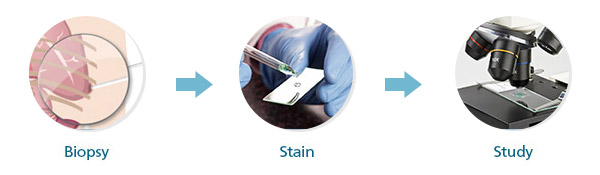
The order in which doctors determine mesothelioma cell type from biopsy to study.
How Do Doctors Identify Mesothelioma Cell Types?
To find out your specific mesothelioma cell type, pathologists take a small piece of tissue from a biopsy. They look at it under a microscope using chemical stains that make the cells’ features stand out. They study the cells to see what they look like and how they function.
Special tests, like immunohistochemistry, help doctors find specific markers on the cells. Knowing the cell type helps cancer doctors diagnose mesothelioma and choose the best treatment plan based on how the cancer might behave.
How Mesothelioma Cell Type Is Identified
Method
What It Shows
Role in Cell Typing
Biopsy (tissue sample)
Physical cell structure and appearance
Primary method for diagnosis
Immunohistochemistry
Specific proteins on cell surfaces
Confirmatory test for cell type
Electron Microscope
Highly detailed cell structure
Distinguishes mesothelioma from other cancers
Molecular Testing
Gene changes in cancer cells
Identifies targets for targeted therapy
Other Ways Pathologists Learn About Mesothelioma Cells
Pathologists use special tests and advanced tools to study mesothelioma cells. These methods show detailed features of the cells’ structure, genes and proteins. They also reveal how the cells grow, change shape and interact with their surroundings. This helps doctors understand how aggressive the cancer might be, how it behaves and how it may respond to different strategies.
Tools for Studying Mesothelioma Cells
Cell staining: Checks for specific proteins in mesothelioma cells using special stains to help with diagnosis and treatment choices.
Electron microscope: This microscope shows a very clear and detailed picture of the cells to help tell mesothelioma apart from other cancers.
Gene analysis: This test, called a cytogenetic test, checks if the cancer cells have changes in their chromosomes to help with diagnosis.
Molecular testing: Finds gene changes that might respond to treatments like targeted therapy, which blocks genes that help mesothelioma cells grow and spread.
Protein profiling: A test called flow cytometry checks proteins on cancer cells’ surfaces to see how the cells respond to treatments.
All of these assessments help to create a more complete understanding of mesothelioma cells. Your doctors use this information to understand how each individual mesothelioma case operates on a cellular level and develop a treatment plan that works best for you.
FREE MESOTHELIOMA TREATMENT GUIDE
Expert Guidance for Your Mesothelioma Journey
Get answers about treatment, top doctors, and clinical trials from the nation’s most trusted mesothelioma resource.
How Cell Type Affects Mesothelioma Prognosis and Treatment
Mesothelioma cell types affect outcomes because they change how cancer cells and their surroundings behave. Slower-growing types like epithelioid respond better to surgery and medicines because their tumors let treatments and the immune system work more easily. Faster-growing types like sarcomatoid build thick tissue that blocks treatment and immune system defenses, making them harder to treat. These differences also affect how well newer treatments like immunotherapy work.
When doctors look at biopsy results, they can decide if surgery is a good option or if relieving symptoms with palliative care is better. These results also help doctors and patients have clearer conversations about what’s ahead, allowing them to prepare with their families for their mesothelioma journey.
New treatments are helping some people with mesothelioma live longer. In a 2025 study in the International Journal of Clinical Oncology, immune checkpoint inhibitors Opdivo and Yervoy improved progression-free survival for almost 11 months in some people. Overall survival was significantly better in patients with the epithelial cell type.
How Mesothelioma Cell Type Influences Treatment
Cell Type
Surgery Eligibility
Chemotherapy Response
Immunotherapy Relevance
Epithelioid
Most eligible
Responds well; cisplatin and carboplatin are the standard
Less common but may apply
Sarcomatoid
Less eligible
Limited response
Increasingly the primary approach
Biphasic
Depends on dominant cell type
Varies
Often appropriate, especially with higher sarcomatoid proportion
Common Questions About Mesothelioma Cells
Which mesothelioma cell type has the best prognosis?
Epithelioid mesothelioma has the most favorable prognosis of the 3 cell types. A peritoneal mesothelioma study found a median survival of 55 months for people with epithelioid cells. Outcomes vary depending on tumor location and treatment, so it’s important to talk with your doctor about what to expect.
What is mesothelioma histology?
Histology is the microscopic study of tissue. Doctors use mesothelioma histology to identify cell type and make informed treatment decisions based on how the cells look and behave.
How does sarcomatoid mesothelioma differ from epithelioid?
Epithelioid cells are the most common, making up 50% to 70% of cases, and they respond better to treatment. Sarcomatoid cells occur in 10% to 20% of cases and carry the least favorable prognosis with the most limited response to standard treatments. Doctors increasingly treat sarcomatoid mesothelioma with immunotherapy rather than surgery or chemotherapy.
Can immunotherapy treat all mesothelioma cell types?
Immunotherapy isn’t the first choice for every cell type. It’s been found to be most effective for people with sarcomatoid and biphasic mesothelioma. A 2025 study in the International Journal of Clinical Oncology found that Opdivo and Yervoy improved progression-free survival for almost 11 months in some people.
What do mesothelial cells indicate?
Healthy mesothelial cells line the lungs, the abdomen and the heart sac. Pathologists study healthy and abnormal mesothelial cells through histology to understand how asbestos exposure causes cellular changes. Asbestos irritates the lining and triggers tumor growth, turning healthy cells malignant.
Can mesothelioma have more than one cell type?
Yes. Biphasic mesothelioma has both epithelial and sarcomatoid cells within one tumor. The dominant type will determine the characteristics of the cancer and the treatment.
Do mesothelioma cell types change over time?
Generally, no. People with mesothelioma usually don’t have a different type over the course of their treatment or disease. Treatment response and the way tumors develop may vary throughout the progression of mesothelioma.
Is cell type more important than stage in mesothelioma prognosis?
Both mesothelioma cell type and how far the cancer has spread are important. Cell type informs aggressiveness and response to treatment, while stage indicates the ability to spread. They factor into prognosis upon first diagnosis and affect the care you’ll receive.
Recommended Reading
Your web browser is no longer supported by Microsoft. Update your browser for more security, speed and compatibility.
If you are looking for mesothelioma support, please contact our Patient Advocates at (855) 404-4592
Fact Checked
Our fact-checking process begins with a thorough review of all sources to ensure they are high quality. Then we cross-check the facts with original medical or scientific reports published by those sources, or we validate the facts with reputable news organizations, medical and scientific experts and other health experts. Each page includes all sources for full transparency.
Reviewed
Asbestos.com is the nation’s most trusted mesothelioma resource
The Mesothelioma Center at Asbestos.com has provided patients and their loved ones the most updated and reliable information on mesothelioma and asbestos exposure since 2006.
Our team of Patient Advocates includes a medical doctor, a registered nurse, health services administrators, veterans, VA-accredited Claims Agents, an oncology patient navigator and hospice care expert. Their combined expertise means we help any mesothelioma patient or loved one through every step of their cancer journey.
More than 30 contributors, including mesothelioma doctors, survivors, health care professionals and other experts, have peer-reviewed our website and written unique research-driven articles to ensure you get the highest-quality medical and health information.
About The Mesothelioma Center at Asbestos.com
Assisting mesothelioma patients and their loved ones since 2006.
Helps more than 50% of mesothelioma patients diagnosed annually in the U.S.
A+ rating from the Better Business Bureau.
5-star reviewed mesothelioma and support organization.
My family has only the highest compliment for the assistance and support that we received from The Mesothelioma Center. This is a staff of compassionate and knowledgeable individuals who respect what your family is experiencing and who go the extra mile to make an unfortunate diagnosis less stressful. Information and assistance were provided by The Mesothelioma Center at no cost to our family.
Registered Nurse and Board Certified Patient Advocate
Karen Selby is a registered nurse and Board Certified Patient Advocate at The Mesothelioma Center with more than 30 years of experience in oncology and thoracic surgery. She worked as an operating room nurse in thoracic surgery at the University of Maryland for 6 years, assisting with surgeries such as lung transplants, pneumonectomies and pleurectomies. She later served as regional director of the tissue procurement program at the University of Florida. Karen joined The Mesothelioma Center in 2009, providing patients with personalized support and resources.
Fact-checked and verified content:
Our fact-checking process begins with a thorough review of all sources to ensure they are high quality. Then we cross-check the facts with original medical or scientific reports published by those sources, or we validate the facts with reputable news organizations, medical and scientific experts and other health experts. Each page includes all sources for full transparency.
Please read our editorial guidelines to learn more about our content creation and review process.