


Based on Your Reading:
Get Your Free Mesothelioma Guide

Find a Top Mesothelioma Doctor

Access Help Paying for Treatment

Occupational asbestos exposure is the primary cause of mesothelioma and asbestosis. Working around asbestos puts people at risk for several types of cancer and serious pulmonary diseases. While asbestos was widely used, some occupations have higher risks of exposure to asbestos in the workplace.

Written by Michelle Whitmer | Scientifically Reviewed by Diana Zuckerman, Ph.D. | Edited by Walter Pacheco | Last Update:
Asbestos is still present in buildings, roads, homes, schools, factories, ships, trains and cars across the country. In March 2024, the Biden administration banned chrysotile asbestos in the U.S. However, companies can still use it for another 12 years during the phase-out. This ban does not apply to all types of asbestos.
Many asbestos products are still found today at jobsites. These include car brakes, clutches, roofing materials and gaskets. People used it throughout America for its fibrous form, which resists heat, water, chemicals, and electricity.
In the 20th century, asbestos was widely used in many products. These ranged from fireproof coatings and concrete to bricks and pipes. It was also in gaskets, insulation, drywall, flooring and other industrial goods. Asbestos was found in electrical appliances, plastics, rubber, and mattresses.

Working with asbestos products puts your health at risk. According to a 2022 report by the European Commission, more than 70,000 workers died in 2019 from past exposure to asbestos.
Asbestos exposure causes serious diseases like mesothelioma and asbestosis. This includes other cancers, including lung cancer and ovarian cancer. If you have such a disease, see a specialist.
The Agency for Toxic Substances and Disease Registry reports that from 1940 to 1979, about 27 million workers were exposed to asbestos. Now, they are at risk for mesothelioma and other serious diseases. Although regulations have reduced exposure, some jobs still carry risks.
The National Institute for Occupational Safety and Health (NIOSH) found that, from 1987 to 1994, 6.3% of workers were exposed to asbestos above the recommended limit. This fell to 4.3% between 2000 and 2003.

Mesothelioma Lawyer
Kevin Paul: Common Jobs in Asbestos Cases


Get Your Free Mesothelioma Guide
Find a Top Mesothelioma Doctor
Access Help Paying for Treatment
Besides the top five jobs, others also involve varying asbestos exposure levels. These range from high to low. More exposure raises the risk of mesothelioma.
Occupations With Moderate Risk of Asbestos Exposure
Making asbestos products or asbestos plant workers was likely the second-most dangerous job for asbestos exposure. Workers in these plants faced a 244% higher risk of dying from throat or lung cancer than the general population.
Boiler workers were exposed to high levels of asbestos in small spaces.
Construction jobs are a major source of asbestos exposure in the U.S. The NIOSH says 25% of asbestosis deaths are in construction workers.
Workers are at risk of asbestos exposure during cleanup. Older buildings often have asbestos in many areas. Taking these buildings down raises the risk. This means that demolition crews, along with bulldozer and crane operators, might breathe in asbestos dust.
Factory workers’ risks varied by factory type. Those in brake, clutch, glass, rubber, and packing factories faced high exposure.
Firefighters face high asbestos levels during fires and disasters. This risk makes them over twice as likely to get mesothelioma compared to the general public.
Industrial sites used products with high asbestos to prevent fires. Machinists, mixing operatives, and maintenance workers were the most exposed.
Insulators are among the most at-risk jobs for asbestos exposure. They are over 10 times more likely to develop mesothelioma than the general population.
Asbestos mining is the most dangerous for asbestos exposure. It stopped in the U.S. in 2002, but risks remain. Miners can still be exposed to asbestos in talc and vermiculite. Moreover, mining equipment often has asbestos insulation and gaskets.
Asbestos was commonly used in the building of U.S. Navy ships throughout most of the last century. A large number of Navy veterans were exposed to asbestos as shipbuilders or sailors. All branches of the U.S. military used asbestos in buildings, aircraft, and cars. Additionally, Merchant Marine sailors were also at risk of asbestos exposure.
Power plants had many asbestos products, like asbestos cement and insulation. They put workers at constant risk of exposure.
Civilian and U.S. Navy shipyard workers were highly exposed to asbestos. Similarly, longshoremen and others also faced this risk, leading to higher mesothelioma rates.
Asbestos was common in steel mills for its heat control. However, Belgian steel workers were found to be three times more likely to die from mesothelioma than others.
Asbestos was prized for insulation and fire prevention in textile mills, where machines ran hot. This created a fire risk. Workers, like weavers and those making protective gear, faced higher rates of asbestosis and mesothelioma due to past asbestos exposure.
Moderate-risk jobs involve direct or indirect work with asbestos materials. The concentration of asbestos fibers can range from low to high and may vary by day and job site.
These workers dealt with asbestos products such as car parts, building materials, insulation, friction materials, machine parts, pipes, and repair compounds. Companies like Johns Manville, Celotex, National Gypsum Co., Owens Corning, and W.R. Grace & Co. manufactured them.
Occupations With Moderate Risk of Asbestos Exposure
Farmers and agricultural workers found asbestos in their equipment and some fertilizers. Those working on land with asbestos in the soil were at higher risk.
Auto mechanics face varying asbestos exposure levels based on their work. Brake mechanics are at the highest risk because of the asbestos dust created when replacing brakes.
Blacksmiths used asbestos-containing gloves, aprons, blankets and welding rods that presented a moderate risk of asbestos exposure.
Carpenters often worked with asbestos products and materials. This put them at risk of exposure.
Cement plant workers faced a moderate to high level of asbestos exposure when making asbestos cement blocks and other asbestos cement products.
Chemical engineers, technicians and maintenance workers worked around asbestos laboratory equipment, including asbestos ovens, asbestos lab countertops and asbestos insulation. They faced a low to moderate level of exposure.
Engineers of all types have worked at job sites where asbestos products are common. Some mechanical engineers directly handled asbestos parts. Exposure varied from low to moderately high.
HVAC workers dealt with asbestos ductwork and materials. Some also worked with asbestos furnace cement and insulation.
Electricians worked with asbestos products and materials. Their exposure levels varied from low to moderate.
Old printing machines had asbestos insulation and parts, exposing linotype workers. In buildings with more asbestos, their exposure risk rose from low to moderate.
Tinsmiths, blacksmiths, welders, and other metal workers faced different levels of asbestos exposure in their jobs. They often used asbestos-containing equipment and materials.
Oil refinery workers were often exposed to asbestos in insulating materials, such as packing and pipe wrap. They also encountered it in gaskets, valves, and pumps.
Machinists and maintenance workers in paper mills worked with asbestos products such as packing, gaskets, and insulation. This put them at high risk of exposure.
Plumbers were exposed to asbestos from cement pipes, insulation, and repair compounds.
Railroad maintenance workers and engineers were exposed to asbestos in railway brakes and clutches, furnace cement, boiler parts and asbestos insulation.
Some jobs frequently expose workers to low levels of asbestos, leading to potential harm over time. Other jobs might rarely expose workers to high levels.
Why does it help doctors if patients share their asbestos exposure history?
[MUSIC PLAYING] We do have some patients that do—
will give me as a side note. So every once in a while— oh, actually, by the way, I worked in the shipyards. I was in the Navy up in Marin. And so those patients, it's very nice and it is beneficial to let us know that.
The reason why— and if you do know that and the patient, say, wants to know a little bit more about whether or not it was related to asbestos or not, you can now test the tissue— test the tissue once we take it out surgically for asbestos fibers and whatnot. And that can also help them just understand a little bit more why they developed lung cancer, understand what their job was doing, and understand just a lot of the financial and emotional aspects of things because their cancer may have not been related to smoking. It may have been related to asbestos and something that they couldn't do anything about.
They were working, and that's what they got. And so I do think that if patients do tell us that, I think us as clinicians, we should act on that. And we should notify our pathologists to look at that.
We should notify our oncologists to look at that because potentially that could be treated differently. Right now, it's not. It's treated the same, lung cancer asbestos related or lung cancer not.
But in the future, with all these new treatments, new targeted treatments, immunotherapy, beneficial effects with mesothelioma, then maybe we can enhance that and use that for asbestos-related lung cancer too. So it's extra treatment that can help. So I think that that is something that we could do a better job at.
[MUSIC PLAYING]
How did you determine your asbestos exposure?
Well, Sam asked me where I worked. And would and I told him I had worked in, various companies as a as a mechanical engineer as a maintenance engineer, but then he asked me, do you remember the equipments that you work with that contain asbestos. And I said, hundreds, hundreds of equipments that had asbestos, because I worked in a sugar mill sugar mill, in two sugar mills. I worked in various pharmaceutical plants. I had worked with many equipment, being boilers, the boilers before before my time. They cover the inside of the fire pit with asbestos. Material container asbestos. To, you know, isolate it from the outside. So that’s that in the boilers, they use that in the gaskets, gas, asbestos, since it’s a good non heat transmitter, they use it in very hot piping. They use it in in clutches, in breaks. In anything that you want to stop heat from. In hot, they use it in covering pumps to to insulate pumps. But also, you know, we found out now that it was bad for the human seen. So so I I used it in pumps, in boilers, in, in piping, in other equipments. And Sam asked me, can you enumerate Can you name all of those? So we did. I that I started to think about it and I started to remember I remember on one occasion. I remember about seventy something companies that use asbestos. And that’s From there we started.
Low-risk jobs infrequently place workers at risk of asbestos exposure. The concentration of toxic fibers in the workplace may be low or moderate. It may spike if a more dangerous project, job site or product is encountered.
Occupations With Low Risk of Asbestos Exposure
Asbestos insulation was on spacecraft that workers had to repair.
Both private and public sector aircraft mechanics were exposed to asbestos in electrical equipment, heat panels and insulation.
Older appliances, like ovens, toasters, and irons, had asbestos insulation. Appliance installers and repairers encountered it in their work.
Ovens once had asbestos insulation that risked exposure for bakers.
Chimney sweeps and fireplace builders have been diagnosed with mesothelioma, lung cancer, and asbestosis. This was due to asbestos in firebricks,
Hairdressers have a high rate of asbestos-related diseases. This is due to asbestos in hairdryers and contaminated talcum powder.
School teachers in private and public schools have slightly higher mesothelioma rates. This is due to asbestos in old school buildings.
Toll collectors have slightly higher rates of asbestos-related diseases. This is due to asbestos in brake pads and other auto parts.
Warehouse buildings were often insulated with spray-on asbestos. They probably also had other asbestos materials, such as pipes, floor tiles, cement, and panels.
Even low-level asbestos concentrations can cause mesothelioma if exposure occurs regularly for years.

You shouldn’t have to choose between getting care and paying for it. Get the financial support you deserve.
Get Financial HelpAsbestos regulation began in the 1970s and has tightened since. In June 2021, a California judge ordered the U.S. Environmental Protection Agency to better track asbestos imports that could be dangerous at work.
In December 2020, the EPA wrapped up Part 1 of its chrysotile asbestos review. It found high risks for workers. The review also pointed out aftermarket brakes, brake linings, and gaskets as other risks. Now, the agency is moving on to Part 2, which could tighten regulations.
The result is an updated version of the Occupational Safety and Health Act. It expanded the list of requirements for companies to protect workers’ health.
Workplace Asbestos Safety Requirements
In the 1980s and 1990s, OSHA reduced the allowed asbestos levels at work. This was to protect workers from related diseases. However, the effects of past poor regulation still pose a risk. Asbestos diseases can take decades to develop, known as the latency period.
In 1997, OSHA set the asbestos limit at 0.1 fibers per cubic centimeter in workplaces. Now, employers must ensure safe conditions. They also need to provide protective gear for workers handling asbestos.
You can file a report if you suspect an employer isn’t providing safe conditions to protect workers from asbestos exposure. File a complaint with OSHA by calling or visiting a local OSHA office.
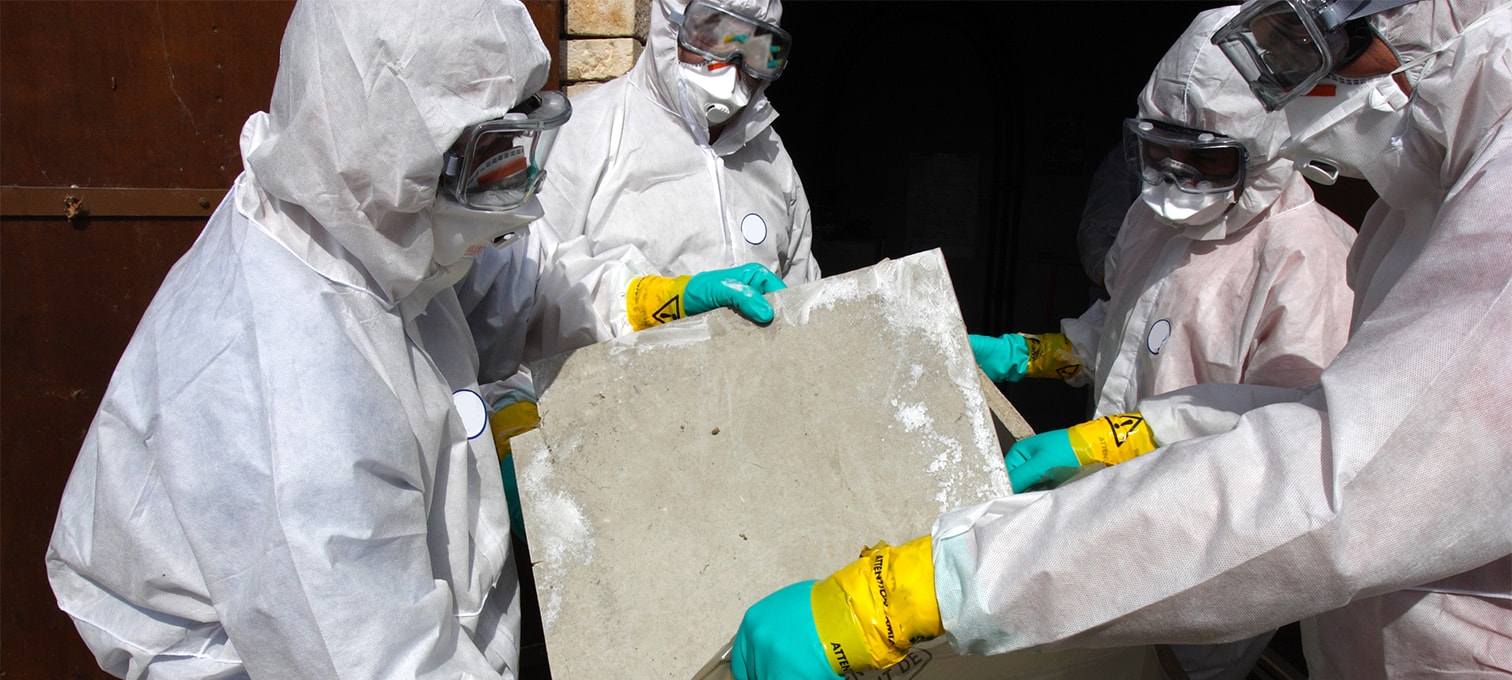
Asbestos exposure in the workplace can cause several diseases, including lung cancer and mesothelioma. Appropriate safety measures always need to be taken when working with asbestos.

Laws at all levels require employers to protect workers from asbestos at work.
Agencies such as OSHA, EPA, the Consumer Product Safety Commission, and the Mine Safety and Health Administration require employers to ensure safe workplaces. They require training and safety gear to prevent asbestos exposure.
For example, the EPA created the Asbestos Hazard Emergency Response Act to regulate asbestos in schools. This act protects students, teachers, and staff. AHERA is part of the Toxic Substances Control Act, which classifies asbestos as a toxic substance.
OSHA set laws and rules for asbestos in the workplace. They include unique requirements for the construction industry.
If you’re worried about asbestos at work, you can report it anonymously to OSHA or the Mine Safety and Health Administration. Other agencies also provide resources, education and training to protect workers from asbestos exposure.
Workers may file an anonymous complaint with OSHA if asbestos exposure is suspected. The administration monitors asbestos in the workplace, issues fines and may shut down operations if asbestos rules are violated.
OSHA Complaint Line: 800-321-6742 (OSHA)
Miners worried about asbestos can file anonymous complaints with the Mine Safety and Health Administration. This agency can inspect mines and penalize for asbestos violations.
MSHA Complaint Line: 800-746-1553
The EPA makes asbestos rules, fines violators, and enforces penalties. Its Ombudsman also advises the public on managing asbestos in homes, schools, and workplaces.
EPA’s Asbestos Ombudsman Line: 800-368-5888
The institute, or NIOSH, sets asbestos rules but can’t enforce them. It also educates workers on asbestos dangers and safe removal procedures.
NIOSH Information Line: 800-CDC-INFO (800-232-4636)

Our Patient Advocates have more than 50 years of combined experience helping mesothelioma patients.
Chat NowWorkers who develop mesothelioma or any other asbestos-related disease may be eligible for compensation.
Types of Legal Compensation for Mesothelioma
Victims seek compensation from asbestos manufacturers for disease caused by their products. These manufacturers are liable. Some have created asbestos trust funds. Others settle claims or go to trial.
Workers who get sick from asbestos should seek a mesothelioma lawyer for legal help. These lawyers can assist patients and their families in getting settlement money.
Navy veterans were exposed to significant asbestos. This makes up nearly 30% of mesothelioma lawsuits. They can also file VA claims for compensation. The VA offers disability, health care, and other benefits.
The occupations most at risk for developing malignant mesothelioma disease after asbestos exposure include firefighters, construction workers, industrial and power plant workers and shipyard workers. These workers regularly handle asbestos-containing materials in high volumes.
If you think you’ve been exposed to asbestos at work, the first step is to talk to a top mesothelioma doctor. They can diagnose you and start treatment. Doctors specializing in pleural and peritoneal mesothelioma offer advanced treatments. These aim to slow down or limit the disease’s spread.
No asbestos exposure is safe. Yet, brief or one-time exposures are not major risks. However, working long-term in an asbestos-laden building raises the risk. This is due to repeated exposures, which can lead to mesothelioma years later.
If a past employer neglected to protect you from asbestos exposure, you are likely eligible to file a legal claim for asbestos compensation. Payment from a legal claim or settlement varies by case but is sometimes available within months of filing. A lawyer or mesothelioma law firm that specializes in asbestos litigation can help you file a claim.
Your web browser is no longer supported by Microsoft. Update your browser for more security, speed and compatibility.
If you are looking for mesothelioma support, please contact our Patient Advocates at (855) 404-4592
The Mesothelioma Center at Asbestos.com has provided patients and their loved ones the most updated and reliable information on mesothelioma and asbestos exposure since 2006.
Our team of Patient Advocates includes a medical doctor, a registered nurse, health services administrators, veterans, VA-accredited Claims Agents, an oncology patient navigator and hospice care expert. Their combined expertise means we help any mesothelioma patient or loved one through every step of their cancer journey.
More than 30 contributors, including mesothelioma doctors, survivors, health care professionals and other experts, have peer-reviewed our website and written unique research-driven articles to ensure you get the highest-quality medical and health information.
My family has only the highest compliment for the assistance and support that we received from The Mesothelioma Center. This is a staff of compassionate and knowledgeable individuals who respect what your family is experiencing and who go the extra mile to make an unfortunate diagnosis less stressful. Information and assistance were provided by The Mesothelioma Center at no cost to our family.LashawnMesothelioma patient’s daughter


Whitmer, M. (2026, February 12). Occupational Asbestos Exposure. Asbestos.com. Retrieved June 8, 2026, from https://www.asbestos.com/occupations/
Whitmer, Michelle. "Occupational Asbestos Exposure." Asbestos.com, 12 Feb 2026, https://www.asbestos.com/occupations/.
Whitmer, Michelle. "Occupational Asbestos Exposure." Asbestos.com. Last modified February 12, 2026. https://www.asbestos.com/occupations/.
An occupational scientist or another expert who specializes in occupational hazards reviewed the content on this page to ensure it meets current scientific standards and accuracy.

Diana Zuckerman is the founder and president of the National Center for Health Research. She develops prevention strategies and treatments for programs such as the Cancer Prevention and Treatment Fund.
Our fact-checking process begins with a thorough review of all sources to ensure they are high quality. Then we cross-check the facts with original medical or scientific reports published by those sources, or we validate the facts with reputable news organizations, medical and scientific experts and other health experts. Each page includes all sources for full transparency.
Please read our editorial guidelines to learn more about our content creation and review process.


